

What are common applications for 8mm Ti6Al4V titanium bars?


 2026-06-23 11:18:00
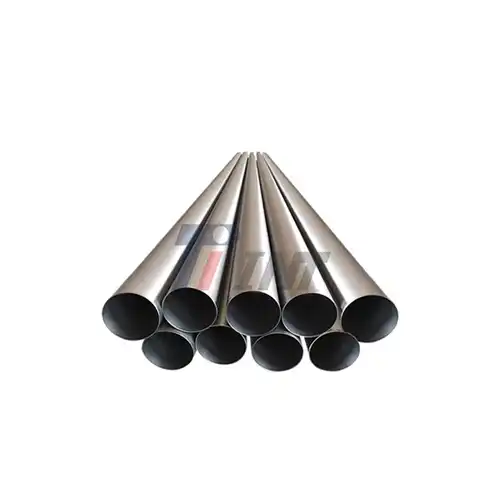
The Ti6Al4V Titanium Bar 8mm is an important raw material for many precision production industries. When it comes to making medical devices, like hip implants, surgery tool shafts, and dental abutments, this Grade 5 titanium alloy bar is very useful because it is strong and biocompatible. Aerospace companies use these bars to make bolts and structural pins that are light and can withstand changes in temperature. They are machined by auto racing teams into valve stems and suspension parts, and marine equipment makers use them for important shaft systems because they don't rust in saltwater.
|
|
|
Understanding Ti6Al4V Titanium Bar 8mm: Properties and Composition
Chemical Composition and Microstructure
The makeup of grade 5 titanium metal is carefully managed, which has a direct effect on its performance. The aluminum content keeps the hexagonal close-packed (HCP) alpha phase stable, and the vanadium content keeps the body-centered cubic (BCC) beta phase stable. This two-phase lattice gives the metal its unique mix of strength and flexibility. Standard grade material still has an iron content of less than 0.30%. However, the Extra Low Interstitial (ELI) version limits iron to less than 0.25% and oxygen to less than 0.13% to improve fatigue performance in medical uses.
The mill license level is the start of being able to track materials. Material Test Reports (MTRs) from reputable sources show spectroscopy-based chemistry analysis and prove that the material meets ASTM B348 standards for commercial uses or ASTM F136 standards for medical implant-grade material. We've seen procurement delays happen when buyers forget to check this paperwork during the seller qualifying process. Verifying heat lot numbers and chemistry reports keeps expensive production stops from happening.
Mechanical Properties and Performance Characteristics
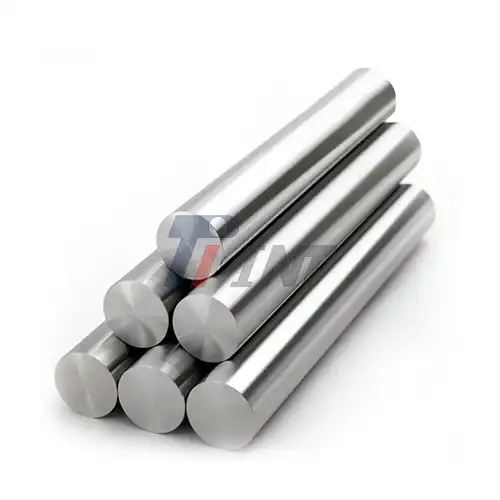
The Ti6Al4V Titanium Bar 8mm shape usually comes in the annealed state, which gives it the basic mechanical qualities needed to meet strict engineering standards:
Tensile strength is at least 895 MPa, which is about 130 ksi. This gives it the load-bearing ability needed for aircraft bolts and surgical fastening devices. Yield strength is at least 825 MPa, which sets the stress level at which lasting distortion doesn't happen. If the Elongation lengthening is 10% or more, it means that the material is flexible enough to be cold-formed and won't break easily. With a density of 4.43 g/cm³, it is much lighter than stainless steel options while still keeping its structural integrity.
The wear strength of this metal is what makes it stand out in real-world manufacturing situations. The higher endurance limits of Ti6Al4V make it better for parts that are loaded and unloaded over and over again, like spinal fixation rods that go through millions of flexion cycles or valve stems that are used in an engine all the time. The material keeps between 50 and 60% of its tensile strength as a wear limit, which makes it better than many types of stainless steel in high-cycle uses.
Surface Finish and Dimensional Tolerances
Manufacturers offer 8mm bars with different surface states to meet the needs of processing that comes after. Centerless ground finishes get very accurate measurements, usually meeting h9 or h7 ISO standards, which let them be fed directly into Swiss-style automatic lathes without any extra work. For uses that need low friction or better rust protection, polished surfaces reduce the amount of roughness on the surface. Sandblasted finishes make surfaces with even textures that help coats stick or bone integrate in implant uses.
These surface treatments aren't just for looks; they have a direct effect on how efficiently things are made. A buying manager looking for materials to make a lot of medical instruments will ask for finished bars to cut down on tool wear and get rid of the need for extra deburring steps. On the other hand, an engineer who is making spine implants might ask for a controlled sanded finish that helps the bone adhere better without affecting the accuracy of the measurements.
Common Industrial Applications of 8mm Ti6Al4V Titanium Bars
Medical Device Manufacturing
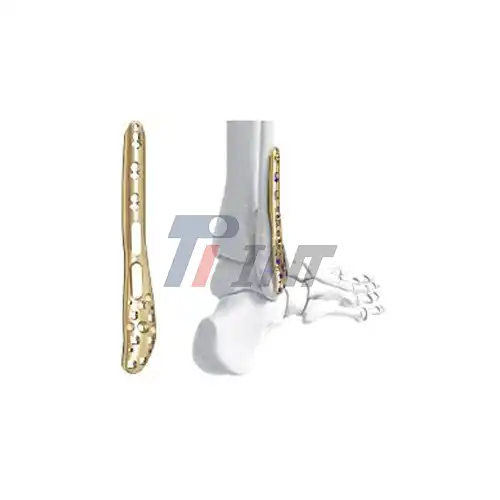
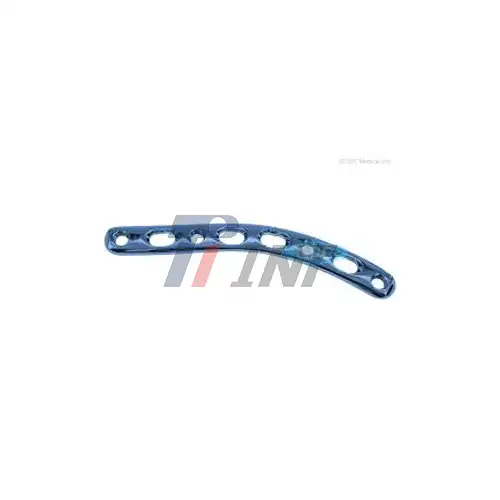
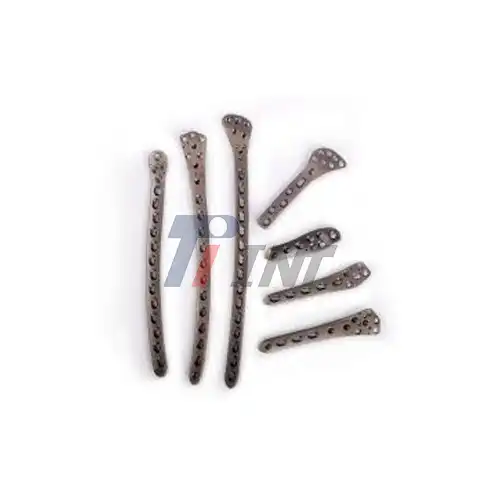
Medical professionals are the ones who buy the most precise-sized Grade 5 titanium bars. The Ti6Al4V Titanium Bar 8mm thickness is especially useful for joint and dental uses. Intramedullary nails are used to fix long bone fractures. They start out as 8mm bar stock that is cut to have proximal and distal fixing holes while keeping the structural integrity needed to support the patient's weight while they heal. These bars are used in external stabilization devices to connect plates that hold complex fractures in place while allowing minimally invasive surgery methods.
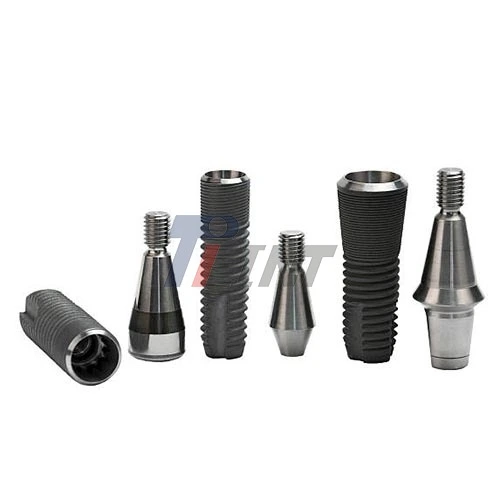
Dental implant makers use this width to make abutments and recovery caps because the material is good at osseointegration. Titanium's low elastic modulus (about 110 GPa) is more like cortical bone's (15–30 GPa), which means it doesn't create as much stress buffering that can shorten the life of an implant. Surgical tool makers use these bars to make reamers, drill guides, and awls. The ability to prevent rust is important for repeated cleaning processes using chemical disinfectants and steam autoclaving.
Working with new medical device companies has shown us that picking the right material grade can mean the difference between getting FDA approval and having to pay a lot of money to redo the whole thing. The ELI type of Ti6Al4V is designed to meet the wear needs of permanent implants, while normal grade material is fine for surgery tools and temporary fastening devices.
Aerospace and Defense Applications
Titanium's high strength-to-weight ratio is used by aircraft makers for parts where every gram counts. The 8mm bar size is used to make shear pins, clevis pins, and other types of specialty screws that are used in landing gear systems and wing parts. These parts have to be able to handle temperature changes from -54°C at cruise level to localized warmth during friction events. They also have to keep their shape for tens of thousands of flight cycles.
Manufacturers of helicopters use these bars to make parts for the rotor hub and pins for the control connection. The ability to resist wear has a direct effect on flight safety. Titanium's resistance to galvanic corrosion is very important when it comes to connecting titanium parts to aluminum airframe structures. Unlike steel fasteners, which can cause problems with dissimilar metal couples, titanium fasteners reduce corrosion risks in saltwater environments that naval aviation platforms are exposed to.
Automotive and Motorsport Engineering
Titanium's ability to save weight without lowering strength is used in high-performance vehicle uses. Builders of racing engines cut valves and retainers for valve springs from 8mm bars. This lowers the moving mass that slows down engines. The material can handle the high temperatures in the combustion chamber and keeps its shape over thousands of RPM cycles. Manufacturers of suspension parts make turnbuckles and adjustment links that lower the weight that isn't being sprung. This makes the vehicle handle better and the tire contact patch stays consistent.
Automobile racing shows that it is willing to pay more for materials when the speed benefits make it worth it. A Formula 1 team could use this bar size to make connecting rod nuts, which would cut down on weight while still being able to handle the high tensile loads that come from engines spinning at 15,000 RPM. For these uses, the materials need to be certified all the way back to when they were made in the mill. This makes sure that the quality of each lot is the same, which stops major fails.
Marine and Chemical Processing
Titanium is used by marine gear makers for parts that will be immersed in saltwater all the time. Propeller shafts, rudder pins, and underwater camera mounting gear made from 8mm bars don't rust or pit, which is what happens to stainless steel options in just a few months. Manufacturers of Remotely Operated Vehicles (ROVs) use titanium parts to make control arms and structural links that stay strong at depth while reducing the need for buoyancy adjustment.
Titanium is used in chemical processing plants for valve stems, pump shafts, and reactor vessel fasteners in places where rare stainless steels can't handle the acidic or caustic conditions. The material's inactive oxide layer protects over a wide pH range, which lowers the cost of upkeep and the chance of unexpected shutdowns in ongoing processes.
Comparison and Selection Criteria for Titanium Bars: Why Choose Ti6Al4V 8mm?
Material Selection Considerations
The choice grid that engineers use to look at titanium grades for a new use is based on a number of factors. Pure titanium (Grades 1-4) is better at resisting rust and can be shaped better, but it's not strong enough for structural uses. Ti6Al4V Titanium Bar 8mm fills in this gap, making titanium about twice as strong as widely pure titanium while still being very resistant to rust. When compared to stainless steel, the metal gets rid of worries about nickel sensitivity in medical implants and cuts the weight of parts by about 40% while keeping their strength the same.
The 8 mm width is a point where making can be improved. When it comes to high-load uses, smaller sizes limit the cross-sectional strength that can be used. On the other hand, bigger bars need more active cutting operations, which extend cycle times and increase tool wear. This size works with bar-fed CNC Swiss machines that are great at making a lot of small, complicated parts. This is the best way to make surgery screws, dental parts, and precision fasteners.
Costs will always play a role in buying choices. Ti6Al4V is more expensive than aluminum or stainless steel. For verified bar stock, the price ranges from $35 to $55 per kilogram, based on the market and the number of orders. But when you figure out the total cost of ownership, you need to take into account things like better rust resistance that gets rid of the need for protection coats, fewer machine passes because chips form more easily, and the possibility of design improvement that uses less material because it is stronger.
Quality Certifications and Compliance
Medical gadget makers have to follow strict rules that start with choosing the right materials. Getting ISO 13485:2016 approval shows that a supplier's quality management system meets the standards of the medical device business. It sets specific standards for the Ti6Al4V makeup and mechanical qualities of metals used in medical implants (ISO 5832-3). Medical device makers in the European Union have to make sure that their sources give them CE-marked materials that meet the standards of the Medical Device Regulation (MDR).
Documentation standards are just as strict for aerospace uses. AMS 4928 spells out the rules for titanium metal bars that are used in airplanes. It talks about their mechanical features, chemical limits, and quality control methods. Accreditation by Nadcap for testing materials and heat treating them gives buyers more faith in the abilities of suppliers, especially when it comes to important rotating parts in turbine engines.
Our experience with buying has taught us how important it is to qualify suppliers before placing big orders. To make sure of a sample's mechanical qualities (tensile testing), its chemistry (independent laboratory analysis), and its surface finish (dimensional inspection), it should be tested. This upfront investment keeps production from stopping when materials don't meet standards after production has started.
Procurement Insights: How to Source High-Quality Ti6Al4V Titanium Bars 8mm
Supplier Qualification and Selection
To find trusted providers, you need to carefully look at their professional skills and how they run their businesses. We suggest that buying teams look at possible providers in a number of different ways. When a supplier's manufacturing capability is checked, it is seen if they are in charge of the main melting operations or if they get their materials from qualified mills. This is because material tracking starts at the ingot stage. Quality system standards show that a company is committed to using uniform methods. ISO 9001:2015 is a good starting point, and ISO 13485:2016 is required for medical uses.
Geographic considerations influence lead times and logistics complexity. Chinese makers offer low prices and higher quality standards. Suppliers that have been around for a while can provide full testing paperwork and experience sending goods internationally. Customers who need frequent expert advice or just-in-time supply plans can benefit from European providers' closeness, but they charge more. Manufacturers who do business in different areas keep their inventory levels in a way that balances lowering costs with making sure the supply chain is resilient.
The ability to test materials shows how sophisticated the seller is. Basic suppliers give mill papers that list the chemical and mechanical qualities of the metal, while advanced suppliers have their own labs where spectrographic analysis, tensile testing, and metallographic study are done. Traceability is important for medical device Master Files and aircraft material certifications, and being able to include approved test results with every shipment lot makes this possible.
Ordering Specifications and Customization
Clear buy order specs stop mistakes that cause shipping delays or material that doesn't meet requirements. Important parts include the material grade (Ti6Al4V or Ti-6Al-4V ELI), the standards that apply (ASTM B348, ASTM F136, AMS 4928), the thickness error (usually ±0.1mm for precision ground bars), the length needs, the surface finish requirements, and the certifications that are needed. Prices are affected by volume promises. For example, makers offer quantity savings for orders over 100 kilograms, but they charge more for smaller sample numbers.
There are more customization choices than just standard size requirements. Suppliers can cut bars to specific lengths, so normal 3-meter stock lengths don't lose any material. Different types of heat treatment change the mechanical qualities of materials for different uses. For example, solution treating and aging make materials stronger while making them less flexible, which is good for Ti6Al4V Titanium Bar 8mm high-stress fastening. Passivation and other surface processes make marine uses more resistant to rust, while managed hardness standards help meet certain biological needs.
To handle lead time well, you need to set realistic goals based on how complicated the work is. Standard diameter bars in widely requested sizes usually ship within 4 to 6 weeks for established sources who keep stock on hand. Lead times can go up to 12 to 16 weeks when custom specs call for special mill runs. This is especially true when ELI grade material needs extra quality control steps. When planning purchases, these dates should be taken into account, especially when arranging when to send materials with when to start making new products.
Future Trends and Innovations in Ti6Al4V Titanium Bar Applications
Additive Manufacturing Integration
When standard bar stock and additive manufacturing come together, they can make it possible to make interesting combination parts. Manufacturers now make parts that combine cut bar stock for areas of high stress with 3D-printed parts that add complex shapes that can't be done with traditional machining. A Ti6Al4V Titanium Bar 8mm could be used as the main structural element of a spine implant, along with additively made hollow areas that help the bone integrate. This method combines the efficiency of the material with the biological usefulness of the implant.
Wire arc additive manufacturing (WAAM) uses titanium wire that is pulled from bar stock. This lets a lot of parts be made with less waste than when solid billets are machined. Aerospace companies are looking into these methods for making structural brackets and fittings that give designers more freedom and the mechanical dependability of worked materials.
Advanced Machining Technologies
Cutting tool improvements keep making titanium milling cheaper. When cutting titanium, ceramic cutting plates and polycrystalline diamond (PCD) equipment make the tools last longer, which lowers the cost per part that has previously kept titanium from being widely used. High-pressure water supply systems keep the work from getting too hard and improve the finish on the surface. This is especially helpful when making medical implants that need a very smooth surface without having to do any extra cutting.
When making accurate parts, integrating automation cuts down on the cost of work. Bar-fed Swiss lathes with automatic load tracking and tool wear adjustment keep the quality of parts uniform over long production runs. Robotic deburring cells get rid of the need for human finishing, which makes the process more consistent while lowering the amount of direct work needed. These improvements in production make titanium parts more cost-effective than parts made from lower-performance materials in high-volume uses.
Sustainability and Circular Economy Initiatives
Environmental factors are becoming more and more important in choosing materials. Titanium's high longevity lowers its effect on the environment over its entire lifetime compared to alternatives that wear out quickly and need to be replaced more often. Because the material doesn't rust, protective layers that are hard to get rid of aren't needed, and because it's neutral, dangerous chemicals can't leach out in biological and marine settings.
Recycling programs get money from titanium cutting scrap, which makes up 60 to 80% of the starting bar stock amount in the production of complicated parts. Closed-loop recycling programs send scrap and rejected parts back to the original manufacturers to be remelted. This lowers the demand for new materials. Careful separation is needed in these programs to keep things from getting mixed up. For example, keeping separate collections for Ti6Al4V and commercially pure titanium makes sure that recovered material passes strict science requirements for later use.
Conclusion
The Ti6Al4V Titanium Bar 8mm standard meets important production needs in the aircraft, automobile, medical, and industrial fields. Its biocompatibility, high strength-to-weight ratio, and resistance to rust make it a must-have for situations where performance and dependability are worth the extra cost. To do a good job of buying, you need to pay close attention to material certifications, seller qualifications, and clear specifications that make sure the material supplied meets the needs of the application.
When engineers and buyers are making decisions about where to get materials, they need to know what the material can and can't do. Knowing the difference between standard grade and ELI versions, how surface finish affects processing further down the line, and licensing requirements helps buyers make smart choices that combine technical performance with business needs.
FAQ
Q1: What is the typical lead time for ordering 8mm Ti6Al4V bars?
A: Standard-grade material from well-known sources usually ships within 4 to 6 weeks for most needs. Depending on mill production plans and quality testing needs, wait times may go up to 12 to 16 weeks for custom requirements like ELI makeup, special heat processes, or lengths that aren't standard.
Q2: Can suppliers provide custom cutting and heat treatment services?
A: Most reputable sellers offer extra services that make your purchase more valuable, like precisely cutting materials to the amounts you need, which cuts down on waste. For some uses, heat treatment services like solution cleaning, aging, or stress release can change the mechanical properties. However, it's important to be clear about the qualities you want to change and the standards that apply.
Q3: How can I verify material authenticity and supplier credibility?
A: Ask for Material Test Reports (MTRs) that list the chemical and mechanical qualities of each batch lot. Having a different lab check the sample material gives you even more trust. Audits of suppliers' facilities show how well they can make things and how well their quality systems are working. This is especially important for medical devices that need full tracking and FDA Master File data.
Partner with a Trusted Ti6Al4V Titanium Bar 8mm Manufacturer
Baoji INT Medical Titanium Co., Ltd. has been making medical-grade titanium products that meet the strict standards your uses need for more than twenty years. Our Ti6Al4V Titanium Bar 8mm have full ISO 9001:2015, ISO 13485:2016, and EU CE certifications, which gives you the proof you need for medical device regulatory applications and aircraft quality systems.
We know that procurement professionals need more than just approved materials. You also need technical help that is quick to respond, quality that stays the same across production lots, and reliable delivery that keeps manufacturing plans on track. Our engineering team helps you choose the right materials, make suggestions for cutting, and provide quality paperwork that makes the process of qualifying suppliers easier. We offer flexible buying that grows with your business, so you can get what you need whether it's a small amount for a sample to test your research or a large amount for mass production.
Email our team at export@tiint.com to talk about your particular needs. For Ti6Al4V Titanium Bar 8mm provider relationships based on long-term partnerships rather than business exchanges, we offer sample material for testing confirmation, clear price, and thorough technical specs.
References
1. American Society for Testing and Materials. (2021). ASTM B348-13: Standard Specification for Titanium and Titanium Alloy Bars and Billets. ASTM International.
2. Boyer, R., Welsch, G., & Collings, E.W. (2007). Materials Properties Handbook: Titanium Alloys. ASM International.
3. International Organization for Standardization. (2016). ISO 5832-3:2016 Implants for Surgery — Metallic Materials — Part 3: Wrought Titanium 6-Aluminum 4-Vanadium Alloy. ISO Standards.
4. Lütjering, G., & Williams, J.C. (2003). Titanium: Engineering Materials and Processes. Springer-Verlag.
5. Peters, M., Kumpfert, J., Ward, C.H., & Leyens, C. (2003). "Titanium Alloys for Aerospace Applications." Advanced Engineering Materials, 5(6), 419-427.
6. Rack, H.J., & Qazi, J.I. (2006). "Titanium Alloys for Biomedical Applications." Materials Science and Engineering: C, 26(8), 1269-1277.
_1753926358324.jpg)
_1752463990252.webp)
_1749191401740.webp)