

What are the common dimensions available for GR1 titanium medical bars?


 2026-06-16 09:24:30
When buying medical-grade titanium to make devices, the first important thing to do is usually to find out the exact material specs. Gr1 Titanium Medical Bar usually comes in lengths and widths ranging from 300mm to 6000mm and 6mm to 50mm, but it can be made to fit specific needs for making implants or instruments. These measurements have a direct effect on how well the product works, how much material is wasted, and how efficiently it is machined. If you know what standard sizes are out there and which combinations work best for your surgery tool or implant design, you can improve your supply chain and avoid costly mistakes during the testing stages.
|
|
|

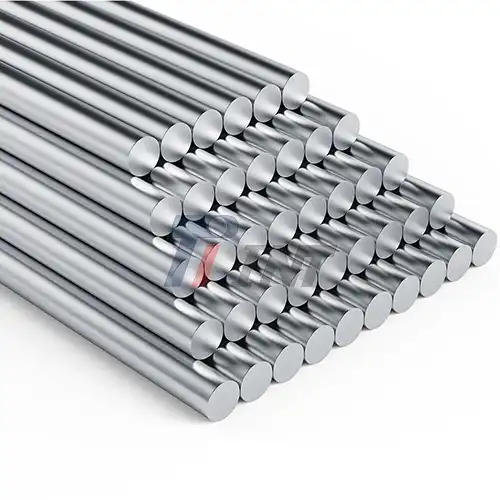
Overview of GR1 Titanium Medical Bars and Their Applications
Gr1 Titanium Medical Bar is the purest titanium that can be bought, with the lowest interstitial element percentage and the most flexibility of all the unalloyed grades. The material meets the standards set by ASTM F67 and ISO 5832-2, which means it is highly biocompatible and resistant to rust, which are both important for lasting human implants. It is easier to shape than stronger alloys like Ti-6Al-4V because it has an alpha-phase lattice, an oxygen content of no more than 0.18%, and an iron content of less than 0.20%.
Key Properties That Drive Material Selection
Engineers who work on medical devices mostly choose Gr1 Titanium Medical Bars for uses that need to be able to be cold-formed well and not corrode in any way. The material's elastic stiffness of about 103 GPa is closer to that of human bone than that of stronger metals. This makes stress-shielding less likely to happen in load-bearing devices. This quality is very useful when making frontal plates, orbital floor meshes, and complicated tooth structures that need to be shaped during surgery without breaking or springing back.
The stable titanium dioxide film that forms naturally on Gr1 Titanium Medical Bar surfaces protects them against salty conditions inside the body for life. This inactive layer stops metallosis and the release of poisonous ions, which is very important for patients who are allergic to alloying elements like nickel or vanadium that are found in stainless steel options.
Medical Device Applications Across Multiple Specialties
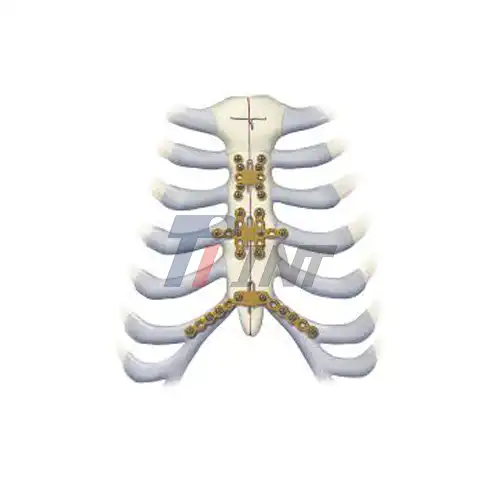
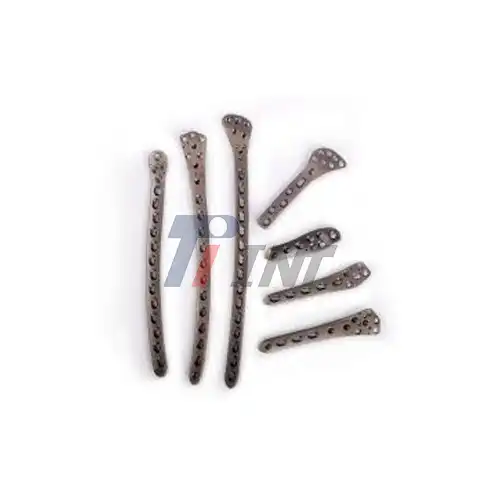
Gr1 Titanium Medical Bars are used by companies that make surgical instruments to make retractors, forceps, and special cutting tools because they are flexible enough to allow for complex designs. Orthopedic suppliers cut these bars into bone pins, fixing plates, and spine fusion cages that are used in surgeries to fix broken bones and rebuild bodies. Dental labs use Gr1 Titanium Medical Bar to make mending abutments, cover screws, and temporary implant parts that connect to soft tissue while the implant is osseointegrates.
For high-volume production runs, OEM makers that work with big medical names often need large amounts of the same size. On the other hand, custom prosthetic makers need smaller numbers with specific details for implants that are made just for each patient. Knowing about these different use cases helps buying teams figure out what sizes are needed and how long the lead time will be before they can hire suppliers.
Standard Dimensions of GR1 Titanium Medical Bars
The market for medical titanium has a clear set of standard sizes that strike a good mix between cost-effective production and practical flexibility. For precision tools, the diameter range starts at 6 mm and goes up to 50 mm for bigger implant blanks. Length choices usually run from 300 mm for small-batch testing to 6000 mm for settings that need to make things all the time with little waste during CNC cutting.
Diameter Ranges and Manufacturing Considerations
Bars with a width of 6 mm to 12 mm work well for medical tools that need complex shapes and close tolerances. Mid-range sizes, from 12 mm to 25 mm, are good for making general-purpose implants because they give you enough material to machine complex threaded features or internal shapes. When the width is bigger than 25 mm, it supports hip stem blanks, the production of spine cages, and custom prosthesis parts that need a lot of material to be removed during finishing operations.
To make sure that all of their products are the same, manufacturers keep very close circle tolerances—usually within ±0.1mm for precision-grade Gr1 Titanium Medical Bars. This control over measurements is necessary when automatic machine centers need stable stock sizes to keep tool wear low and part consistency high.
Length Specifications and Supply Chain Efficiency
Standard lengths between 1000mm and 3000mm are the most popular combinations that are kept in stock. This gives buying teams quick access to the products and low prices. Longer bars (up to 6000 mm) cut down on the number of times that materials need to be changed during high-volume production. This saves money on work and keeps the amount of scrap to a minimum. For prototypes and small-batch custom orders where material freedom is more important than per-unit cost, shorter lengths of 300mm to 500mm are used.
Medical device makers can better control their goods when they have suppliers who can cut lengths to order straight from stock. By buying bars that have already been cut to the exact measurements needed for the project, you can skip the step of cutting them again, save time on handling, and lower the risk of contamination during the preparation stages.
Surface Finish Impact on Dimensional Accuracy
Different surface finishes, such as hot-rolled (black scale), cold-finished (bright), and polished, have different effects on the accuracy of measurements and how the material behaves during subsequent cutting. Hot-rolled bars usually have a rough surface with a Ra value of about 3.2μm, which means that more stock margin needs to be added during cutting to get the final standards. Cold-finished bars have Ra values below 1.6μm, which lets you start with smaller pieces and cut down on the time it takes to machine them.
Polished bars with Ra values below 0.8μm are used for things like precision guide lines or parts of moving joints where the quality of the surface directly affects how well the device works. To avoid having to do extra work or rejecting quality, the surface preparation method picked during purchase must match the planned manufacturing process and the specs for the final device.
Dimensional Variations Based on Medical Use Cases
Different types of medical devices need different physical arrangements that are based on how they are used and how they are made. Knowing about these differences based on applications helps procurement professionals give clear instructions to sellers and avoid expensive mistakes when material stock doesn't match production needs.
Surgical Instruments and Precision Tooling
For making surgical instruments, Gr1 Titanium Medical Bars with diameters between 6mm and 15mm and lengths between 500mm and 1500mm are usually needed. These measurements allow for the production of handles, rods, and moving parts that need to be strong while also being comfortable to use. Manufacturers often ask for smaller circle limits of ±0.05mm to make sure that tools with more than one part always fit together correctly.
The cold-finished surface state is now common for instrument-grade bars because it cuts down on the time needed for cutting and gives the smooth finish needed for cleaning. Buying these bars in standard lengths that match the sizes of most instruments cuts down on waste and supports lean manufacturing in places where a lot of things need to be made.
Implant Manufacturing and Patient-Specific Devices
For making orthopedic implants, Gr1 Titanium Medical Bars with diameters between 20 mm and 50 mm and lengths of 3000 mm or more are needed. For example, hip stem blanks need a lot of material to be able to fit the complex curved shapes and porous coating areas that are needed in current implant designs. In the same way, companies that make spinal cages need the right stock sizes to be able to build complex grid structures that help bones grow while keeping the structure stable.
Implant makers who work with specific patients often use bars that are cut to fit each person's anatomy. These orders may ask for non-standard sizes like 18mm or 32mm and exact lengths that are estimated from CT scan data. This shows how important it is for suppliers to be able to meet specific measurement requests that aren't covered by their catalogs.
OEM Production and Bulk Order Dynamics
Original equipment makers that sell to named medical device companies usually buy in bulk for standard sizes that allow for ongoing production plans. These buying strategies favor standard sizes like 12mm, 16mm, 20mm, and 25mm widths in lengths of 2000mm to 3000mm. This lets sellers keep stock and offer competitive volume discounts.
Dimension choices are often affected by minimum order numbers, especially for forms that aren't used very often. The cost savings of buying in bulk must be weighed against the costs of keeping supplies and the chance that materials will become obsolete if product designs change. OEM makers who handle multiple product lines with different size needs can benefit from building long-term relationships with suppliers that offer open minimum order terms.
Comparing GR1 Titanium Bar Dimensions with Other Medical Titanium Grades
Medical device experts often check to see if the size and qualities of Gr1 Titanium Medical Bar are best for their purpose or if other titanium types are better in other ways. This study looks at more than just mechanical qualities. It also looks at available dimensions, how the material behaves when machined, and the total cost of ownership over the whole span of the product.
GR1 Versus GR2 Property and Sizing Differences
GR2 titanium has a slightly higher oxygen level (up to 0.25%) than Gr1 Titanium Medical Bar, which is limited to 0.18%. This makes GR2 titanium stronger but less flexible. This difference in makeup changes how the material works when it's being machined and the width sizes that providers offer. Most of the time, GR2 bars have the same sizes as Gr1 Titanium Medical Bars, but because the material is stronger, it's better for load-bearing parts where a little less flexibility doesn't affect the design.
If the buyer wants the best cold-forming properties and the lowest possible elastic modulus, they should be very clear about Gr1 Titanium Medical Bar, even if the specs of GR2 fit the needs of the project. The small changes in properties between these grades have a big effect on how well the device works in situations where stress buffering is important or where complicated surgical bending is needed.
GR5 Alloy Considerations for High-Strength Applications
This is a completely different type of material called Ti-6Al-4V (GR5). It has about twice the tensile strength of Gr1 Titanium Medical Bar but is much less flexible. GR5 bars usually come in diameters between 10mm and 50mm, but because the metal is harder to work with and costs more, it changes how load-bearing implants like femur stems, acetabular shells, and spine pedicle screws are bought.
When GR5 is heated and machined, its physical stability is different from that of available pure grades. This means that procurement teams have to account for tighter starting tolerances and possibly different length requirements to keep distortion to a minimum during processing. The higher cost of GR5 is worth it for devices that need the highest strength-to-weight ratios, while Gr1 Titanium Medical Bar specs are better for parts that need to be easy to shape and resistant to rust.
Titanium Versus Stainless Steel Dimensional Availability
Medical-grade stainless steel bars are often used instead of titanium in surgery instruments because they are more affordable and come in a wider range of sizes. Stainless steel sources usually keep widths from 3 mm to 60 mm in smaller steps. This gives instrument designers more size choices for custom instruments. But titanium's better biocompatibility, smaller density, and ability to work with MRIs lead to standards around tried-and-true forms that combine the material's qualities with the cost of production.
When deciding between titanium and stainless steel for a purchase, not only must the sizes be available be thought about, but also the costs of processing, the ability to be sterilized, and the long-term safety ratings for patients. Gr1 Titanium Medical Bars come in a slightly smaller range of sizes because the material is used in specific situations where performance requires careful measurement rather than standard sizes.
Practical Considerations for Purchasing GR1 Titanium Medical Bars
To successfully find Gr1 Titanium Medical Bars, you need to make sure that the technical requirements match the skills of the suppliers and keep an eye on costs, quality, and delivery dates. When going through this process, procurement workers should know the key choice factors that separate trusted sellers from those who don't have the right certifications and experience to make medical devices.
Certification Requirements and Quality Assurance
When you buy a Gr1 Titanium Medical Bar, it has to come with full material tracking paperwork, like an EN 10204 3.1 Mill Test Certificate that shows the heat number, chemical makeup, and mechanical test results. Suppliers with ISO 13485:2016 approval show they are dedicated to medical device quality management systems. Compliance with ASTM F67 and ISO 5832-2 standards proves the material is safe for surgery insertion.
To keep industrial-grade titanium from getting mixed up, procurement teams should make sure that sellers follow tested methods for measuring dimensions, checking surface finish, and separating lots. A supplier's technical detail and dedication to medical-grade standards can be seen in their ability to provide extra paperwork like tensile test results, grain size analyses, and oxygen content proof.
Customization Capabilities and Lead Time Management
Manufacturers of new devices can get strategic benefits from suppliers who offer custom measurement specs, non-standard lengths, and specialized surface treatments. Receiving bars that have already been made to near-net forms or with custom surface changes cuts down on the number of steps needed for internal processing and speeds up the time it takes to get new goods on the market.
Lead times are very different depending on the size requirements and the number of items ordered. Standard sizes, like 16 mm in diameter and 2000 mm in length, usually ship within two to four weeks from reputable sources who keep stock. Custom sizes may take 6 to 12 weeks to complete because of the time it takes to order materials, process them, and check the quality. Manufacturers can keep up with production plans even when things change, thanks to purchasing methods that include extra stock for important measurements.
Pricing Dynamics and Volume Considerations
The cost of materials for Gr1 Titanium Medical Bars goes up as the width and length go up because more raw titanium sponge is needed. A bar with a diameter of 50 mm costs a lot more per kilogram than one with a diameter of 10 mm. This is because melting and shaping bigger ingots requires more complicated steps to keep the grain structure regular. Because of the special handling and shipping needs for bars longer than 3000mm, they come with length fees.
When you buy more than 100 kilograms of standard measures, you usually get a volume discount. If you sign an annual contract or a blanket purchase order, you can get even bigger price cuts. To get the most out of volume leverage while keeping inventory levels acceptable, procurement teams that are in charge of more than one product line should combine measurement needs across projects. Just-in-time manufacturing methods work best when you build long-term relationships with sellers who can be flexible with delivery times. This way, you can get the price benefits of buying in bulk without giving up those benefits.
Conclusion
When buying workers know about the different sizes of Gr1 Titanium Medical Bars, they can make choices that meet technical needs and save money at the same time. Standard lengths and widths of up to 6000mm and 6mm to 50mm work for most medical device uses. Custom specs are available for unique implant and tool needs. To get the best total cost of ownership, good buying methods match the size of the materials to the way they are made, check the certifications of the suppliers, and buy in bulk. Manufacturers make sure their goods meet the best quality, safety, and performance standards by working with experienced sources who know about both material science and the rules that govern medical devices.
FAQ
Q1: What is the largest normal width that GR1 medical bars can have?
A: Most sellers keep Gr1 Titanium Medical Bars with a width of up to 50 mm in stock all the time. On special orders, larger widths up to 60mm or 75mm can be made, but wait times get much longer and the minimum order quantity goes up. Applications needing widths above 50mm are usually for big orthopedic implant blanks, where the extra cost of the material and the time it takes to process it make the larger size worth it.
Q2: Can suppliers provide custom-cut lengths for non-standard requirements?
A: Medical titanium providers with a good reputation often offer custom cutting services to meet the length needs of a particular project. This feature gets rid of trash and cuts down on dealing time during production. When bought in large quantities, custom lengths usually don't add much to the cost, and most providers can work with cutting errors of up to 2 mm to help with accurate production planning.
Q3: How does surface finish affect dimensional precision and machining outcomes?
A: When compared to hot-rolled conditions, cold-finished and polished bars keep their circle specs tighter and offer more reliable cutting performance. Better surface quality cuts down on tool wear during CNC operations and lowers the amount of stock that needs to be added to get the final part measurements. Medical device makers who care about consistent sizes and clean surfaces should choose cold-finished or polished bars over hot-rolled ones, even though they cost a little more.
Partner with Baoji INT Medical Titanium Co., Ltd. for Your Gr1 Titanium Medical Bar Needs
At Baoji INT Medical Titanium Co., Ltd., we have over 30 years of experience in the titanium business, are ISO 13485:2016 certified, and fully comply with ASTM F67. This means that we can make Gr1 Titanium Medical Bars that exactly meet your needs. Our large collection includes widths from 6mm to 50mm and lengths up to 6000mm. We also offer custom cutting and surface finishing services to help you make the most of your manufacturing process. As one of the biggest companies in China that makes Gr1 Titanium Medical Bars, we have strict quality control systems that make sure every bar comes with full tracking documentation and measurement proof records.
Our flexible minimum order amounts and reasonable price structure help you meet your buying goals without lowering quality standards, whether you need small quantities for prototypes or large production runs. Email our technical team at export@tiint.com right now to talk about your size needs, get material certifications, or get a full quote that fits your project's budget and time frame.
References
1. American Society for Testing and Materials. "ASTM F67-13: Standard Specification for Unalloyed Titanium for Surgical Implant Applications." ASTM International, West Conshohocken, PA, 2013.
2. International Organization for Standardization. "ISO 5832-2:2018: Implants for Surgery—Metallic Materials—Part 2: Unalloyed Titanium." ISO, Geneva, Switzerland, 2018.
3. Rack, H.J., and Qazi, J.I. "Titanium Alloys for Biomedical Applications." Materials Science and Engineering C, Volume 26, Issue 8, 2006, pages 1269-1277.
4. Niinomi, M. "Mechanical Properties of Biomedical Titanium Alloys." Materials Science and Engineering A, Volume 243, Issues 1-2, 1998, pages 231-236.
5. Elias, C.N., Lima, J.H.C., Valiev, R., and Meyers, M.A. "Biomedical Applications of Titanium and its Alloys." Journal of the Minerals, Metals and Materials Society, Volume 60, Issue 3, 2008, pages 46-49.
6. Geetha, M., Singh, A.K., Asokamani, R., and Gogia, A.K. "Ti Based Biomaterials: The Ultimate Choice for Orthopedic Implants—A Review." Progress in Materials Science, Volume 54, Issue 3, 2009, pages 397-425.
_1753926358324.jpg)
_1751958555199.webp)
_1750923514395.webp)
_1749191822714.webp)