
What is a dental titanium bar?


 2026-06-11 10:17:56
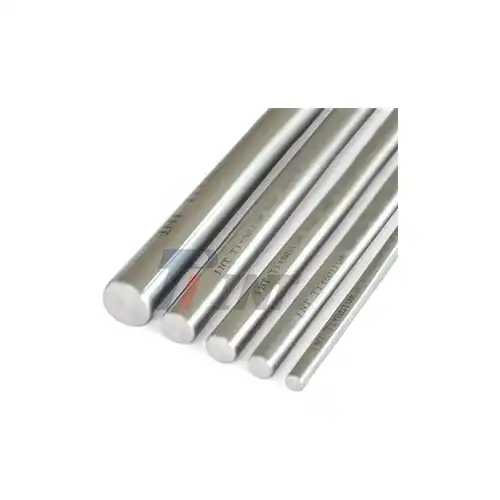
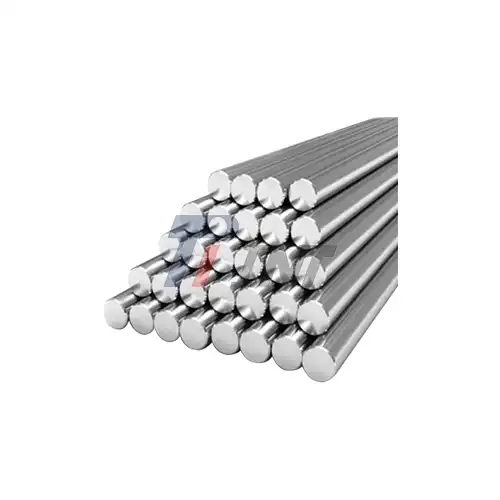
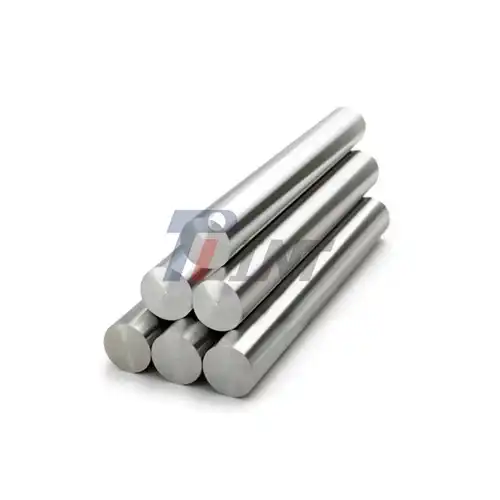
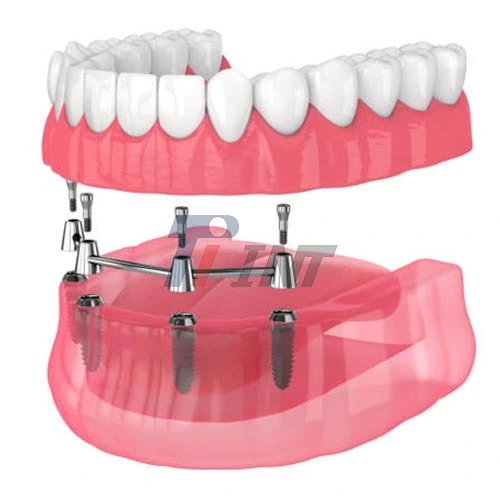
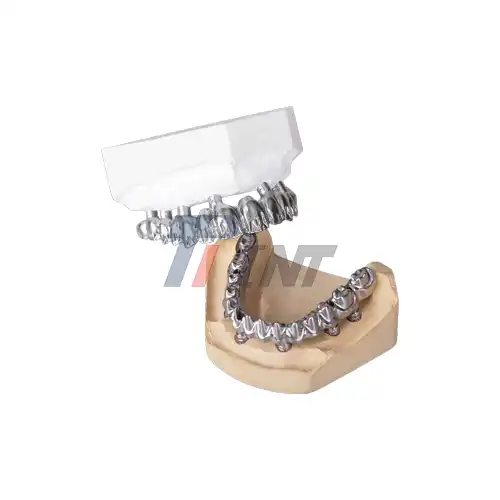
The titanium bar dental system is one of the most important parts of implant-supported fillings because it combines accuracy with biological safety. A dental titanium bar is a core made from medical-grade titanium alloy, usually Grade 5 (Ti-6Al-4V) or Grade 23 (Ti-6Al-4V ELI). It is CAD/CAM-milled and made to connect multiple dental implants and support replacements like full-arch dentures or implant bridges. This carefully designed part meets the important passive fit requirement in full-arch rehabilitation. It makes sure that masticatory forces are properly distributed across implants and that the framework stays stable in its dimensions, which is something that standard cast-metal frameworks often fail to do. The titanium bar dental solution is designed to be biocompatible, strong, and light, which makes it essential for All-on-4® and related ideas.
|
|
|
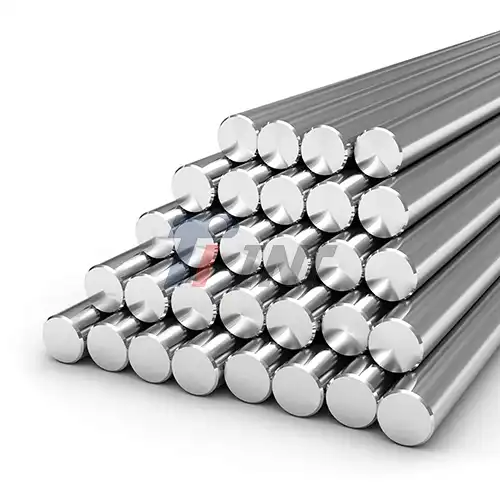
Introducing Dental Titanium Bars
Tiny titanium bar dental components are used for more than just supporting teeth in modern dentistry. When biology and engineering come together in these parts, they make up the mechanical backbone of complicated healing processes.
Material Properties That Define Performance
Titanium is the best material for dental implant systems because it has a unique set of qualities. The high strength-to-weight ratio (4.4 g/cm³ density) makes it possible to build strong frames without putting extra stress on the implant sites. When it comes to full-arch cases, this feature is especially useful because standard cobalt-chrome frames might be too heavy. The material doesn't rust because it has a passive oxide layer that stays steady in the mouth, even when it's exposed to saliva, changes in temperature, and acidic conditions.
Biocompatibility is another important reason why titanium works so well in dentistry. The substance can osseointegrate, which means that bone tissue can grow right on top of it without creating fibrous tissue boundaries. This cellular acceptance lowers the risk of rejection and helps keep things stable over time. Studies have shown that titanium implants have a high success rate and cause little inflammation over many years of practical use.
Titanium Grades and Clinical Applications
There are different types of medical-grade titanium, and each one meets different medicinal needs. Pure titanium for sale (Grades 1-4) is very biocompatible but has different levels of tensile strength. Grade 4 is the strongest pure titanium choice, so it can be used for single-implant replacements that need to be flexible.
Adding aluminum and vanadium to Grade 5 (Ti-6Al-4V) titanium metal greatly improves its mechanical qualities. This metal can handle the strong forces found in multi-unit implant frames because its tensile strength is up to 950 MPa. Grade 23 (Ti-6Al-4V ELI—Extra Low Interstitial) makes this makeup even better by lowering the amount of interstitial elements. This makes it more resistant to fatigue and increases its fracture hardness to 1100 MPa. Because of this, Grade 23 is perfect for uses that need to withstand stress, like implant bars that hold up full teeth.
Regulatory Compliance and Safety Standards
Professionals in the procurement field know that certificates prove that materials are reliable and that production is consistent. Dental titanium bars that meet ISO 13485:2016 standards show that medical device quality control systems were followed during production. The CE mark shows that the product meets European health and safety standards for safety, and the ISO 9001:2015 mark shows that the quality control processes are strong.
These certifications give proof of ownership that is needed for quality assurance processes and government checks. Manufacturers who follow these guidelines put their products through a lot of tests, such as checking their mechanical properties, chemical makeup, and sterility. Dental labs and gadget makers can be sure that materials will work the same way in all production runs with this level of oversight.
Benefits and Advantages of Dental Titanium Bars
There are a lot of things to think about when picking the right material for dental frames. These things affect both the clinical results and the cost-effectiveness. The titanium bar dental solution provides unique benefits that help with common pain points in implant prosthodontics.
Superior Material Performance
Titanium frames have long-term value because they last a long time. Titanium stays structurally sound for years of useful service, unlike gold alloys that may wear down over time or ceramics that can break under too much stress. Because the material is very resistant to wear, repeated chewing cycles—possibly millions over a decade—do not damage the framework's mechanical qualities.
The lightweight design makes the user much more comfortable. A titanium bar dental framework usually weighs a lot less than similar cobalt-chrome structures. This makes it less heavy to wear, which some patients complain about with traditional metal prostheses. This weight advantage also keeps the stress on the implants and bone tissue around them to a minimum.
Corrosion resistance provides another practical benefit. When scratched, the inactive oxide layer on the surface of titanium fixes itself, keeping it safe from electrolytic breakdown. In the mouth, where drool is present, this trait is especially useful because galvanic currents can happen when different metals touch each other. Titanium doesn't rust, so you don't have to worry about rusty tastes, tissue changes, or chemical attacks weakening the structure.
Cost-Effectiveness and Lifecycle Value
Titanium may have higher starting material prices than some other options, but when you look at the total cost of ownership, you can see that it is a good investment. Because the material lasts a long time, it doesn't need to be replaced or fixed as often, which can be expensive and cause patients to be inconvenienced. Fabrication of titanium is useful for dental labs because current CAD/CAM systems can make frames that fit perfectly with little waste.
The passive fit that can be achieved with polished titanium bars cuts down on biology problems that cost more. When frameworks don't fit properly and put stress on implants, problems like screws coming loose, implants breaking, or peri-implantitis happen. These problems need a lot more work than the initial investment in the materials. These risks are kept to a minimum by titanium's dimensional steadiness and precise production, which protects both patient results and practice profits.
Comparative Material Analysis
Stainless steel is cheaper to work with, but it may not be compatible with living things and is less resistant to rusting in long-term transplant situations. Ceramics look great, but they aren't flexible enough to be used for multi-unit frames that span several implants. Even though gold metals are very biocompatible and don't rust, they are very heavy and expensive, which means they can't be used in full-arch devices.
Titanium is the best metal for all of these factors. It has the same or better corrosion protection as rare metals and is biocompatible on the same level as ceramics. The material is strong enough for tough jobs without being too fragile, which is a problem with ceramics. Titanium has become the standard material for implant-supported frames in modern dentistry because it has so many useful qualities.
Types and Technical Specifications of Dental Titanium Bars
Knowing the different kinds of titanium bar dental options that are out there helps people who buy things choose materials that are best for manufacturing needs and medical uses.
Classification by Material Grade
Commercially pure titanium grades 1 and 2 are the most flexible and easy to shape. This makes them good for uses that need to be cold worked or don't need to be very strong. Tensile strengths for these grades range from 240 to 345 MPa, making them suitable for single-unit repairs or temporary frames.
Grade 4 economically pure titanium is stronger (550 MPa tensile strength) than lower grades, but it still has the same great corrosion protection and biocompatibility. This material works well in situations with mild stress where the better mechanical qualities of titanium alloys are not necessary.
Manufacturing Precision and Quality Control
Modern dentistry titanium bars are made with precise methods that make sure the material qualities and dimensions stay the same. The first stock material is made by hot forging or casting. It is then heated to set the appropriate microstructure. When you finish the surface, you get the tight measurement limits (h6 or h7) that CAD/CAM milling machines need to work at their best.
As part of their quality control procedures, approved facilities check the chemical make-up using spectroscopic analysis, test the mechanical properties with tensile and fatigue tests, and look at the microstructure using metallographic methods. These steps make sure that every production lot meets the requirements for stretch, yield strength (880–1000 MPa), and tensile strength (950–1100 MPa).
Another important condition is sterilization compatibility. Dental titanium bars must be able to go through many sterilizing cycles without losing any of their mechanical or surface qualities. Medical device standards-compliant materials show stability through standard sterilization procedures. This makes sure that manufactured frames keep their integrity from the time they are made until they are used in a patient.
Customization Capabilities
Customizing the specs of titanium bars meets a wide range of production needs in the dental device business. Stock sizes ranging from small rods for surgical tools to big bars for multi-unit frames give planners more options for how to make things. Custom widths cut down on waste by matching stock sizes to the needs of most jobs.
Surface treatments give you more ways to make it your own. For some uses, machined surfaces make it easier for replacement parts to fit together mechanically, while for others, smooth finishes keep plaque from building up. Manufacturers can set limits for surface roughness that work with their design needs and production methods. Baoji INT Medical Titanium Co., Ltd. is an expert at making both types in custom sizes, with diameters going up to 200 mm and lengths going up to 3000 mm.
Comparing Dental Titanium Bars to Other Materials
It is helpful to know how titanium bar dental solutions compare to other materials in real-life healthcare settings before making a purchase choice.
Titanium Versus Stainless Steel
If you want to save money on some medical tools and temporary devices, stainless steel is a good option. When used for short periods of time, the material is strong enough and doesn't rust too badly. However, most stainless steel products contain nickel, which can be an allergy trigger for some people. Putting stainless steel in your mouth for a long time also makes you wonder how it will react to rust. Saliva contains chloride ions that can start pitting corrosion.
Titanium gets rid of these worries and has a better strength-to-weight ratio. The lighter weight of the material makes implant places less stressed, which could increase long-term success rates. Biocompatibility tests constantly show that titanium is better than stainless steel at how tissues respond and how well it integrates with bone.
Titanium Versus Ceramic Materials
Zirconia and other dental plastics look great and are safe for your teeth. Because ceramics are white, you don't have to worry about metal showing through in front repairs. But ceramics are fragile, which means they can't be used in multi-unit frames that need to be able to bend a little to suit small differences in how the implants are placed.
For complicated framework shapes, titanium is also better for manufacturing reasons. Both materials can be made with CAD/CAM milling, but titanium is more flexible, so smaller parts and more complicated patterns can be made without the risk of breaking. For ceramic frames to be strong enough, the dimensions need to be thicker, which can make it hard to manage room in cases where the distance between the arches is short.
Titanium Versus Cobalt-Chrome Alloys
Cobalt-chrome metals have been used in dentistry for many years in cast frameworks. These materials are very strong and biocompatible enough to use. Traditional casting methods, on the other hand, lead to errors in measurements because of cooling shrinking and possible flaws. In implant dentistry, where passive fit standards need accuracy that cast frameworks have trouble meeting, these limits become a problem.
Milled titanium bars get rid of flaws that come from casting. The subtractive production method keeps the dimensions under control to within 10 micrometers, which makes sure that the frames fit the implant interfaces without putting stress on them. This level of accuracy cuts down on technical problems and helps biological results be at their best. Titanium's lower mass takes care of this problem while still being strong enough for its purpose.
Procurement Guide: Buying and Sourcing Dental Titanium Bars
To set up effective supply chains for medical-grade titanium bar dental materials, many things need to be taken into account to make sure quality, compliance, and shipping performance.
Supplier Evaluation Criteria
Verification of certification is the basis of evaluating a seller. Manufacturers who have ISO 13485:2016 approval show that they are dedicated to meeting quality standards for medical devices. For this approval, there must be written processes for controlling the design, buying, production, and keeping an eye on the product after it has been sold. The CE mark shows that a product is in line with the European Medical Device Regulations and that the material meets strict safety and performance standards.
A lot depends on how much experience a company has making medical titanium. Companies that have been specializing for decades, like Baoji INT Medical Titanium Co., Ltd., which has been in the titanium business since 2003 and has over 30 years of experience, bring a wealth of knowledge to the table that ensures stable product quality. Long-term partnerships with medical device makers show dependability and customer happiness.
Geographic Sourcing Considerations
With its improved production skills and low prices, China has become a big producer of medical-grade titanium materials. Modern tools and quality control methods that meet foreign standards are used by businesses like Baoji INT Medical Titanium Co., Ltd. Being close to titanium production sites in the Baoji region helps with logistics and lowers the cost of materials.
European and North American sellers offer different ways to get goods, and they often already have relationships in the areas where they operate. These providers may be able to help local makers save time on shipping and money by knowing the rules and regulations in their area. However, because of the way things are made in these areas, material prices tend to be higher.
Bulk Ordering and Lead Time Management
Getting medical titanium bars usually takes a few weeks to a few months of planning, based on how they need to be customized and how many are ordered. Standard stock sizes may be shipped faster, but wait times are longer for custom sizes or special surface treatments. Setting up blanket orders with planned releases helps makers keep their stock levels stable and get better prices by committing to large volumes.
Minimum order amounts depend on the goods and the supplier. Standard-grade materials in popular sizes usually have smaller minimum orders. Specialty alloys or custom specs, on the other hand, may need bigger commitments to cover setup costs. Material certificates, test results, and compliance statements should all be included with shipments as part of quality paperwork to avoid delays in getting materials ready for production.
Building Long-Term Partnerships
Successful purchase relationships are more than just buying things. They also include working together to support new ideas and constant growth. Suppliers who offer professional support, such as help with choosing materials, handling, and quality issues, add value on top of the material itself.
When problems come up, responsive customer service is very important. Suppliers who keep their expert staff easy to reach and show they're ready to deal with problems quickly protect production schedules and keep quality standards high. Talking with providers about capacity planning lets you see how well they can grow with your business. Long-term supply security can be judged by how much a company can produce, how they plan to grow, and how many different types of customers they have.
Conclusion
When it comes to current implant dentistry, titanium bar dental bars are where materials science, precision manufacturing, and clinical quality all come together. Medical-grade titanium is the best material for challenging implant-supported restorations because it is biocompatible, has the best strength-to-weight ratio, is highly resistant to corrosion, and works very well under stress.
When choosing a supplier, procurement workers should pay attention to how well the supplier meets certification requirements, how long they've been in business, and how well they can provide technical help. Companies like Baoji INT Medical Titanium Co., Ltd., which has been in the titanium business for over 30 years and has many quality standards, offer the dependability and stability that is needed to make medical devices. Knowing about different types of materials, their technical specs, and their relative benefits helps people make smart choices that balance clinical performance with cost-effectiveness.
FAQ
Q1: How should dental titanium bars be cleaned and sterilized?
A: Standard cleaning methods can be used on titanium bar dental components, such as steam autoclaving at 134°C for the right amount of time. The material keeps its shape and mechanical qualities even after being sterilized many times. The usual way to clean something is to use ultrasonic cleaning with the right chemicals and then rinse it well. Do not use strong chemicals or rough cleaning methods that could change the way the surface looks. Documentation of proper cleaning supports infection control guidelines and legal requirements.
Q2: Can patients with metal sensitivities safely use titanium implants?
A: Titanium is very biocompatible and doesn't tend to make teeth more sensitive like some other metals used in dentistry. True titanium allergies are still very uncommon in the medical world. The solid oxide layer of the material stops the release of metal ions that cause allergic reactions. People who are allergic to nickel or cobalt usually don't have any problems with titanium. If there is a background of unusual sensitivity, patch tests can confirm compatibility.
Q3: What certifications should dental titanium materials carry?
A: Dental titanium that is medical grade should meet the standards set by ISO 13485:2016 for medical device quality management. CE marking proves that a product meets European safety standards, and ISO 9001:2015 shows that the quality system is strict. When sending materials to the US market, it's best to get them from sources who know what the FDA wants for medical device materials. Qualified materials come with certificates of approval that list their chemical make-up and mechanical qualities.
Partner With a Certified Dental Titanium Bar Manufacturer
Where you get your products affects their quality, how well they meet regulations, and finally how well they work in the clinic. Baoji INT Medical Titanium Co., Ltd. has quality titanium bar dental materials that are backed by ISO 9001:2015, ISO 13485:2016, and EU CE certifications. These materials are sold to medical device makers, dental labs, and OEM partners. When we make Grade 5 (Ti-6Al-4V) and Grade 23 (Ti-6Al-4V ELI) titanium bars, they have the right mechanical properties, biocompatibility, and accuracy in size that are needed for complex implant uses. With specifications that can be changed (diameters up to 200 mm, lengths up to 3000 mm), and full expert support, we help you choose the best materials for your industrial processes. Email our team at export@tiint.com to talk about your needs for titanium bar dental material, get detailed specs, or set up tests of samples.
References
1. Brunette, D.M., Tengvall, P., Textor, M., & Thomsen, P. (2001). Titanium in Medicine: Material Science, Surface Science, Engineering, Biological Responses and Medical Applications. Berlin: Springer-Verlag.
2. Geetha, M., Singh, A.K., Asokamani, R., & Gogia, A.K. (2009). "Ti-based biomaterials: The ultimate choice for orthopaedic implants – A review." Progress in Materials Science, 54(3), 397-425.
3. Jokstad, A. (2009). Osseointegration and Dental Implants. Ames: Wiley-Blackwell.
4. Niinomi, M. (2008). "Mechanical biocompatibilities of titanium alloys for biomedical applications." Journal of the Mechanical Behavior of Biomedical Materials, 1(1), 30-42.
5. Att, W., Kurun, S., Gerds, T., & Strub, J.R. (2006). "Fracture resistance of single-tooth implant-supported all-ceramic restorations: An in vitro study." Journal of Prosthetic Dentistry, 95(2), 111-116.
6. Pjetursson, B.E., Thoma, D., Jung, R., Zwahlen, M., & Zembic, A. (2012). "A systematic review of the survival and complication rates of implant-supported fixed dental prostheses after a mean observation period of at least 5 years." Clinical Oral Implants Research, 23(6), 22-38.
_1750668839491.webp)
_1750210463958.webp)