
What is the difference between Ti-6Al-4V and Ti-6Al-4V Eli?


 2026-04-28 13:45:50
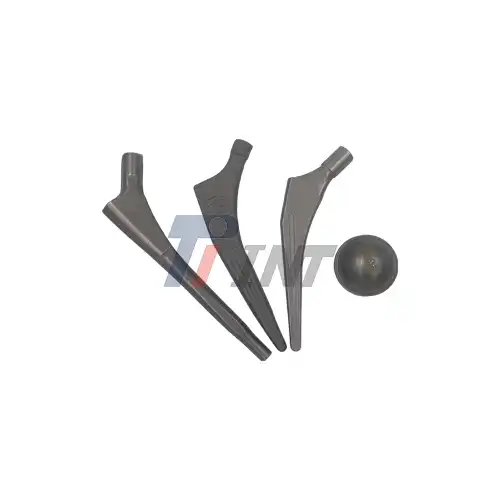
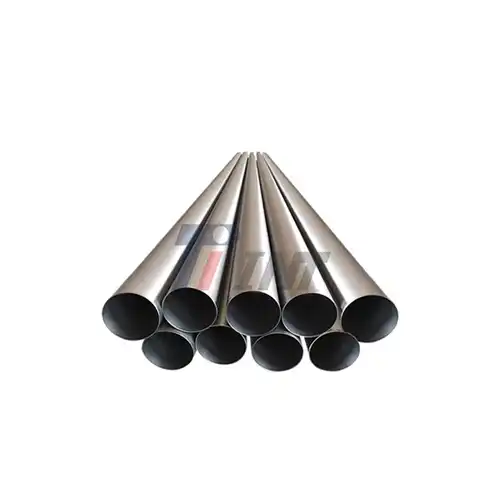
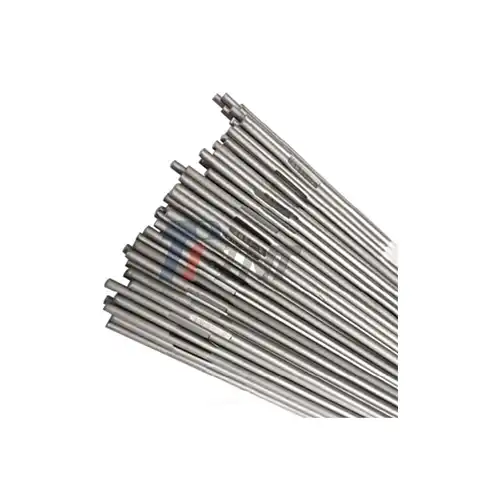
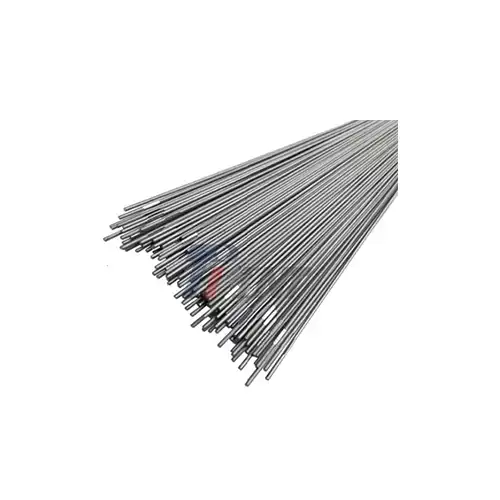
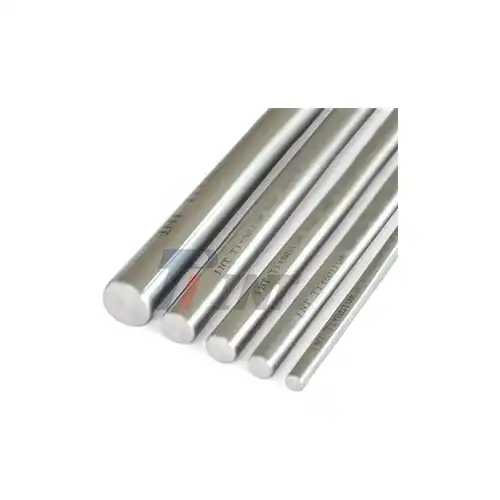
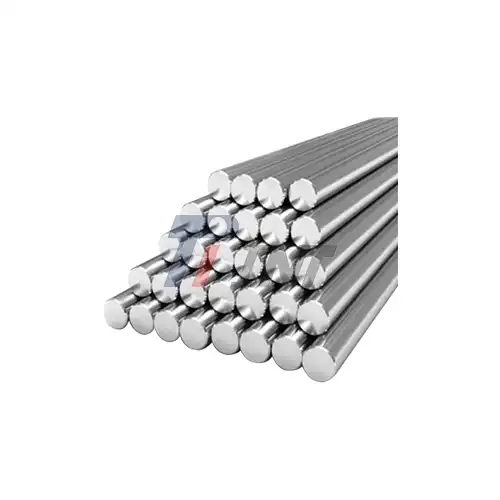
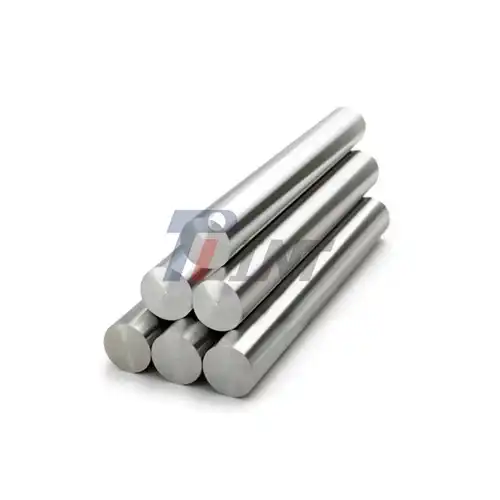
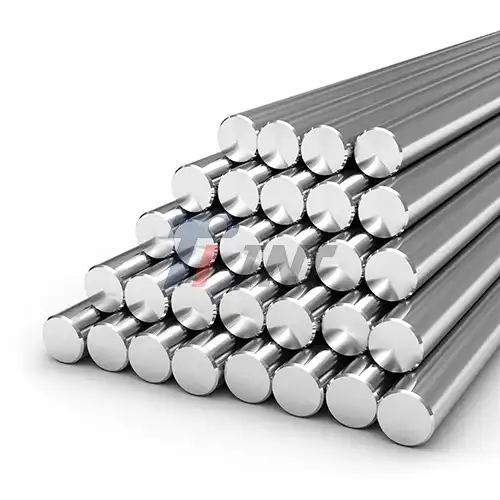
When looking for titanium alloys to make medical devices, it's important to know the difference between standard Ti-6Al-4V and its ELI version so that the products work well and follow the rules. Ti-6Al-4V (Grade 5) is a common alpha-beta titanium metal that has great strength-to-weight ratios. Ti-6Al-4V ELI (Extra Low Interstitial, Grade 23) has lower amounts of interstitial elements and was designed for use in medical implants. Both materials are mostly made up of about 6% aluminum and 4% vanadium, but the ELI form limits the amounts of oxygen, nitrogen, and iron that can be present to much smaller levels. This difference is especially clear when choosing materials like Ti6Al4V Titanium Bar 8mm for surgical tools, since biocompatibility and fracture toughness affect how well the surgery goes in the long run.
|
|
|
Introduction to Medical-Grade Titanium Procurement
A lot of the work that goes into medical devices depends on carefully choosing materials that meet strict international standards and stay cheap during production cycles. In today's interconnected supply chains, it's hard for R&D engineers, buying managers, and production directors to get high-purity titanium materials that meet ISO 5832-3, ASTM F136, and FDA standards, and they also have to make sure that deliveries happen on time. Global buying of titanium alloys has changed from one-time deals to strategic partnerships where sellers provide technical documents, help with tracking materials, and processing knowledge.
In the medical titanium industry, good procurement strategies lower the total cost of ownership by cutting down on material waste, improving the speed of machining, and stopping expensive returns because of material non-conformance. Industry studies show that when companies build long-term partnerships with reliable titanium providers, they can cut down on production delays by up to 23% and keep a closer eye on the quality of the finished medical products. This shows how important it is to choose partners who know not only about the features of metals but also about the complicated rules that guide making medical devices in different markets.
Knowing the subtle differences between titanium types is the first step in making smart decisions about what to buy. The difference between normal Ti-6Al-4V and ELI versions has a direct effect on how products are certified, how they are made, and how safe they are for patients in the end. If procurement workers learn these technical differences, their companies will be better prepared for regulatory audits and be able to speed up the time it takes to make new products.
Understanding Ti-6Al-4V: The Industry Standard Alloy
Since it was first made in the 1950s, Ti-6Al-4V has become the standard metal for use in aircraft, cars, and other industries. This alpha-beta titanium alloy has a dual-phase architecture that makes it very strong. Aluminum keeps the hexagonal close-packed alpha phase stable, and vanadium keeps the body-centered cubic beta phase stable. The final product has tensile forces higher than 895 MPa and a density of only 4.43 g/cm³, which is about 45% lighter than stainless steel options.
Mechanical Properties and Performance Characteristics
The normal guideline for Grade 5 says that the yield strength should be at least 825 MPa when the metal is annealed, and the elongation should be between 10 and 14 percent, based on how it is processed. Because of this, the material can be used for parts that need to be both structurally sound and somewhat flexible. The value of elasticity of the alloy is about 113.8 GPa, which is higher than human bone tissue but still much lower than stainless steel options. When made to exact specs, like Ti6Al4V Titanium Bar 8mm, the material can handle the tight tolerances needed for automatic cutting in high-volume production settings.
When making something, thermal qualities are important to think about because Ti-6Al-4V has a low thermal conductivity of 6.7 W/m·K. Because of this, careful control of the coolant is needed during cutting to keep the work from hardening and the tools from wearing out. The melting point ranges from 1604°C to 1660°C, which is hot enough for a number of different joining and shaping methods. The corrosion resistance is still very good in neutral and oxidizing conditions. However, the performance in reducing acids needs to be carefully evaluated based on the chemicals that are present.
Applications Beyond Medical Devices
Medical uses are a growing market, but standard Ti-6Al-4V is also used in important ways in aircraft fasteners, turbine parts, and high-performance car systems. Because it doesn't break down easily under repeated loads, the material is essential for structural parts of airplanes and landing gear systems. In motorsports, parts like connecting rods and valve springs use the alloy's ability to handle repeated stress cycles while keeping the moving mass as low as possible. Because these applications are so demanding, manufacturing methods and quality control standards have been improved, which helps the production of medical devices.
Ti-6Al-4V ELI: Engineering for Biocompatibility
The Extra Low Interstitial version was created to meet the special needs of surgical implantation, where materials need to stay in close contact with living tissue for long periods of time. Ti-6Al-4V ELI keeps the basic makeup of 6% aluminum and 4% vanadium while putting tighter limits on the interstitial elements. Oxygen level is limited to 0.13% (up from 0.20% in normal grade), iron to 0.25% (up from 0.30%), and nitrogen to 0.03% (down from 0.05%). On paper, these decreases may not seem like much, but they actually make the material stronger against cracks and harder for fatigue cracks to spread.
Enhanced Mechanical Performance for Implants
The managed interstitial content means that the material is more flexible; properly treated material usually has elongation values above 10-15%. This increased flexibility lowers the chance of a brittle fracture when orthopedic implants like femoral stems, tibial plates, and spine fixation devices are loaded in complicated ways. Researchers studying fracture mechanics have found that ELI material is about 25–30% more resistant to cracks starting than normal grade material when put under physiological stress patterns.
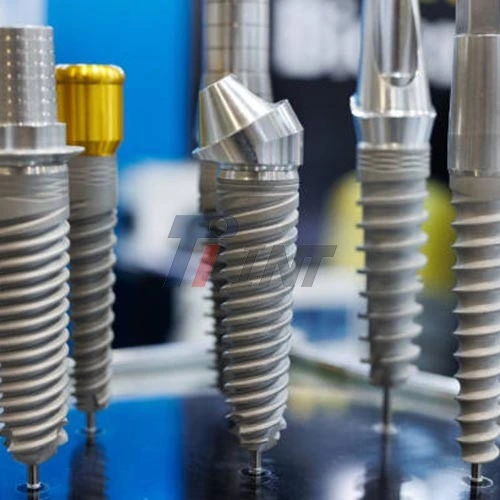
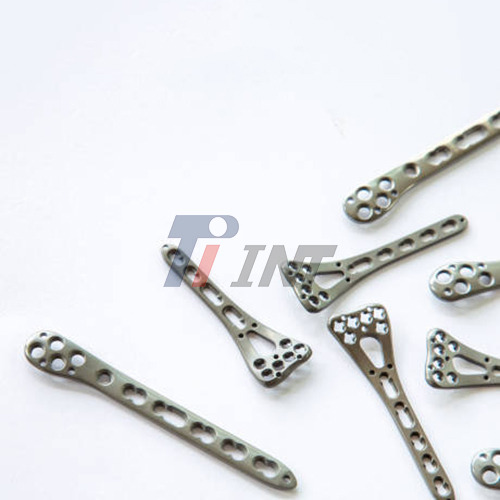
The lower oxygen level also changes the material's elastic elasticity, making it stiffer like cortical bone tissue but less flexible. This alignment helps reduce stress shielding, a problem that happens when implants are too stiff and stop the bone from remodeling normally. This can cause the implant to become free over time. Surgeons and biomechanical engineers are becoming more and more aware that this trait is very important for long-term device integration and patient movement. The material is best for making intramedullary nails, external fixation pins, and tooth abutment blanks when it is made into precise bars with widths like Ti6Al4V Titanium Bar 8mm.
Regulatory Compliance and Certification Requirements
When medical device makers choose ELI material, it is clearly recognized by regulatory systems around the world. ASTM F136 sets clear limits on the composition and mechanical properties of Ti-6Al-4V ELI for use in surgical implants. These limits and standards make the FDA 510(k) filing and CE marking processes easier. ISO 5832-3 also sets worldwide standards that everyone agrees on and that make it easier for people in European, Asian, and emerging markets to reach each other's markets.
Maintaining ISO 13485:2016 certification shows that suppliers use systematic quality management that is especially designed for making medical devices. This makes it easier for buying organizations to do audits. For implant-grade materials, the requirements for traceability go beyond those for regular commercial goods. They need a lot of paperwork, like records of the heat treatment process, certificates of chemical analysis, and mechanical test results that can be linked to specific production lots. This chain of paperwork supports the duty to keep an eye on things after the product has been sold and lets people act quickly if there are any serious problems. Established providers with decades of experience in medical titanium keep strong quality systems that include these standards in all stages of production.
Critical Differences: A Comparative Analysis
To tell these closely related metals apart, you need to look at their chemical limits, differences in mechanical properties, and performance standards that are specific to the application. The next study gives people who work in procurement decision-making models based on technology needs and legal factors.
Chemical Composition Constraints
In standard Ti-6Al-4V, oxygen can make up to 0.20% of the weight, but in ELI, it can only make up to 0.13%. Even though this difference doesn't seem like much, it has a big effect on the structure of the grains and how the phases are distributed during heat processing. The limits for iron content drop from 0.30% to 0.25%, and the limits for nitrogen content drop from 0.05% to 0.03%. The highest amount of carbon that can be in both types is still 0.08%. These intermediate elements move around in the titanium crystal structure and stop dislocations from moving. This makes the material stronger but less flexible and tough.
Residual element requirements are also slightly different between grades, and the amount of hydrogen in the material is closely monitored to keep it from becoming weak. ELI material usually needs hydrogen levels below 0.0125% to keep hydrides from forming while it's being used in physiologically damp conditions. The combined effect of these compositional controls makes material that is easier to predict when it comes to complicated loading situations that are common in implanted devices.
Mechanical Property Variations
Even though both metals are very strong, ELI material has tensile and yield strengths that are 50–100 MPa lower than standard grade in situations that are exactly the same. This trade-off gives up a small amount of strength in exchange for big gains in fracture toughness, which is a key factor in how long an implant lasts. Charpy impact testing shows that ELI material absorbs about 15 to 20 percent more energy before it starts to crack. This means that it is better able to handle quick impact loads during patient activities.
When tested for fatigue performance under spinning beam and axial loading conditions, it was found that ELI material has a longer cycle life at the same stress levels. This quality is especially useful for joint replacements and spinal implants that are loaded and unloaded millions of times over the course of their useful lives. With the right amount of strength, better toughness, and excellent corrosion resistance, ELI material is the best choice when reliable contact with human flesh is needed.
Cost Implications and Supply Chain Considerations
When compared to standard grade, ELI material costs more; usually 15–25% more, based on the shape and amount. This difference is because of stricter controls on processing, more testing needs, and smaller production amounts mainly made by specialized medical titanium makers. When making sourcing choices, purchasing managers have to weigh the prices of materials against the risks of liability and the benefits of following the rules.
Lead times for ELI material are usually two to four weeks longer than for commercial grade because of extra steps needed to check the quality and different ways of melting it. By managing stockpiles and coordinating production plans, suppliers who run separate production efforts for medical-grade materials help make these time constraints less of a problem. Setting up framework deals with qualified suppliers lets you plan supply times that work with the dates for gadget development and regulatory submission.
Key Challenges in Medical Titanium Sourcing
When buying medical titanium, procurement workers face certain problems that need strategic risk management and seller qualification strategies. Understanding these problems makes it easier to work with suppliers and makes the supply chain less vulnerable.
Supplier Qualification and Audit Requirements
No matter what licenses a supplier has, medical device makers are ultimately responsible for the quality of the materials they use. By doing detailed checks of suppliers, you can be sure that quality systems really reflect daily operations and aren't just exercises in paperwork. Effective audits look at systems for tracking raw materials, checking methods during production, records of equipment calibration, and proof of employee training. Even though suppliers with ISO 13485:2016 certification show they have basic skills, they still need to be checked out in person to make sure their practices match what they say in their quality guidebook.
Because titanium metallurgy is so complicated, sellers need to have specialized scientific knowledge that goes beyond their ability to distribute metals in general. As part of the verification process, the heating methods, heat treatment tools, and non-destructive testing methods should all be looked at. Cross-contamination risks are kept to a minimum and lot separation is made easier by suppliers who use separate production lines for medical materials.
Regulatory Compliance Across Multiple Markets
Companies that sell to customers all over the world have to deal with different rules and regulations that guide medical equipment materials. As a general rule, ASTM F136 sets the standards for North America and ISO 5832-3 does the same for Europe. However, developing countries are creating their own standards more and more, which may require more testing or paperwork. Suppliers who have worked with medical devices in foreign markets are aware of how these standards are changing and change quality documentation ahead of time to make it easier for customers to submit to regulatory bodies.
The European Medical Device Regulation (MDR), which went into effect in 2021, made it more important for device manufacturers to keep a close eye on their material sources. Organizations that buy things must make sure that suppliers keep the right technical files that show how they control design, handle risks, and keep an eye on their goods after they've been sold. In this way, standard supplier relationships go beyond just buying things from each other. They become partnerships where professional skills and knowledge of regulations add strategic value.
Quality Assurance and Material Traceability
Implant-grade titanium needs to be fully traceable from the time it is made into an ingot to the time it is turned into a part. This process includes the chemistry of the raw materials, the conditions for melting, the conditions for shaping or rolling, the heat treatment cycles, and the finishing operations on the surface. Suppliers need to keep systems that connect material approvals to specific production lots. This way, if questions come up during the making or using of a device, they can be quickly looked into.
Nonconformance management methods are also very important because even small changes from the requirements may need a lot of research and paperwork. Buying deals should make it clear who is responsible for handling non-conforming materials, including how to secure them, how to decide what to do with them, and what steps need to be taken to fix the problem. Suppliers that have been around for a while and have strong quality systems see non-conformances as chances to keep getting better, not as extra work that needs to be done, particularly when considering Ti6Al4V Titanium Bar 8mm.
Strategic Approaches for Optimized Titanium Procurement
Medical device companies that do well use organized buying plans that include more than just buying things. These plans include working with suppliers to improve their services and come up with new ideas together.
Establishing Qualified Supplier Networks
It costs a lot of money up front to do audits, test samples, and make sure the process works, but having an approved supplier base is important for long-term supply stability. To avoid being too dependent on a single source, the best procurement groups keep approved seller lists that include both primary and secondary sources. Regular re-qualification audits and performance tracking are needed for this approach to make sure it keeps up with changing quality standards and legal requirements.
Tracking on-time delivery, material conformance rates, and responses to technical questions with supplier scorecarding tools gives you concrete performance measures that you can use for regular business reviews. Clear sharing of performance standards and working together to solve problems strengthens relationships with suppliers and encourages them to keep getting better. Top-performing suppliers often get promoted to preferred status, which gives them early access to product development roadmaps and volume forecasts that help with planning capacity and optimizing inventory.
Leveraging Technical Partnerships for Product Development
During the creation stages of a new product, suppliers with a lot of knowledge in metals and processing become useful partners. Their knowledge about how to make things, the best shapes for materials, and the right working conditions can greatly shorten development times and keep expensive design changes from being needed. Having material providers take part in design reviews helps find problems early on that might have to do with material supply, tolerances for size, or surface finish needs.
When people work together, they might come up with custom material specs that fit the needs of each gadget. When suppliers spend money on new melting technologies, specialized heat treatment skills, or creative surface modification methods, they can offer unique solutions that can't be found through channels that deal with standard materials. These relationships often give businesses a competitive edge by making products work better or making factories more efficient, which helps balance out the higher costs of the materials used.
Implementing Data-Driven Procurement Analytics
Data analytics are used by modern procurement teams to find the best inventory levels, predict trends of demand, and negotiate good contract terms. By looking at past patterns of consumption, we can make more accurate predictions about future demand and work together with providers to plan production. This makes it easier to keep track of cash flow and lowers the costs of speeding and having too much inventory.Looking at prices from different sellers and the state of the market helps with negotiating tactics while keeping quality standards high.
Keeping track of landed cost factors like material prices, freight costs, customs taxes, and quality check costs gives a full picture of total acquisition costs. This all-around view helps with deciding whether to make or buy something and finds ways to improve the supply chain by combining or finding other sources of supplies.
Building Long-Term Partnerships with Titanium Suppliers
In the medical device industry, getting a sustainable competitive edge depends more and more on relationships with suppliers that go beyond simple transactions and turn into strategic partnerships based on trust and shared success.
Transparent Communication and Expectations Management
Partnerships that work well start with clear goals about quality standards, service performance, and how to communicate. Reviewing the business on a regular basis gives everyone a chance to talk about performance problems, market trends, and how to best plan for future capacity. Suppliers like being able to see ahead of time what the expected number is and when a new product will be made. This lets them plan their capacity and inventory more effectively, which improves customer shipping performance.
Sharing problems and limits on both sides of a relationship is part of being transparent. When sellers understand the business situation and can quickly gather resources to meet pressing needs, it helps manufacturers who are dealing with sudden increases in demand or regulatory deadline stresses. In the same way, suppliers who are short on raw materials or need to do upkeep on their equipment respect customers who are flexible when they can be and work together to keep problems to a minimum.
Joint Innovation and Continuous Improvement Initiatives
Leading supplier agreements include structured programs for ongoing growth that aim to lower costs, improve quality, and make processes more efficient. Value engineering groups or joint kaizen events find ways to improve material specs, cut down on waste, or make things easier to machine without lowering the standards for performance. These projects often save a lot of money and make it easier for people to work together and learn from each other.
Innovation partnerships may include looking into new technologies like 3D printing titanium parts, improved surface processes that help bone integration, or new alloy formulas that solve certain medical problems. When suppliers invest in research and development (R&D) and stay up to date on developments in university research, they bring useful views to talks about product innovation and may be able to access skills that can't be reached through internal resources alone.
Performance-Based Contracting and Risk Sharing
Performance-based contract designs that match incentives with desired results are becoming more common in mature supplier relationships. Agreements that guarantee stable prices in return for minimum purchases help suppliers see how much demand there is, which helps them make investment decisions, and they give clients predictable cost structures. Quality performance incentives that reward suppliers for delivering materials without any defects urge them to spend in process controls and inspection tools.
Risk-sharing agreements that deal with market volatility or regulatory uncertainty show a dedication to maintaining the relationship over the long run. Some of these arrangements could include ways to change prices based on raw material prices or ways for everyone to share the cost of doing the things needed to get into a new market. Such agreements need a lot of trust, which can be built over time through steady performance and open communication, particularly when dealing with Ti6Al4V Titanium Bar 8mm.
Conclusion
To tell the difference between Ti-6Al-4V and Ti-6Al-4V ELI, you need to know about small differences in their makeup that lead to big changes in how well they work in medical implant uses. Standard Grade 5 material works well in the military and industry sectors, but the Extra Low Interstitial variant is needed for permanent implantable devices because it is more resistant to breaking and is recognized by regulators.
When making sourcing choices, procurement professionals have to weigh the prices of materials against the benefits of compliance, the qualifications of suppliers, and the performance needs of specific applications. Strategic relationships with suppliers based on open communication, technical cooperation, and matched incentives give companies competitive advantages that go beyond just lowering costs. These advantages include support for innovation and supply chain robustness.
FAQ
Can standard Ti-6Al-4V be used for temporary medical devices?
Standard Ti-6Al-4V might work for some short-term medical uses, but it depends on how long it stays in contact with the tissue and how it is controlled. Standard grade material is usually fine for surgical tools that touch flesh for a short time during procedures. External fixation devices that are taken off within a week may also meet standard grade requirements, though specific regulatory advice depends on the device type and the location. When choosing the right material grade for a job, it's important to talk to people who work with regulations and look over relevant standards like ISO 10993 biological evaluation requirements. When it's not clear what level of acceptance is necessary, stating the ELI grade is a safe way to reduce regulatory risk.
How does processing affect the properties of ELI titanium?
The mechanical properties of Ti-6Al-4V ELI material are greatly affected by heat treatment. When you anneal metal at temperatures between 700°C and 800°C, it gets the best mix of strength and flexibility, making it ideal for most implant uses. Solution fixing and then aging can make something much stronger, but it can also make it less flexible and tough, so these treatments aren't used as often on internal devices. When you cold work something by rolling or drawing it, it gets stronger but less flexible, so you have to be very careful to make sure you stay within the specifications. Surface processes like passivation, electropolishing, and coating application change biocompatibility and rust resistance, which are important for the long-term performance of implants.
What documentation should accompany medical-grade titanium purchases?
Full certificates for materials should include a chemical composition analysis for all the elements that are required, test results for mechanical properties like tensile strength, yield strength, and elongation values, and paperwork for heat treatment that shows the processing parameters. Traceability information that connects materials to specific lots of ingots and processing records lets any quality issues that come up be looked into. Compliance statements that prove obedience to relevant standards like ASTM F136 or ISO 5832-3 are used by regulators to back device applications. To meet company compliance plans, many makers also ask for declarations of conformity, material safety data sheets, and comments about where the conflict minerals come from.
Practical Considerations for Material Selection
Aside from basic material specs, buying teams should think about a number of technical and business factors when comparing titanium types for different medical device uses.Prior to choosing a material, it is important to have a full understanding of the device's functional needs, such as its mechanical loading conditions, external exposures, and regulation classification. Implantable devices that stay in place in the body must clearly be made of ELI material that meets ASTM F136 standards.
Surgical tools or brief fixation devices may be able to use standard Grade 5 material successfully, but it depends on the length of exposure and how the regulations are interpreted.Instead of just looking at the price of buying something, a cost-benefit study should look at the whole lifetime of that thing. Even though ELI material costs more, it may be worth it because it can help with regulatory applications, lower your risk of liability, and improve clinical performance.
Our founder has worked in the titanium industry for 30 years, which helps us make process and quality system changes all the time. These help customers by making products more consistent and giving us the ability to solve technology problems. We'd love to talk in more depth about your unique application needs, expected volume, and qualification methods. Get in touch with our expert sales team at export@tiint.com to find out how Baoji INT Medical Titanium Co., Ltd. can help you develop new medical devices as your go-to source for Ti6Al4V Titanium Bar 8mm.
References
1. Donachie, Matthew J. Titanium: A Technical Guide, 2nd Edition. ASM International, 2000.
2. American Society for Testing and Materials. ASTM F136-13: Standard Specification for Wrought Titanium-6Aluminum-4Vanadium ELI (Extra Low Interstitial) Alloy for Surgical Implant Applications. ASTM International, 2013.
3. International Organization for Standardization. ISO 5832-3:2016 Implants for Surgery — Metallic Materials — Part 3: Wrought Titanium 6-Aluminum 4-Vanadium Alloy. ISO, 2016.
4. Rack, H.J., and Qazi, J.I. "Titanium Alloys for Biomedical Applications." Materials Science and Engineering C, vol. 26, no. 8, 2006, pp. 1269-1277.
5. Long, Marc, and Rack, H.J. "Titanium Alloys in Total Joint Replacement—A Materials Science Perspective." Biomaterials, vol. 19, no. 18, 1998, pp. 1621-1639.
6. Boyer, Rodney, Welsch, Gerhard, and Collings, E.W., editors. Materials Properties Handbook: Titanium Alloys. ASM International, 1994.
_1750209732185.webp)