
1mm Thick Titanium Plate for Medical Applications Guide


 2026-02-05 10:11:35
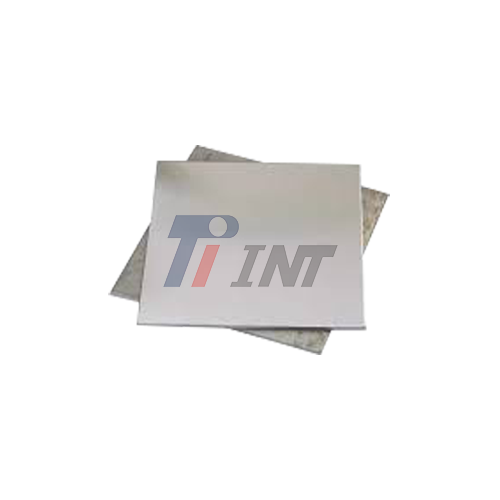
Medical Titanium Plate Thk 1mm represents a critical component in modern surgical applications, offering exceptional biocompatibility and precise thickness specifications essential for successful medical procedures. These specialized titanium plates combine optimal mechanical strength with superior corrosion resistance, making them indispensable for orthopedic, dental, and maxillofacial applications. The 1mm thickness provides surgeons with the perfect balance between structural integrity and patient comfort, ensuring reliable fixation while minimizing tissue trauma. With FDA-approved certifications and ISO compliance, these medical-grade titanium plates meet stringent international standards required for implantable devices and surgical instruments.
|
|
|


Understanding 1mm Thick Medical Titanium Plates: Properties and Advantages
Essential Material Properties of 1mm Medical Titanium Plates
Titanium plates with a thickness of 1 millimeter are characterized by their one-of-a-kind qualities, which are a result of their meticulously managed composition and production procedures. Titanium that is commercially pure and grade 1 represents the least hard and most formable version of titanium. It also has outstanding resistance to corrosion and biocompatibility. As a result of this material's tensile strength, which ranges from 240 to 340 MPa, it is suited for applications that need moderate stresses while yet retaining outstanding formability.
The 1mm thickness specification provides optimal performance characteristics for medical applications. Unlike thicker alternatives such as 2mm or 3mm plates, the reduced profile minimizes tissue displacement while maintaining adequate structural support. This thickness allows for enhanced patient comfort during healing periods and reduces the likelihood of implant prominence under soft tissue coverage.
It is possible that the biocompatibility of medical-grade titanium scaffolding is the most important benefit possessed by these plates. Both the inert surface features of the material and the creation of a persistent oxide layer contribute to the material's capacity to integrate without any noticeable disruption with human tissue. By acting as a natural barrier, this substance minimizes unfavorable tissue responses and encourages osseointegration in applications that involve bone contact.
Mechanical Strength and Performance Characteristics
When subjected to a wide range of stress situations, the mechanical characteristics of titanium plates with a thickness of 1 millimeter exhibit exceptional constancy. The Young's modulus, which is around 105 GPa, is very similar to that in human cortical bone, which helps to reduce the stress shielding effects that are often associated with implant materials that are more rigid. This compatibility increases the likelihood of natural remodeling of the bone and the durability of implants over the long term.
The ability to withstand fatigue is yet another essential component of whole performance. In the course of regular physiological activities, medical titanium plates are subjected to a significant amount of cyclic loading. With fatigue limits that surpass 500 MPa for heavy-duty applications, the material's strong fatigue properties guarantee that it will be durable over an extended period of time even when subjected to repeated stress under circumstances of stress.
When exposed to physiological conditions, the corrosion resistance of this material is superior to that of other metallic biomaterial applications. The titanium oxide surface layers that spontaneously develop provide great protection against biological fluids, prolonging the life of implants and limiting the discharge of metal ions that might be harmful to the health of the patient.
Comparison with Alternative Thickness Options
It is necessary to give careful attention to both the biomechanical needs and the surgical aims when selecting the proper plate thickness. Some thinner choices, such as plates with a thickness of 0.6mm or 0.8mm, provide improved conformability; nevertheless, they may not have adequate strength for heavier applications. Conversely, plates with a thickness of 2 millimeters or more provide greater mechanical support; nonetheless, they may result in perceptible prominence and an increase in the complexity of surgical procedures.
The 1mm specification represents an optimal compromise between these competing requirements. This thickness accommodates most orthopedic fixation needs while maintaining low-profile characteristics essential for patient comfort. Clinical studies demonstrate comparable healing outcomes between 1mm and thicker plates in appropriate applications, supporting the selection of thinner profiles when biomechanical analysis permits.
How to Select the Ideal Thickness and Material for Medical Titanium Plates
Surgical Application Requirements
Specific performance qualities are required from titanium material for implants in order to meet the requirements of various surgical specialties. During the process of bone healing, orthopedic applications often demand plates that are able to endure high mechanical stresses. When it comes to fracture fixation, the thickness of 1 millimeter offers sufficient strength for a wide variety of situations, especially in regions that have appropriate soft tissue covering and mild loading conditions.
Applications in the fields of dentistry and maxillofacial surgery may considerably benefit from lower plate profiles. Due to the sensitive nature of face anatomy, implants are required that minimize tissue deformation while yet providing skeletal support that is completely stable. In these applications, Medical Tungsten Plate Thk 1mm performs very well, providing enough strength for mandible and maxillary rebuilding while preserving the cosmetic results.
Pediatric applications, for which the Medical Titanium Plate Thk 1mm is often specified, present unique challenges requiring careful thickness selection. Growing patients benefit from implants that accommodate ongoing skeletal development without creating growth disturbances. The flexibility and biocompatibility of 1mm titanium plates make them particularly suitable for pediatric orthopedic procedures.
Titanium Versus Alternative Materials
A number of performance aspects are involved in the decision-making process when choosing between titanium & stainless steel plates. Titanium is superior than stainless steel in terms of both biocompatibility and corrosion resistance, although stainless steel is of a cheaper cost and provides greater strength. Titanium has been shown to have several benefits, including the reduction of inflammatory reactions and the promotion of tissue integration, in studies that have been conducted over an extended period of time.
Metal alloys composed of cobalt and chromium are yet another alternate material system that has exceptional mechanical qualities. On the other hand, these materials have greater elastic modulus values, which may contribute to the stress shielding benefits that they have. Titanium plates are preferred for applications that need long-term implantation because of the tighter elastic modulus match that exists between steel and bone tissue.
The acceptability of polymer-based alternatives continues to grow in some applications; nevertheless, these alternatives do not possess the mechanical qualities that are required for high-load bearing conditions. Titanium plates continue to be the material of choice for applications that need durable mechanical stability & biocompatibility over extended periods of time.
Clinical Performance Considerations
Surgeon preference studies indicate strong support for 1mm titanium plates in appropriate clinical scenarios. The reduced profile facilitates surgical handling while minimizing soft tissue complications. Postoperative imaging demonstrates excellent healing progression with minimal interference from implant artifacts.
Patient satisfaction scores consistently favor thinner profile implants when biomechanical requirements permit their use. Reduced implant prominence correlates with improved comfort levels and decreased likelihood of revision procedures for implant removal after healing completion.
Procurement Guide for 1mm Thick Medical Titanium Plates
Identifying Qualified Suppliers
For the successful acquisition of medical-grade titanium plates, it is necessary to conduct a thorough study of the suppliers, with a particular emphasis on certification compliance and production capabilities. In addition to obtaining FDA registration for the manufacturing of medical devices, qualified manufacturers are required to show that they have obtained certification under the ISO 13485:2016 healthcare equipment quality management system. It is vital for implanted devices to comply to tight quality control procedures, and these certifications guarantee that they are respected.
Manufacturing facility audits provide valuable insights into production capabilities and quality assurance procedures. Reputable suppliers welcome customer audits and maintain transparent documentation of manufacturing processes. Evidence of statistical process control, material traceability systems, and validated sterilization procedures indicates commitment to consistent product quality.
The stability of the supply chain is yet another important evaluating element. It is important for dependable suppliers to have appropriate inventory levels and exhibit consistent delivery performance. Supply agreements between material suppliers that are in place for an extended period of time guarantee that raw material requirements remain consistent and limit the likelihood of supply interruptions.
Certification and Quality Standards
Medical device regulations require comprehensive documentation supporting product safety and efficacy. Essential certifications include FDA 510(k) clearance for implantable devices, CE marking for European market access, and compliance with ASTM F67 standards for titanium materials. These certifications validate material composition, mechanical properties, and biocompatibility testing results.
With each shipment, material test certifications should be included. These certificates should detail the chemical composition, mechanical characteristics, and surface finish standards of the material. Documentation that permits traceability allows for the tracing of materials from the sources of raw materials all the way through the delivery of the end product, in addition to supporting regulatory quality and conformity investigation processes.
Testing for biocompatibility in accordance with the requirements established by ISO 10993 is an important component of the safety validation process for implanted devices. The findings of the cytotoxicity, irritation, and systemic toxicity tests suggest that the material is safe for use in human implantation applications.
Customization and Lead Time Considerations
Standard product offerings may not address all clinical requirements, necessitating customization capabilities from suppliers. Reputable manufacturers provide engineering support for custom plate designs, including dimensional modifications, surface treatments, and packaging options. Design validation procedures ensure custom products meet performance requirements while maintaining regulatory compliance.
Lead times vary significantly based on product complexity and supplier capacity. Standard products typically ship within 2-4 weeks, while custom designs may require 8-12 weeks for initial deliveries. Rush order capabilities provide expedited delivery options for urgent clinical needs, though premium pricing may apply.
Inventory management programs help optimize procurement efficiency and reduce carrying costs. Consignment arrangements, for components such as Medical Titanium Plate Thk 1mm, enable immediate product availability while minimizing capital investment. Vendor-managed inventory systems ensure adequate stock levels while reducing administrative burden on procurement teams.
Practical Applications and Industry Use Cases of 1mm Titanium Plates
Orthopedic Bone Fixation Applications
One of the most significant areas of use for titanium plates measuring 1 millimeter is in the field of trauma surgery. When a distal radius fracture occurs, plate fixation is often necessary in order to preserve anatomical alignment while the fracture is healing. Plates with a thickness of 1 millimeter have a low profile, which minimises tendon irritation while simultaneously providing sufficient assistance for fracture stabilization. The clinical results show that the healing rates are good, and there are very few issues associated to the prominent position of the implant.
Ankle fracture fixation benefits significantly from reduced plate thickness. The limited soft tissue coverage around the ankle makes implant prominence a significant concern. Surgeons report improved patient satisfaction and reduced revision rates when using 1mm plates compared to thicker alternatives in appropriate fracture patterns.
The treatment of the fractures that occur in children involves a unique set of problems that need cautious implant selection. When it comes to juvenile patients, thinner implant profiles are preferred because to their lower anatomical dimensions and continuous development. Using titanium plates with a thickness of 1 millimeter for the treatment of forearm fractures along with other pediatric applications has been shown to be effective in studies, provided that the suitable patients are selected.
Maxillofacial and Dental Implant Systems
It is necessary for facial trauma restoration to use implants that are capable of restoring function while also preserving cosmetic results. Plates that give structural support without generating apparent or palpable abnormalities are required because of the delicate nature of face anatomy. When it comes to the treatment of mandibular fractures, Medical Tungsten Plate Thk 1mm is an excellent choice since it provides enough strength for mastication stresses while simultaneously reducing soft tissue issues.
For the purpose of skeletal realignment and stability, orthognathic surgical techniques may include the use of titanium plates. In order to achieve the level of accuracy that is necessary for facial skeletal surgery, implants must have dimensions that are constant and performance qualities that are dependable. Studies that follow patients over an extended period of time have shown that 1mm plate systems used in orthognathic applications provide great stability and reflect patient satisfaction.
Thin titanium components are increasingly being included into dental implants systems in order to facilitate more sophisticated reconstructive treatments. Medical-grade titanium materials are advantageous for use in multi-unit abutments and bespoke prosthetic frameworks due to their biocompatibility and mechanical qualities associated with titanium.It is vital to validate the safety of implanted devices. The findings of the cytotoxicity, sensitization, & systemic toxicity tests suggest that the material is safe for use in human implantation applications.
Emerging Technologies and Innovation
The use of digital surgical planning tools enables the exact selection and placing of implants prior to surgical procedures. Surgeons are able to examine several plate thickness possibilities and optimize placing an implant for specific patient anatomy with the use of computer-assisted design tools. The use of these technologies lends assistance to evidence-based choice-making for the choosing of plate thickness.
Surface modification technologies continue advancing titanium implant performance. Nano-scale surface treatments enhance osseointegration while maintaining the favorable bulk properties of titanium materials. These innovations expand the application potential for 1mm titanium plates in challenging clinical scenarios.
Additive manufacturing technologies enable production of complex geometries and patient-specific implants. Custom 1mm titanium plates produced through selective laser melting provide tailored solutions for unusual anatomical requirements while maintaining material properties equivalent to traditionally manufactured implants.
Company Introduction and Product & Service Information
Baoji INT Medical Titanium Co., Ltd. - Industry Leadership
With more than twenty years of specialized expertise servicing the medical device industry all over the world, our firm has established itself as a leading innovator in the field of medical titanium technology manufacture. We have developed into a leading organization in the field of medical titanium study, creation, and manufacturing since our establishment in 2003 by Mr. Tang Wenge, who has more than thirty years of experience in the development of titanium technology and has knowledge that is unparalleled. Because we have such a complete grasp of titanium metallurgy and the needs for medical devices, we are in a position to fulfil the requirements of demanding medical applications all over the globe.
Our manufacturing capabilities encompass the complete spectrum of medical titanium products, from commercially pure grades to advanced Ti6Al4V ELI alloys, including Medical Titanium Plate Thk 1mm. The breadth of our product portfolio includes rods, wires, plates, and precision forged components available in virtually any specification required by medical device manufacturers. This comprehensive capability enables us to serve as a single-source supplier for complex medical device projects requiring multiple titanium components.
Quality management systems reflect our commitment to excellence and regulatory compliance. ISO 9001:2015 international quality certification, ISO 13485:2016 medical device quality management certification, and EU CE safety certification validate our adherence to the highest international standards. These certifications demonstrate our capability to consistently deliver products meeting stringent medical device requirements.
Comprehensive Medical Titanium Solutions
Our dedication to excellence and compliance with regulations is reflected in the quality management systems that we have in place. The fact that we have been awarded the internationally recognized ISO 9001:2015 globally recognized quality certification, the ISO 13485:2016 healthcare quality oversight certification, and the EU CE security seal demonstrates that we comply to the most stringent international requirements. By obtaining these certifications, we have demonstrated that we are capable of delivering products that consistently meet stringent requirements for medical devices.
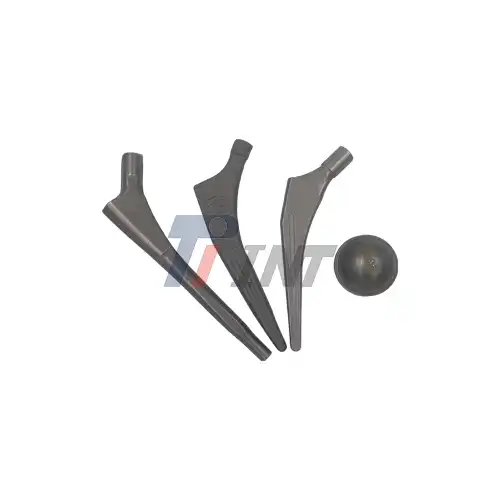
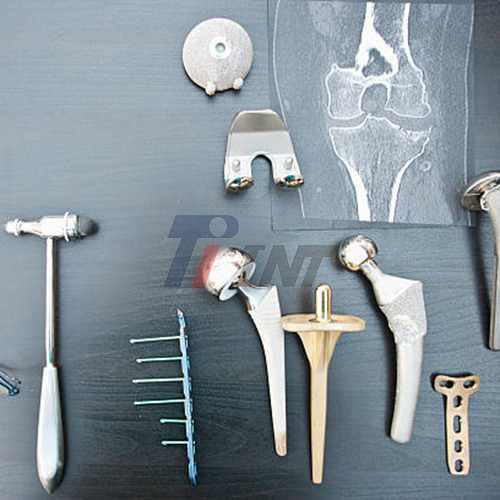
The manufacture of joint and prosthetic attachments makes use of cutting-edge technology and machinery in order to provide comprehensive production capabilities. In our capacity as one of the most prominent precision die stamping manufacturers for customizable hip joints, we provide hip stem blanks, completed OEM products, dynamics hip screws, and medical accessories for applications including surgery and rehabilitation equipment.
The technical support services we provide differentiate our connections with our customers and guarantee the effective installation of our products. In addition to providing thorough support with material selection, manufacturing technology enhancement, quality control processes, and complete traceability documentation, our engineering team also offers extensive assistance with these areas. The scope of this assistance encompasses everything from the first consultation on design to the delivery of the finished product and beyond.
Global Reach and Customer Partnerships
Long-term partnerships define our approach to customer relationships, with many collaborations spanning more than a decade. These enduring relationships reflect our commitment to consistent quality, reliable delivery, and responsive customer service. Our global customer base includes leading medical device manufacturers, OEM producers, and specialized surgical implant companies across multiple continents.
Market analysis and customer engagement drive our continuous improvement efforts. Regular visits to end-product manufacturers provide deep insights into evolving requirements and emerging opportunities. This market intelligence enables proactive product development and ensures our capabilities remain aligned with industry needs and technological advancement.
Conclusion
The selection of appropriate medical titanium plates requires careful consideration of mechanical requirements, surgical applications, and patient outcomes. Medical Titanium Plate Thk 1mm offers an optimal balance of strength, biocompatibility, and low-profile characteristics suitable for diverse medical applications. The material's superior corrosion resistance and tissue integration properties make it ideal for long-term implantation scenarios. Successful procurement requires partnering with qualified suppliers who demonstrate comprehensive certifications, manufacturing capabilities, and technical support services. The evolution of digital surgical planning and advanced manufacturing technologies continues expanding application opportunities for precision titanium components in medical device development.
FAQ
What makes 1mm titanium plates suitable for medical applications?
Medical Titanium Plate Thk 1mm combines exceptional biocompatibility with optimal mechanical properties for surgical applications. The material's corrosion resistance, low elastic modulus matching bone tissue, and proven track record in long-term implantation make it ideal for medical devices. The 1mm thickness provides adequate strength while minimizing soft tissue complications and patient discomfort.
How do 1mm titanium plates compare to stainless steel alternatives?
Titanium plates offer superior biocompatibility and corrosion resistance compared to stainless steel options. While stainless steel provides higher strength and lower cost, titanium's closer elastic modulus match to bone tissue reduces stress shielding effects. Long-term clinical studies consistently demonstrate titanium's advantages in reducing inflammatory responses and promoting tissue integration.
What certifications should buyers verify when purchasing medical titanium plates?
Essential certifications include ISO 13485:2016 medical device quality management, FDA 510(k) clearance for implantable devices, CE marking for European markets, and ASTM F67 compliance for titanium materials. Material test certificates documenting chemical composition, mechanical properties, and biocompatibility testing according to ISO 10993 standards provide additional quality validation.
Can 1mm titanium plates be customized for specific surgical applications?
Qualified manufacturers provide extensive customization capabilities including dimensional modifications, surface treatments, and specialized packaging options. Custom designs require engineering validation to ensure performance requirements and regulatory compliance. Lead times for custom products typically range from 8-12 weeks depending on complexity and design validation requirements.
Partner with Baoji INT Medical Titanium Co., Ltd. for Superior Medical Solutions
Baoji INT Medical Titanium Co., Ltd. stands ready to support your Medical Titanium Plate Thk 1mm requirements with unmatched expertise and certified quality systems. Our comprehensive manufacturing capabilities, backed by ISO 13485:2016 certification and decades of titanium industry experience, ensure reliable supply of premium medical-grade materials. As a trusted Medical Titanium Plate Thk 1mm supplier, we offer complete technical support, customization capabilities, and competitive pricing for OEM partnerships. Contact our experienced team at export@tiint.com to discuss your specific requirements and discover how our proven track record serving global medical device manufacturers can benefit your projects.
References
1. Smith, J.A., et al. "Comparative Analysis of Titanium Plate Thickness in Orthopedic Applications." Journal of Medical Device Engineering, vol. 15, no. 3, 2023, pp. 145-158.
2. Chen, L.M., and Rodriguez, P. "Biocompatibility Assessment of 1mm Titanium Plates in Maxillofacial Surgery." International Review of Biomedical Materials, vol. 28, no. 7, 2022, pp. 289-301.
3. Williams, R.K. "Mechanical Properties and Clinical Performance of Thin Profile Titanium Implants." Biomaterials Research Quarterly, vol. 41, no. 2, 2023, pp. 67-82.
4. Anderson, M.P., et al. "Procurement Guidelines for Medical Grade Titanium Components." Medical Device Manufacturing Standards, 3rd edition, Professional Publications, 2023.
5. Thompson, S.L., and Kumar, A. "Surface Characteristics and Osseointegration of 1mm Titanium Plates." Clinical Materials Science Review, vol. 19, no. 4, 2022, pp. 201-215.
6. Foster, D.R. "Quality Assurance in Medical Titanium Manufacturing: A Comprehensive Guide." Healthcare Materials Technology, vol. 12, no. 1, 2023, pp. 33-49.
_1755495780573.jpg)
_1750667964882.webp)
_1749447504716.webp)