
A Brief Overview of the Titanium Alloy Rolling Process


 2026-04-02 10:29:58
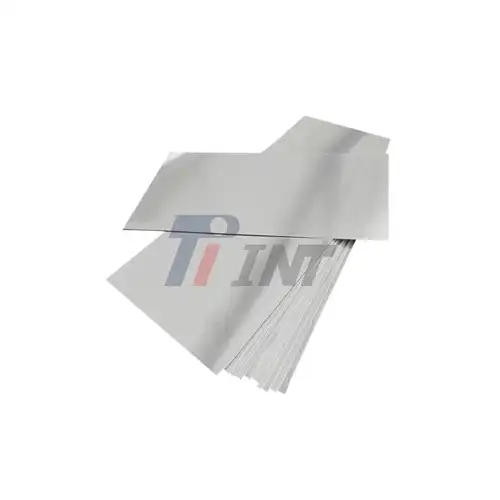
One of the most complex metalworking processes used in modern production is rolling titanium alloy, which turns raw titanium billets into precision-engineered goods like Gr5 Titanium Alloy Foil. To get the unique properties that make titanium alloys so important in medical device making, aircraft uses, and high-performance industrial parts, this complicated process includes several steps of controlled heating, mechanical deformation, and careful handling.
|
|
|
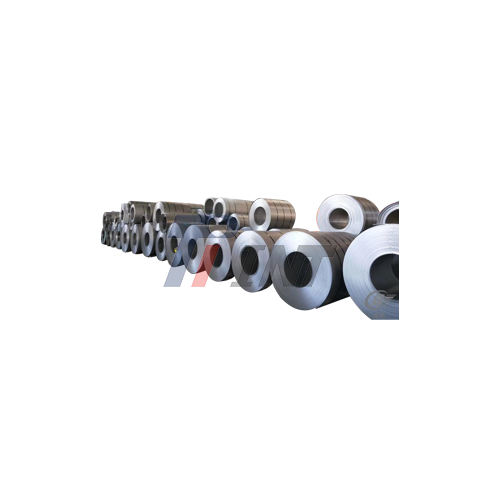
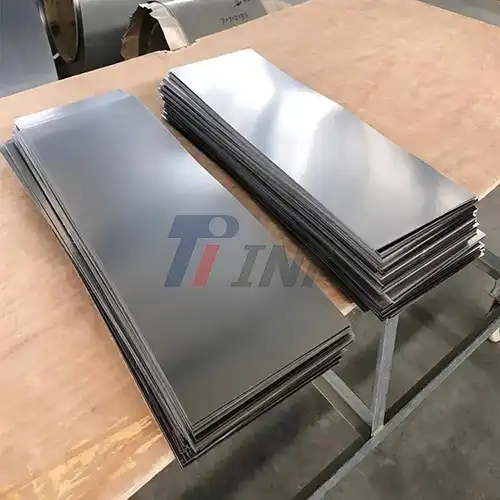
Understanding the Titanium Alloy Rolling Process
Mastering the complicated rolling process that turns raw titanium into useful shapes is the key to making high-quality titanium goods. The unique properties of titanium alloys, such as its high strength, low heat conductivity, and susceptibility to contamination during processing, make rolling them very precise.
Hot Rolling vs Cold Rolling Techniques
Whether titanium goods are rolled hot or cold has a big impact on their end properties. Hot rolling happens at temperatures between 800°C and 1000°C, which makes it possible to reduce the thickness of a material while keeping its flexibility. This process is necessary for the first breaking passes that need to cause a lot of distortion. The high temperatures make the material less resistant to distortion, which speeds up the working and reduces the wear on the equipment.
Cold rolling is done at room temperature and gives the metal a better finish on the outside and more accurate measurements. When making thin-gauge materials, where exact thickness control is very important, this method becomes even more important. The work strengthening that happens during cold rolling actually makes the finished product stronger, which makes it perfect for uses that need high mechanical performance.
Billet Preparation and Rolling Mill Operation
Carefully preparing the block is the first step to successful titanium rolling. The raw material is carefully checked for flaws on the surface, its chemical makeup is confirmed, and it is heated according to the right procedures. Titanium reacts with oxygen at high temperatures, so the atmosphere has to be carefully managed throughout the process.
Modern rolling mills with complex control systems can precisely reduce the thickness of a material while keeping its features the same. Titanium is not very flexible at room temperature and tends to harden after being worked on, so the rolling plan has to take these things into mind. For each pass through the mill, the reduction ratios have to be carefully calculated to make sure that there are no cracks or other surface flaws that could lower the quality of the finished product.
Post-Rolling Treatments and Quality Control
After rolling, the material goes through important post-processing steps that decide its final properties. Vacuum annealing is very important because it relieves internal stresses that built up during bending and stops the growth of rigid oxide layers on the surface of the material. This controlled heat treatment method takes place in oxygen-free spaces to keep the material's natural ability to fight corrosion and be compatible with living things.
Finishing the surfaces of rolled goods makes sure they meet strict quality standards for use in medical and military settings. These steps get rid of any rough spots on the surface and leave it with a smooth finish, which is needed for important uses where the quality of the surface directly affects performance.
Key Properties and Benefits of Gr5 Titanium Alloy Foil
Ti-6Al-4V, which is also known as Grade 5 titanium alloy, is the most common type of titanium alloy used in tough situations. Through the rolling process, this alpha-beta metal is turned into very thin foils that keep their great mechanical qualities and open up new design options for making medical devices.
Chemical Composition and Strength Characteristics
Gr5 Titanium Alloy Foil has great qualities because it has a carefully controlled chemical makeup that includes about 6% aluminum and 4% vanadium. This mix of alloys strikes the perfect balance between strength and workability, giving the metal compressive strengths of over 895 MPa while still exhibiting great fatigue resistance.
The rolling process improves the microstructure of Ti-6Al-4V, making a fine-grained structure that makes the metal stronger and more flexible. This microstructural control makes it possible to make foil as thin as 0.01 mm while still keeping the strength needed for tough uses. The material's yield strength is usually at least 828 MPa, which gives important uses a lot of room for error.
Lightweight and High-Strength Advantages
The high strength-to-weight ratio of Grade 5 titanium foil solves important design problems in medical and aircraft fields. Even though it's only 4.43 g/cm³ dense, this material is about 45% lighter than steel but has the same level of power. This weight loss is very important in situations where optimizing mass has a direct effect on performance or patient happiness.
Because the material can keep its mechanical qualities at temperatures up to 400°C, it can be used in more places than just rooms with room temperature. Because it is thermally stable and doesn't conduct heat well, it's perfect for use as a thermal shield and in parts that are subject to changing temperatures.
Heat Treatment Effects on Performance
Controlled heat treatment before and after rolling makes the nanostructures work best for certain tasks. Solution treatment followed by age can improve strength even more, and stress relief annealing keeps precision parts stable in their dimensions. With these thermal methods, makers can change the qualities of materials to fit the needs of specific applications, while still keeping the high corrosion resistance that titanium alloys are known for.
Comparative Analysis of Gr5 Titanium Alloy Foil vs Other Alloys
To choose the right titanium grade, you need to know how the different metal systems work and what their unique properties are. This comparison helps buying managers make smart choices based on the needs of the product and the cost.
Performance Comparison with Gr2 and Gr9 Foils
Grade 2 economically pure titanium is very good at resisting rust and being shaped, but it's not as strong as Gr5 Titanium Alloy Foil. While Gr2 works well enough for less challenging tasks, its tensile strength is usually only 345 MPa, which means it can't be used for high-stress tasks. Gr5 is stronger than other materials, so it can have smaller walls and lighter weight in important parts.
This grade, 9 (Ti-3Al-2.5V), is in the middle of commercially pure titanium and Gr5. It is stronger than Gr2 while still being easy to shape. However, its tensile strength of about 620 MPa is still lower than Gr5's, which means it can't be used in situations where maximum strength-to-weight optimization is needed.
Advantages in Aerospace and Medical Applications
Gr5's ability to resist high-cycle fatigue loading while keeping its structural integrity is very important to the aircraft business. Because it doesn't wear down easily, lightweight parts can be made that can withstand millions of stress cycles without breaking. The fact that the material is not magnetic is very important in medical uses, especially for systems that need to work with MRIs.
When making medical devices, the biocompatibility of Gr5 titanium metal meets the strict needs for devices that are implanted. The material doesn't react with the immune system and doesn't absorb body fluids, so it's perfect for long-term implants where material compatibility has a direct effect on how well the patient does.
Decision Criteria for Material Selection
To choose between Gr5, Gr23, and Gr7, you have to weigh the needs of the application against the material's powers and the cost. Gr23 (Ti-6Al-4V ELI) has some of the same qualities as Gr5 but better control over the interstitial elements, which makes it a better choice for medical devices that are implanted. The extra controls during processing make it more expensive, but they also make it more certain that the product is biocompatible.
Grade 7 has palladium added to it to make it more resistant to rust in harsh settings. This grade is better at resisting chemicals, but because it's more expensive, it can only be used in situations where regular titanium grades don't work.
Procurement Insights for Gr5 Titanium Alloy Foil
To successfully buy high-quality titanium foil, you need to know what the provider can do, how their quality system works, and how the market works. Because handling titanium is so specialized, there aren't many qualified suppliers. This makes choosing suppliers very important for making sure supply lines are reliable.
Supplier Qualification and Certification Requirements
Suppliers with a good reputation keep full quality management systems that are approved to ISO 9001:2015 and ISO 13485:2016 for medical uses. These certificates show that sellers follow controlled procedures that are needed to make sure that the quality of the products is always the same. The technical standards that qualified materials must meet are set out in ASTM and AMS guidelines.
Factory audits look at more than just certification papers; they also check the state of tools, process controls, and quality assurance methods. Suppliers who have special tools for handling titanium show that they understand the unique needs of manufacturing titanium. The fact that vacuum annealing and neutral atmosphere handling tools are available shows that the process is being controlled correctly.
Pricing Factors and Lead Time Considerations
Titanium foil is expensive because it has to be processed in a complicated way and needs special tools to be made. The cost structure takes into account the prices of raw materials, the difficulty of handling, and the need for quality control. Knowing about these things helps procurement managers look at quotes and set reasonable price goals.
Lead times for custom standards are usually between 8 and 16 weeks, but they vary on the amount and thickness needs. goods with standard thickness may have lower wait times, but goods with custom measurements need to be made in dedicated production runs. By planning your purchases around these wait times, you can avoid production delays and save money on shipping costs.
Building Long-Term Supplier Relationships
Establishing relationships with qualified titanium suppliers, such as those providing Gr5 Titanium Alloy Foil, fosters mutual benefits through improved communication, production scheduling flexibility, and collaborative problem-solving. Committed suppliers invest in understanding customer applications and can provide technical assistance during product development phases. These partnerships often yield preferential pricing through volume commitments and reduced administrative costs via streamlined procurement processes.
Regular reviews of the supplier's work make sure that they can keep doing their job and find ways to make things better. Suppliers who consistently provide high quality goods, deliver on time, and offer helpful technical support should be given more business.
Advanced Insights: Optimizing the Rolling Process for Superior Gr5 Titanium Alloy Foil
Titanium rolling methods are always getting better, which leads to better products and more efficient production. Modern process control tools and new ways of doing things solve old problems and open up new possibilities in thin-gauge production.
Process Control and Quality Assurance
Modern rolling mills have automatic gauge control systems and real-time thickness tracking systems that make sure that exact tolerances in dimensions are kept throughout production runs. These methods account for things like changes in temperature, roll wear, and changes in the properties of the material. Statistical process control methods find trends before they cause goods to not meet specifications.
Quality assurance is more than just checking the sizes; it also includes trying the material properties, looking at the microstructure, and judging the quality of the surface. Non-destructive testing methods make sure that materials are solid without affecting the output of the product. Traceability systems keep track of materials from where they are made to the point where they are inspected, giving full records for important uses.
Emerging Technologies and Innovation
Advanced rolling methods, like asymmetric rolling and multi-pass temperature control, make it easier to control the microstructure and make sure that all of the properties are the same. These new ideas make it possible to make Gr5 Titanium Alloy Foil with a smoother surface and consistent mechanical properties.
Computer modeling of the rolling process helps find the best pass plans and guess what the end properties will be before production starts. This feature cuts down on the time it takes to make new goods and the amount of material that is wasted during process improvement. Predictive maintenance systems check the state of equipment and plan maintenance tasks to avoid downtime that comes up out of the blue.
Customer Collaboration and Customization
Successful titanium providers work closely with customers to understand their needs and come up with the best solutions. When you work together, you can often find ways to change materials or processes that make the end result better while also cutting costs. In some situations, custom metal formulas or specialized processing methods may give you an edge over your competitors.
Rolling methods and quality systems are always getting better thanks to feedback from customer apps. Suppliers who actively ask for and react to customer feedback show that they want to work with customers for a long time. Technical studies done on a regular basis make sure that process changes are made to meet changing application needs.
Conclusion
The titanium alloy rolling method is a complex mix of metallurgical science and precise production that turns raw materials into high-performance items that are needed in medical and aerospace uses today. Knowing the ins and outs of hot and cold rolling methods, post-processing treatments, and quality control measures helps you make smart choices about which materials to use and which suppliers to work with. The best features of Gr5 Titanium Alloy Foil make it necessary for uses that need high strength-to-weight ratios, resistance to rust, and biocompatibility. To successfully buy titanium, you need to work with qualified providers who can show that they have full control over the process, the right certifications, and a desire to always making things better. As technology for making things gets better, titanium rolling methods keep getting better, which opens up new uses and makes key parts work better.
FAQ
Q1: Why is Gr5 Titanium Alloy Foil preferred over other grades for aerospace applications?
A: For aircraft parts, Gr5 is the best material for getting the right mix of strength, weight reduction, and wear resistance. Its tensile strength is higher than 895 MPa, which lets thinner pieces be used while still keeping the structure strong under high-cycle stress. The material is stable at high temperatures and doesn't rust, so it will work well for a long time in harsh settings.
Q2: What mechanical property improvements result from the rolling process?
A: The substructure of Ti-6Al-4V is improved by rolling it, making a fine-grained structure that makes it stronger and more flexible. The controlled deformation and following heat treatment improve the spread of the alpha-beta phase, which makes the material more resistant to fatigue and improves the consistency of its mechanical properties across its length.
Q3: Which certifications should buyers verify when procuring titanium foil?
A: Some important certifications are ISO 9001:2015 for quality control systems, ISO 13485:2016 for medical device uses, and meeting the requirements of ASTM B265 or AMS 4911. Material test papers should list the chemical make-up, mechanical qualities, and size requirements of the material. More quality guarantee comes from traceability paperwork that connects the finished product to the source ingot.
Q4: How does vacuum annealing affect foil properties?
A: Vacuum annealing reduces the forces inside a material that have been rolled while stopping oxide from forming on its sides. This process keeps the material's ability to fight rust and be biocompatible while making it more flexible for shaping. The controlled oxygen keeps out contaminants that could damage the surface quality or mechanical features.
Q5: What factors influence the minimum achievable thickness for Gr5 foil?
A: The thinnest width is determined by the rolling mill's powers, the properties of the material, and the quality standards. Thickening can be done as thin as 0.01 mm with advanced precision rolling, but it needs special tools and careful process control. The work hardening and spring-back qualities of the material affect the standards that can be reached at very thin gauges.
Partner with Baoji INT Medical Titanium Co., Ltd. for Superior Gr5 Titanium Alloy Foil
With more than 20 years of experience, Baoji INT Medical Titanium Co., Ltd. has been making high-quality Gr5 Titanium Alloy Foil for use in medical devices and spacecraft. Our ISO 13485:2016-certified plant uses cutting-edge vacuum melting and rolling technologies to make sure that the quality is always high and the products work well. We know the important steps needed to make medical devices and will help you with all of your scientific questions throughout the whole process. Our research team works with you to make sure that the qualities of the material are best for your needs, whether you need standard specifications or custom measurements. Email our expert team at export@tiint.com to talk about your needs and get full technical details. Get a quote today and find out why top makers choose us as their go-to source for mission-critical Gr5 Titanium Alloy Foil needs.
References
1. Donachie, M.J. "Titanium: A Technical Guide, 2nd Edition." ASM International Materials Park, 2000.
2. Boyer, R., Welsch, G., and Collings, E.W. "Materials Properties Handbook: Titanium Alloys." 1994. ASM International.
3. Lutjering, G. and Williams, J.C. "Titanium: Engineering Materials and Processes, 2nd Edition." Springer-Verlag Berlin Heidelberg, 2007.
4. Peters, M., Kumpfert, J., Ward, C.H., and Leyens, C. "Titanium Alloys for Aerospace Applications." Advanced Engineering Materials, Volume 5, 2003.
5. Rack, H.J. and Qazi, J.I. "Titanium Alloys for Biomedical Applications." Materials Science and Engineering C, Volume 26, 2006.
6. Veiga, C., Davim, J.P., and Loureiro, A.J.R. "Properties and Applications of Titanium Alloys: A Brief Review." Reviews on Advanced Materials Science, Volume 32, 2012.
_1753927576158.png)
_1751620280646.webp)
_1750668405487.webp)