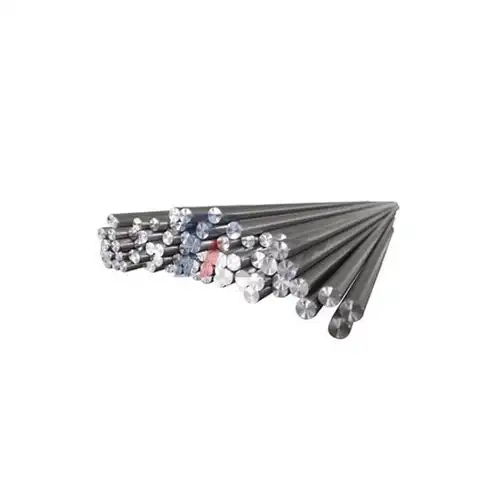
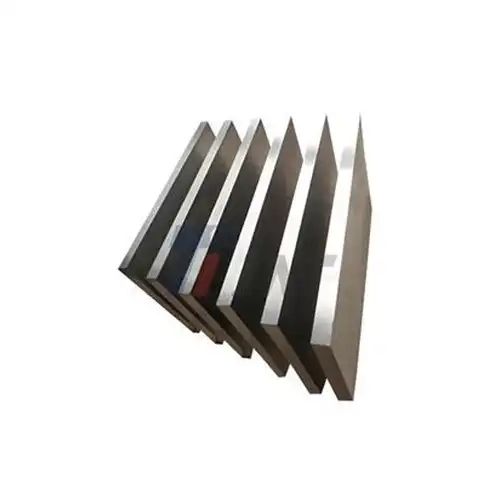
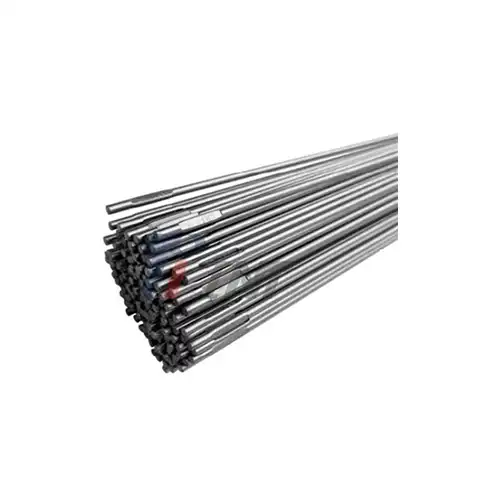
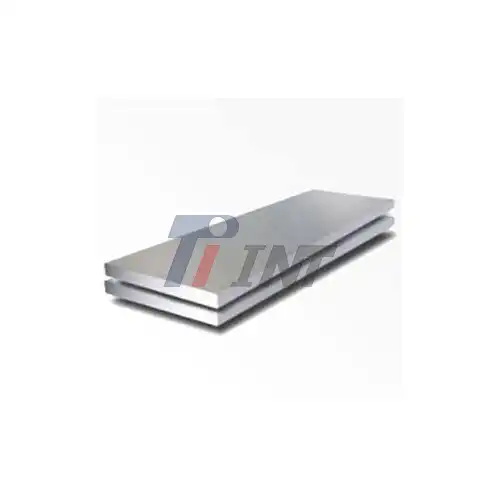
Gr5 Titanium Disc vs Gr1 Titanium Disc: Which Grade Wins?


 2026-09-10 08:58:09
When sourcing titanium discs for orthopedic implant forging, the choice between Grade 5 and Grade 1 titanium often determines project success. Gr5 Titanium Disc (Ti-6Al-4V) emerges as the clear winner for joint implant manufacturing due to its exceptional tensile strength exceeding 895 MPa, superior fatigue resistance under cyclic loading, and optimal strength-to-weight ratio—critical factors when forging femoral stems, acetabular cups, and joint heads that demand both durability and precision machining capabilities.
|
|
|
Introduction
Choosing the right titanium grade has a direct effect on the long-term performance, mechanical quality, and ease of cutting of orthopaedic implant forgings. Working with implant forging makers in the US and Europe for 20 years has taught me how the choice of raw material affects everything from the results of ultrasonic testing to the rate at which materials are used.
This comparison answers the most important question for supply chain managers and forging engineers: how do changes in makeup affect the performance of the forging? Which grade meets the standards of ASTM F136 while reducing the amount of waste? The stakes are high—a single batch of billet material that doesn't meet standards can cause the whole lot to be rejected after NDT testing after forging[^1].
Different industries use Grade 5 and Grade 1 titanium discs for different things, but there is still some misunderstanding about how to best use them in medical casting. This study gives people who make procurement decisions engineering-based information about the chemicals used, their mechanical properties, how they forge, and the trade-offs between cost and performance.
We look at real-life situations where Gr5's aluminum-vanadium alloying gives measured benefits in implant making compared to situations where Gr1's commercially pure structure works just fine. The goal is simple: give forging manufacturers the technical know-how to choose titanium disc billets that balance the cost of the material, the yield of the forging, and the reliability of the finished product.
Overview of Gr5 and Gr1 Titanium Discs
Compositional Architecture and Manufacturing Routes
Grade 5 titanium discs have an alpha-beta alloy structure made up of about 6% aluminium and 4% vanadium in a titanium matrix. This method of alloying raises the tensile strength at room temperature to between 895 and 930 MPa while keeping the density at 4.43 g/cm³.
To make it, vacuum arc remelting is done first, and then hot forging is done at controlled temperatures between 900°C and 1050°C. This smooths out the grain structure and gets rid of segregation. The process of forging creates directed grain flow that makes the disc more resistant to impact. This is an important property when the disc is used as stock material for later die forging operations[^2].
Grade 1 titanium discs are commercially pure titanium that has less than 0.18% oxygen and no more than 0.20% iron. Because there aren't any strengthening elements, the tensile strength is lower, around 240 MPa, but the ductility is very high, exceeding 24% elongation. In manufacturing, temperatures close to 800°C are often used for hot rolling or press forging. The single-phase alpha microstructure is very good at resisting rust in chloride settings and is also very good at being cold shaped. But the same purity limit makes it less resistant to wear and loss of strength at high temperatures than alloyed grades.
Physical Properties and Dimensional Capabilities
Differentiating by density affects the design of the casting die and the estimates of the final implant weight. The difference between Gr5's density of 4.43 g/cm³ and Gr1's density of 4.51 g/cm³ doesn't seem like much until you multiply it by hundreds of femoral stem forgings. This is when the total weight loss improves patient results in joint replacement procedures. The thermal expansion factors are also different: Gr5 has a value of 8.6 × 10⁻⁶/°C, while Gr1 has a value of 8.9 × 10⁻⁶/°C. This changes the stability of the shape during the heat treatment steps that are necessary for forging.
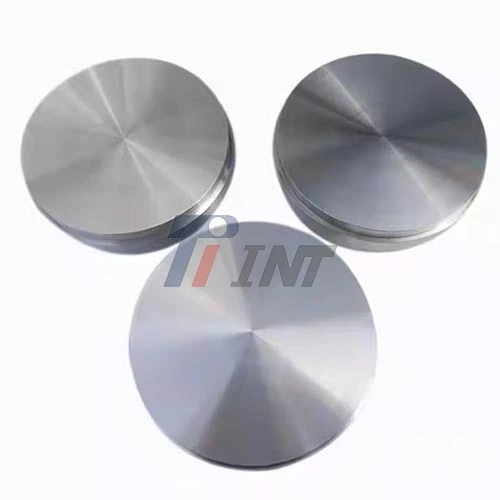
These days, titanium discs can be made with sizes from 10 mm to 300 mm and thicknesses from 0.5 mm to 50 mm. Precision cutting lets you control the tolerance to within ±0.01mm, which is very important when disc blanks need to fit tightly inside forging dies to keep material waste to a minimum. Depending on what needs to be forged next, the surface finish can be polished (Ra ≤ 0.8 μm) or sandblasted (Ra 3.2–6.3 μm). Customisation goes as far as contour profiling, where the edges of the disc meet the shapes of near-net forgings, which cuts down on the titanium that needs to be taken during pre-forming.
Primary Application Domains
Gr5 is the most common metal used to make aircraft turbine discs, orthopaedic implant forging stock, and high-performance car connecting rods. The alloy is good for uses with complex stress states because it has a high strength, a moderate density, and no fatigue resistance. In implant forging, Gr5 discs are used as starting billets for hip stems, knee parts, and trauma fixation plates. After forging, the material must be machined into complex shapes without breaking.
Gr1 is preferred for applications where rust protection is more important than strength, such as chemical processing flanges, heat exchanger plates, and ornamental cladding. The marine industry specifies Gr1 for parts that will be exposed to seawater and work below 100 MPa. It is very easy to shape, which lets you do things like deep drawing and spinning that you can't do with higher-strength metals. However, Gr1 isn't often used in load-bearing orthopaedic implants because its yield strength isn't high enough—240 MPa isn't strong enough to handle the 3–5 times body weight forces that happen during gait cycles.
Performance Comparison: Gr5 vs Gr1 Titanium Disc
Mechanical Strength and Structural Integrity
Their performance range is set by the difference in tensile strength. The minimum tensile strength of Gr5 is 895 MPa, which was confirmed by ASTM E8 tests. This means that forged parts can handle heavy mechanical loads without permanently deforming. Yield strength above 828 MPa guarantees steadiness in dimensions under stress, which is very important when making hip parts that will support body weight for decades.
The minimum extension of 10% allows for enough flexibility for upset forging while still protecting against cracks during rapid cooling [^3]. Gr5 Titanium Disc is the typical forged product form that embodies these properties, ensuring consistent mechanical behavior throughout the component.
The 240 MPa tensile strength of Gr1 makes it less useful for structural uses but makes cold working easier. The 24% extension lets the metal bend and shape severely without breaking, which are benefits that aren't used in implant forging, where hot die forging is more common. The difference in strength can be seen in the hardness values: Gr5 gets 334 HV (Vickers) while Gr1 only gets 120 HV. Forging manufacturers, harder stock material means longer die life when properly oiled. This makes up for higher material costs by lowering the frequency of tool replacements.
Fatigue Resistance and Cyclic Loading Performance
Over the course of a patient's lifetime, orthopaedic implants are loaded and unloaded millions of times. Gr5 has a fatigue strength of about 510 MPa after 10 cycles, which is a lot higher than Gr1's 200 MPa limit. This difference in performance is caused by aluminum's ability to strengthen solid solutions and vanadium's role in keeping the beta phase stable. During forging, the controlled grain flow achieved in Gr5 discs makes it harder for cracks to spread, which lowers the chance of fatigue-related failures in final implants.
Gr1 can't be used in cyclically loaded situations because it has a lower wear strength. The material is good enough for static chemical tanks or building panels, but it can't safely handle the repeated changes in stress that joint implants go through. Forging engineers are aware of this limitation—using Gr1 for implant uses would put patients at risk and put makers at risk of product liability. In medical uses, Gr5's higher price is justified by the difference in fatigue efficiency alone.
Corrosion Resistance Characteristics
Both types form passive titanium dioxide sheets on the surface that are very biocompatible and don't rust. It is thought that Gr1's higher purity makes it more resistant to crevice corrosion in chloride solutions. This is measured in marine settings but doesn't really matter in the body's controlled ionic environment. ASTM G48 tests done in the lab show that there aren't any big differences in the rates of corrosion between Gr5 and Gr1 in body fluid that is simulated at 37°C.
For implant forging, this means that corrosion resistance is not what determines the grade. Both materials meet the biocompatibility requirements set by ISO 5832-3. Instead, decisions are based on mechanical features. The aluminium in Gr5 sometimes makes people worry about the release of aluminium ions, but decades of clinical data show that it is safe. The Extra Low Interstitial (ELI) version of Gr5 lowers the amount of oxygen and iron even more. This solves any leftover biocompatibility issues while keeping the functional benefits.
Thermal Stability and Processing Windows
Gr5 stays strong up to about 400°C, which means that shaping can be done between 900°C and 1050°C without melting too much. Forgers can change the microstructure by carefully heating the beta transus to temperatures around 995°C. They can get fine, evenly spaced grains for better flexibility or long structures for strength in one direction. After forging, heating the metal at 700–800°C relaxes any remaining pressures without making it less hard.
Gr1 can't work as well at high temperatures because it isn't as strong. Around 300°C, softening starts, which makes the best forging window smaller. Since there is no beta-stabilizing vanadium, the only way to control the microstructure is through thermomechanical processing parameters. For complicated implant shapes that need more than one forging step, Gr5's larger processing window lowers the chance of defects and makes sure that all production batches are the same size.
Procurement Insights: What Buyers Should Know
Cost Structure and Economic Considerations
The price of a raw material shows how complicated its composition is. Because alloying elements are added and processing controls are stricter, Gr5 discs usually cost 15–25% more per kilogram than Gr1 discs. However, lifetime cost study shows that Gr5 is better for implant forging. Higher material utilisation rates, made possible by better machinability, mean that fewer kilograms of titanium are needed for each final implant. When titanium makes up 40–60% of the cost of making an implant, a 10% increase in material yield makes the higher disc price worth it at the start.
Minimum order amounts depend on the width and diameter of the Gr5 Titanium Disc. Standard sizes, like 200 mm in diameter and 20 mm in thickness, may have 50 kg MOQs, but custom profiles need 200–500 kg commitments. Forging companies that are making new implant designs are stuck: they can either buy standard discs, which have more cutting waste, or they can commit to custom sizes, which have higher MOQs. Suppliers with a lot of experience, like Baoji INT Medical Titanium Co., Ltd., can be flexible by splitting custom orders into multiple shipments to make cash flow easier and get better prices on volume orders.
Quality Verification and Certification Requirements
Ultrasonic inspection records are the most important part of checking the quality of a disc. ASTM E2375 lists the requirements for acceptance using Distance Amplitude Correction (DAC) curves. Any reflector that rejects signals by more than 1.5 mm of flat-bottom holes is considered acceptable. Manufacturers of fake discs need to make sure that the disc suppliers offer full ultrasonic mapping, not just sampling. Internal flaws that can't be seen with the naked eye can spread during forging, leading to catastrophic fails during NDT testing after forging.
Chemical makeup papers based on EN 10204 3.1 check the amount of elements against the requirements set out in ASTM B381. The mechanical qualities of each output lot are the same as long as the aluminium content is between 5.5 and 6.75% and the vanadium content is between 3.5 and 4.5%. Oxygen content has a big effect on ductility—values above 0.20% make it harder to shape and more likely to crack. According to ASTM E112, grain size documentation should confirm ASTM grain size 5–8. This is the best balance between strength and ductility for forging operations.
Certifications like ISO 9001:2015 and ISO 13485:2016 show that a supplier's quality management is mature. Medical gadget makers can't risk supply chain problems caused by products that don't meet standards. The EU CE mark on titanium discs shows that they meet the standards of Medical Device Regulation (EU) 2017/745. These certifications reassure procurement managers that systems for tracking materials, making sure processes are correct, and taking corrective action are up to code.
Supplier Evaluation and Lead Time Management
Lead times for standard Gr5 discs are between 4 and 8 weeks, which includes the time it takes to melt, forge, heat treat, inspect, and machine the discs. For custom shapes, it takes an extra two to four weeks to prepare the tools and check the first piece. Smart procurement spreads orders out among several sellers so that there aren't too many risks of being dependent on a single source, while still keeping market advantages with main suppliers.
As part of a supplier's technical capability assessment, vacuum arc remelting (VAR) equipment, hot forging presses that can hold more than 3000 tonnes, and in-house ultrasonic testing systems should all be checked. When suppliers depend on subcontracted forging or third-party checking, quality can vary and there are holes in the ability to track goods. When vendors say they can make medical-grade products but don't have clean rooms or special ways to handle medical materials, site audits show that their claims aren't true.
Communication methods affect how well buying works. Problems are solved faster when suppliers offer expert help in English and understand ASTM/ISO standards. Aligning time zones makes it easier for people to work together in real time when a new product is being introduced or when forging trials need quick feedback on material properties. Established sellers keep backup stocks of goods that are specific to each customer. This cuts down on the time it takes to restock in an emergency from weeks to days.
Use-Case Evaluation and Decision-Making Guide
Orthopedic Implant Forging Applications
Hip and knee replacement parts are a great example of how Gr5 should be used. When you walk, you put stress on your femoral stems by bending and twisting them. This requires them to have high yield strength and fatigue resistance. Acetabular cup forgings need to be hard enough to keep their shape during finish machining while still being flexible enough to be pressed into place. The metallurgy behind these performance standards is provided by Gr5 discs.
Starting with discs of the right size cuts down on waste. A femoral stem forging that uses 1.2 kg of titanium from a standard 2.5 kg disc wastes 52% of the material, which is bad for the economy because titanium is expensive. Custom disc profile that fits the stem's envelope increases utilisation to 75% and lowers the cost of materials per implant by 30%. For this optimisation to work, forging engineers and disc providers need to work together closely to find a balance between MOQ economics and material saves per piece.
When it comes to trauma fixation plates, there are different needs. Because these parts put strength over weight reduction, Gr5's dynamic qualities are very important. Plate forgings with complicated physical shapes need good die fill properties, which can be achieved with Gr5's controlled ductility and flow stress. Because the metal is machinable, it can be precisely drilled for screw holes and shaped without work hardening, which would wear out cutting tools too quickly.
Comparative Analysis of Grade Selection Criteria
Material selection grids take into account many things, such as cost, regulatory compliance, mechanical strength, rust resistance, and the ability to be machined. For load-bearing implants, strength is most important—Gr5 gets the most points. For cost savings, non-load-bearing parts like surgical marking clips might be okay with Gr1's lower strength, but single-grade inventories are usually better for standardisation reasons.
Differences in machinability affect prices further down the line. The aluminium in Gr5 Titanium Disc makes it better at breaking chips and lowers cutting forces compared to pure titanium. This lowers the cost of tools and cycle times. Forging companies say that tools last 20–30% longer when they machine Gr5 than when they machine Gr1, which makes up for the higher cost of the material. This benefit grows with larger production runs, which makes Gr5 more cost-effective even though raw materials cost more.
Grade choice is affected by regulatory pathway factors. There is a lot of clinical information about Gr5 (especially the ELI variant) in FDA 510(k) submissions and CE technical files. If you wanted to switch to Gr1 for an implant design that had already been approved, you would have to go through months of testing and paperwork again. This regulatory reluctance keeps Gr5 as the standard for orthopaedic uses, even though there are better options.
Decision Framework for Procurement Managers
A structured assessment method should be used by procurement teams. Start with the mechanical needs: figure out the maximum service stresses and add the right safety factors. If the estimated pressures are higher than 400 MPa, Gr1 won't be able to meet performance goals; then only Gr5 will work. This limit instantly rules out most uses for joint implants that meet the Gr1 standard.
Compare the supplier's skills to the expected production number. If you only need about 1000 speciality implants a year, you may be able to charge more for small-batch custom discs. Contracts with main suppliers that offer bulk savings and inventory management services help companies that buy a lot of standard implants. Dual-sourcing methods find the best mix between lowering costs and keeping supplies going by putting forward two suppliers for each important disc specification.
Think about the total cost of acquisition instead of just the unit price. When shipped across the Atlantic, the cost of freight for titanium plates can hit 5–10% of the value of the material. Landed costs and wait times are less variable when suppliers offer pooled shipping or regional warehousing. Payment terms affect cash flow. For example, the difference between 60-day terms and prepayment requirements has a big effect on the amount of working capital that growing manufacturers need.
Future Trends and Innovations in Titanium Disc Materials
Emerging Alloy Development
Titanium metals that balance Gr5's strength with better biocompatibility are being looked into by research projects. Beta-titanium alloys, such as Ti-12Mo-6Zr-2Fe, have a lower elastic modulus when they are close to bone, which could make stress shielding in orthopaedic implants less effective.
But these experimental grades don't have the vast clinical evaluation and supply chain infrastructure that Gr5 does. Before widespread forging can happen, it needs to be tested biologically and reviewed by regulators for 5–10 years before it can be used commercially.
The growth of additive manufacturing changes how discs are bought. When compared to casting, 3D printing titanium implants uses less material, but the current state of the technology only allows for small-scale unique devices. Forging makes high-volume standard inserts cheaper, which keeps the demand for precision disc plates high. A likely next step is hybrid manufacturing, which combines forged blanks with additive features. This will need discs with better surface finish and tighter control over their dimensions.
Sustainability and Circular Economy Initiatives
Building up infrastructure for recycling titanium addresses both environmental concerns and cost pressures. Closed-loop recycling programs get back machine chips and rejected forgings and use them again in melting processes. But medical-grade titanium recycling has to deal with problems from the government. There are risks of pollution, and standards for tracking materials make it harder to certify secondary materials. Working together on recycling standards could lower costs and make things better for the environment.
Blockchain and digital tracking tools are used in supply chain openness projects. Customers want more and more complete material genealogy, from getting the ore to making the final disc. This makes sure that the products are sourced in a fair way and lets us quickly find the root cause of quality problems. As regulations tighten on medical device makers, suppliers who invest in digital recording systems gain a competitive edge.
Digital Transformation in Procurement
Industry 4.0 technologies change how titanium discs are bought. Just-in-time delivery is possible with real-time inventory tracking tools. This frees up working capital that would otherwise be used to buy raw materials. Predictive analytics use implant production plans to guess how much demand there will be. When inventory hits reorder points, buy orders are instantly sent out. Suppliers must be integrated into these systems so that production data and shipping schedules can be shared through private portals.
Digitising high-quality data makes it easier to find things and solves problems faster. Suppliers who offer electronic certificates with chemical analysis data and pictures of ultrasound inspections allow automatic compliance verification. Machine learning algorithms can find small trends that connect the features of a disc to how well it forges, which can lead to better material specs and higher yield rates. These digital features set leading suppliers apart from traditional ones that use paper-based systems for documentation.
Conclusion
For orthopaedic implant forging uses needing high strength, fatigue resistance, and machinability, Gr5 Titanium Disc easily beats Gr1 alternatives. The aluminum-vanadium metal has the mechanical qualities needed for load-bearing joint replacements. It is also biocompatible and doesn't rust. Even though Gr5 costs more than commercially pure Gr1, its higher material utilisation rates and longer tool life make up for its higher acquisition costs in medium to high volume production.
Choosing a supplier that focuses on metallurgical quality control, ultrasonic inspection rigour, and customisation flexibility is key to a successful procurement. Titanium is a very expensive material, so bad billets can really cost a lot. Because of this, seller quality methods and certifications are very important for judging suppliers. As orthopaedic implant designs move toward patient-specific shapes and minimally invasive profiles, the need for precisely sized titanium discs with tight tolerances will grow. This will favour suppliers who can do advanced cutting and offer quick technical support.
FAQ
What defines the key differences between Gr5 and Gr1 titanium discs?
Gr5 is an alloy made up of 6% aluminium and 4% vanadium. It has a tensile strength of 895 MPa, while Gr1 is pure titanium that is sold in stores and has a strength of 240 MPa. The alloying elements in Gr5 make the mechanical qualities much better, but they also make the corrosion resistance a little worse. However, both grades meet the standards for medical biocompatibility. This difference in composition determines the type of use: Gr5 is best for load-bearing implants, while Gr1 is best for non-structural parts that are vulnerable to corrosion.
How should procurement teams select between grades for medical implant forging?
Figure out the maximum service stresses that will be needed for the implant application. If stresses are higher than 400 MPa or resistance to fatigue is very important, Gr5 must be used. Look at the total cost, which includes how much the material was used and how much it cost to machine, instead of just the price of the raw material. Check the supplier's certifications to make sure they follow ISO 13485 and can do ultrasonic inspections. When it comes to orthopaedic joint implants, standardising on Gr5 gives the regulatory route more benefits than any possible cost saves from Gr1.
What quality documentation should accompany titanium disc purchases?
Ask for EN 10204 3.1 material certificates that confirm the chemical composition according to ASTM B381, full ultrasonic inspection reports according to ASTM E2375 with DAC curve acceptance criteria, mechanical property test results that include tensile strength and elongation, and grain size analysis according to ASTM E112. Check that the company has ISO 9001:2015 and ISO 13485:2016 approvals that cover the production of medical titanium. For full supply chain openness, ask for paperwork that shows how disc lot numbers are linked to ingot heat numbers.
Partner with a Trusted Gr5 Titanium Disc Manufacturer
Baoji INT Medical Titanium Co., Ltd. has been making medical-grade titanium materials since 2003. They work with orthopaedic implant forging companies in the US, Europe, and India. Our full line of Gr5 Titanium Disc products has sizes from 10mm to 300mm and thicknesses from 0.5mm to 50mm. They can be customised to meet your exact forging needs with an accuracy of 0.01mm. Each disc goes through strict ultrasonic testing and has all of its ISO 9001:2015, ISO 13485:2016, and EU CE certifications. This makes sure that the metal quality is high enough to withstand NDT inspection after forging.
We are a dedicated titanium disc supplier with over 30 years of experience with the material. We know the important things that you consider when making your purchasing decisions, such as how accurate the dimensions are when setting up the die, how clean the discs are using ultrasonic technology to avoid batch rejections, and how reliable the delivery is to keep your production schedules.
As part of our customisation services, we can shape profile to fit your forging boxes, which will help you get the most out of your materials and use less titanium per implant. Our flexible MOQ policies and staged delivery options can help your business grow, whether you need small batches of prototypes to test a new product or large volumes of production every three months.
Email our technical team at export@tiint.com to talk about your specific needs for forging. To help you get the best titanium specifications, we give you detailed information about the material's properties, sample discs with full inspection records, and collaborative engineering support. You can look at our full selection of medical titanium materials at inttitanium.com and learn how our focus on quality can improve the reliability of your supply chain.
References
1. ASM International. (2015). Titanium: Physical Metallurgy, Processing, and Applications. Materials Park, OH: ASM International.
2. Donachie, M. J. (2000). Titanium: A Technical Guide (2nd ed.). Materials Park, OH: ASM International.
3. Boyer, R., Welsch, G., & Collings, E. W. (Eds.). (1994). Materials Properties Handbook: Titanium Alloys. Materials Park, OH: ASM International.
4. ASTM International. (2021). ASTM F136-13: Standard Specification for Wrought Titanium-6Aluminum-4Vanadium ELI Alloy for Surgical Implant Applications. West Conshohocken, PA.
6. Titanium Industries. (2022). "Titanium Recycling and Sustainability Practices." Titanium Today, 45(3), 12-18.
_1753926673602.jpg)
_1753429871786.webp)
_1750668405487.webp)
_1750663715751.webp)