
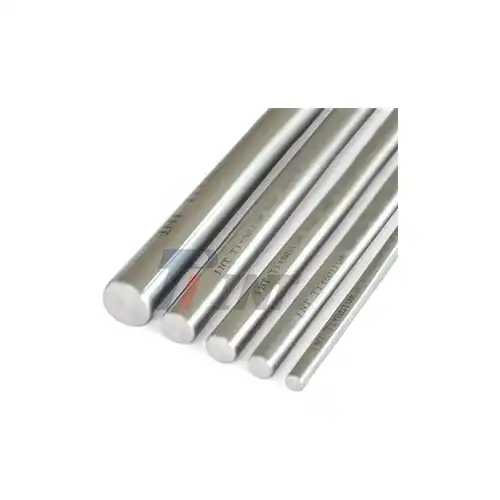
Durability of milled titanium bars in dental applications


 2026-07-03 09:18:07
The durability of milled titanium bar dental components in clinical usage must be carefully considered by medical device manufacturers and procurement experts. These components, which are made from medical-grade titanium alloy using sophisticated CAD/CAM subtractive manufacturing, provide outstanding endurance via a consistent mechanical structure, precise passive fit, and better fatigue resistance. Milled titanium bar dental restorations provide uniform biomechanical performance throughout full-arch constructions, implant-supported frameworks, and hybrid prostheses, as opposed to cast alternatives that are prone to porosity and warping. This makes them the benchmark for challenging dentistry settings where patient outcomes and device performance are directly impacted by long-term durability.
|
|
|
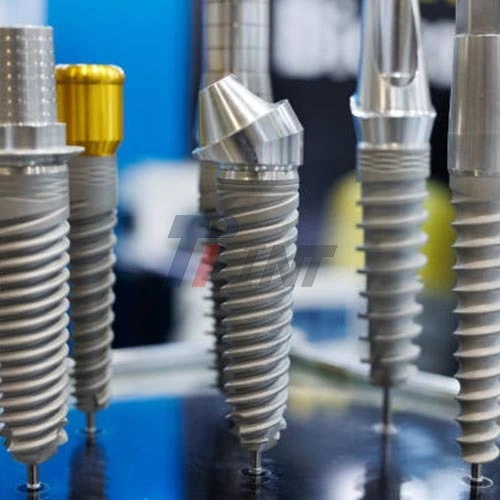
Understanding Milled Titanium Bars in Dental Applications
What Makes Milled Titanium Bars Essential in Modern Dentistry?
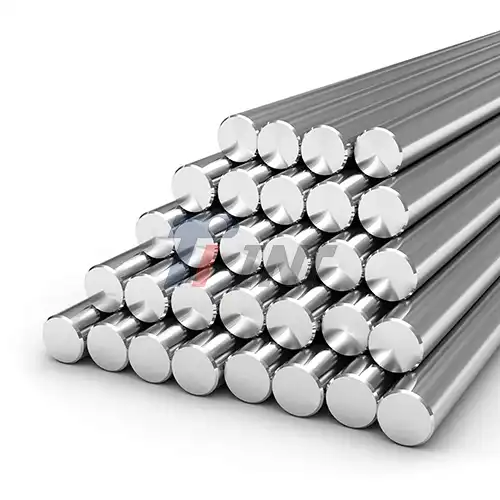
Milled titanium bar dental structures enable complicated dental restorations including All-on-X hybrid dentures, screw-retained bridges, and adjustable overdentures. The physical defects seen in conventional lost-wax casting are eliminated by employing 5-axis CNC milling technology to create these components from solid titanium blocks. A "passive fit"—a stress-free connection between the bar and implant abutments that preserves the bone from deteriorating and stops machinery failure over time—is ensured by this subtractive procedure. According to material science research, the technique produces a solid, void-free structure with predictable grain direction, which directly affects clinical lifetime since there are no weak areas for fracture propagation due to the lack of casting faults.
Manufacturing Process and Material Characteristics
A milled titanium bar dental is built using certified medical-grade titanium blocks, often Grade 5 (Ti-6Al-4V) or Grade 23 (Ti-6Al-4V ELI). Modern production uses state-of-the-art multi-axis milling machines to reach tolerances within 10 microns, guaranteeing physical precision that is impossible to attain with human techniques. Because even little variations in fit might result in stress concentrations that jeopardize long-term durability, accuracy is crucial. Subtractive milling preserves the virgin properties and high tensile strength of the titanium blank throughout manufacturing, while cast bars often have tiny porosity and shrinkage defects that lower fatigue life by 20–35%.
Advantages Over Alternative Materials
Procurement managers often contrast PEEK, zirconia, and cobalt chromium with milled titanium bar dental solutions. Zirconia is biocompatible and aesthetically pleasing, yet it is fragile and may break catastrophically when struck. Although cobalt chrome alloys are very strong, their stiffness mismatch with bone may exacerbate the effects of stress shielding, and they may release metal ions. On the other hand, milled titanium offers flexibility that is more akin to natural bone and an ideal strength-to-weight ratio. For improved tissue integration and sustained performance throughout decades of pH fluctuations and enzymatic activity in the oral environment, precision milling produces a smooth surface finish.
Core Factors Contributing to the Durability of Milled Titanium Bars
Material Grade Selection and Mechanical Properties
The durability of a milled titanium bar dental is significantly impacted by the choice between Grade 5 and Grade 23 titanium alloys. With a tensile strength of over 900 MPa and excellent wear resistance for high-stress scenarios, Grade 5 (Ti-6Al-4V) is composed of 6% aluminum and 4% vanadium. Under the cyclic loading circumstances of chewing, where bars go through millions of cycles per year, this alpha-beta phase metal performs very well. Because there are fewer interstitial elements, Grade 23 (Ti-6Al-4V ELI) offers improved biocompatibility. The fatigue strength of both grades surpasses conventional dental criteria by more than 500 MPa at 10 million cycles.
Precision Engineering and Dimensional Tolerance
The durability of a milled titanium bar dental is directly impacted by the dimensional precision attained by CNC cutting, which guarantees that load is transmitted uniformly over the implant-bar contact. Even 50 to 100 micron misfit conditions may provide biomechanically negative stress levels that accelerate bone loss or screw loosening around the implant. Even for intricate forms, sophisticated milling processes maintain tolerances within 10 to 20 microns, resulting in surfaces that uniformly distribute dental pressures. Internal details like screw holes and connection forms, which prevent micromotion between components and preserve structural integrity throughout the course of the restoration, are examples of this precision.
Corrosion Resistance and Biocompatibility
Because it creates a persistent coating of titanium dioxide (TiO₂) that shields the underlying metal from chemical deterioration, titanium is very resistant to rust. This passive oxide membrane, which shields against the acidic environment of the oral cavity, is just 2–5 nanometers thick and repairs instantly if injured. Milled titanium bar dental components have not shown any discernible deterioration over the course of 15 to 20 years, according to clinical studies. Additionally, medical-grade titanium securely integrates with human tissue and is non-toxic. After ten years of monitoring, its osseointegration properties actively aid in the adhesion of bone to the implant surface, resulting in survival rates of at least 95%.
Comparing Durability: Milled Titanium Bars vs Alternative Materials
Performance Benchmarking Against Cast Titanium
When compared directly to cast alternatives, milled titanium bar dental frameworks are noticeably more robust. The fatigue strength of cast bars is typically 15–25% lower due to microporosity and residual casting stresses. Microcracks appear in cast bars at 40–60% of the stress levels that a milled bar can sustain forever, according to lab studies. In full-arch patients with persistent repetitive stresses, this performance disparity is clinically significant. Additionally, polished milled bars provide a better passive fit; although cast bars sometimes depart from designs by 100–300 microns, milled bars maintain the produced strength properties by staying within 20–50 microns.
Material Alternatives and Their Limitations
Although cobalt chrome alloys have a strong yield strength, they are not as robust for long-term integration as milled titanium bar dental due to their much greater elastic modulus. Bone loss may result from stress at the bone contact caused by this stiffness mismatch. Furthermore, there are concerns about the long-term chemical stability of cobalt chrome due to its vulnerability to crevice corrosion. Although zirconia is aesthetically pleasing, long-span bar constructions cannot employ it due to its brittleness. Although it is robust in compression, it lacks titanium's tensile strength and fracture resistance. In zirconia frameworks, overload conditions that would just bend a titanium bar may result in catastrophic collapse.
Practical Applications and Procurement Considerations
Clinical Applications and Performance Documentation
In challenging scenarios like implant-supported hybrid prostheses, a milled titanium bar dental functions very well. These All-on-4 or All-on-6 designs depend on the bar's capacity to withstand flexural wear and distribute stresses across angled implants. When appropriate grinding specifications are used, framework survival rates surpass 98%, according to clinical data from the last 15 years. Lighter and more flexible bar forms with integrated connection techniques provide accurate attachment location without the size variations associated with casting for overdenture applications, resulting in consistent holding force and lower maintenance requirements.
Supplier Evaluation and Certification Requirements
When buying a milled titanium bar dental, procurement personnel should give preference to suppliers that have quality management systems that meet ISO 13485:2016 requirements. This accreditation guarantees that risk management and traceability procedures suitable for implanted parts are included in manufacture. Additional certifications such as ISO 9001:2015 and CE certifications provide additional evidence of regulatory compliance and process management. Tensile property testing, chemical composition, and grade verification should all be documented in material certifications for each batch. Reliable sources provide post-market monitoring and regulatory audits by offering complete traceability from raw material mill certifications to final inspection reports.
Logistics and Supply Chain Management
Depending on the intricacy of the design, lead times for a custom-milled titanium bar dental typically range from 7 to 14 business days. Production scheduling, shipping, and CAD file approvals should all be planned for by procurement managers. Although milled bars are 30 to 50% more expensive than cast choices, the overall benefits—such as improved clinical life, reduced remake rates, and quicker chairside adjustment times—justify the cost difference. Bulk price agreements and standard design libraries may assist high-volume producers reduce the cost per unit without sacrificing the advantages of machine fabrication in terms of quality.
Ensuring Long-Term Performance: Maintenance and Quality Assurance
Handling Protocols and Installation Best Practices
A milled titanium bar dental's long-term performance is greatly impacted by how it is handled during assembly. To prevent surface scratches that might act as fracture initiation sites, fabrication personnel should utilize non-marring equipment. To avoid joint damage, screws must be tightened to the tension prescribed by the manufacturer, usually 25 to 35 Ncm, using calibrated torque drivers. Maintaining cleanliness during assembly prevents contamination that can hinder the correct fitting of screws. Avoiding contact with dissimilar metals during storage reduces the danger of galvanic corrosion, and ultrasonic cleaning with neutral pH solutions eliminates grinding residue without damaging the oxide surface.
Quality Control Standards and Testing Protocols
Prominent manufacturers use multistage quality control, which includes dimensional inspection and raw material verification. Coordinate measurement machines (CMM) guarantee that a milled titanium bar dental complies with digital design files within ±25 microns. Ra values are kept below 0.8 microns by surface finish measures, which promote cleanliness and osseointegration. Mechanical testing procedures confirm that completed bars satisfy yield strength and fatigue performance criteria. In order to confirm that the corrosion resistance of titanium is maintained throughout time, accelerated aging tests simulate years of exposure to the oral environment.
Innovation Trends and Future Developments
Through controlled oxide layer modification, new surface treatment methods promise to considerably improve the durability of milled titanium bar dental. By increasing surface hardness without sacrificing biocompatibility, anodization techniques may reduce the likelihood of interface degradation. Calcium phosphate-containing bioactive coatings have the potential to accelerate osseointegration while maintaining the fundamental mechanical characteristics of titanium. Additionally, research focuses on beta-titanium mixes that are closer to bone and have lower stiffness values, which may lessen stress shielding. These developments, when paired with additive manufacturing, will improve dental restorations' functionality while preserving their basic durability.
Conclusion
For applications needing excellent durability, a milled titanium bar dental is the best option since it combines outstanding material properties with precision shape and biological compatibility. The structural shortcomings of cast choices are eliminated by advanced manufacturing procedures, enabling complex designs that satisfy a variety of therapeutic requirements. Workers in procurement should understand that lower complication rates, longer service life, and greater patient satisfaction make the additional cost worthwhile. Access to products that satisfy legal requirements and promote long-term clinical success is ensured by choosing suppliers with extensive certifications and stringent quality control procedures.
FAQ
Q1: How long do milled titanium bar dental components last compared to cast titanium?
A: Because they are free of porosity and casting flaws, milled bars have a 20–35% longer wear life than cast options. The dimensional precision of milling creates passive-fit frames that spread stress widely and prevent premature failure at implant surfaces.
Q2: Which types of titanium are most durable for dental bars?
A: Both Grade 5 (Ti-6Al-4V) and Grade 23 (Ti-6Al-4V ELI) are very durable, with tensile strengths over 900 MPa and wear resistance suitable for decades of clinical use. Grade 23 offers slightly better biocompatibility while keeping the same level of mechanical performance.
Q3: What procurement factors have the biggest effect on the durability of a milled titanium bar dental?
A: Critical factors include ISO 13485:2016 supplier approval, detailed paperwork for material tracking, and approved production methods. Reliable providers give test results for each batch showing that mechanical qualities and chemical makeup meet medical-grade standards.
Partner with Baoji INT Medical Titanium Co., Ltd. for Premium Milled Titanium Bar Dental Solutions
Baoji INT Medical Titanium Co., Ltd. has over 20 years of expertise in medical-grade titanium fabrication and supplies manufacturers worldwide with a precision milled titanium bar dental solution that sets industry standards for quality and sturdiness. Our factories are ISO 9001:2015, ISO 13485:2016, and EU CE approved, producing Grade 5 and Grade 23 parts that meet the strictest specifications. Our expert team supports everything from material selection to final inspection, whether you need standard bars or complex custom shapes. Contact our milled titanium bar dental experts at export@tiint.com to discuss how our advanced manufacturing skills and strict quality systems can help you reach your product development goals with high-performance titanium solutions.
References
1. Miyazaki, T., & Hotta, Y. (2018). "CAD/CAM Systems for Fabricating Dental Restorations: Current Status and Future Perspectives." Journal of Prosthodontic Research, 62(4), 447-452.
2. Niinomi, M., & Nakai, M. (2011). "Titanium-Based Biomaterials for Preventing Stress Shielding Between Implant Devices and Bone." International Journal of Biomaterials, Article ID 836587.
3. Jemt, T., & Johansson, J. (2016). "Implant Treatment in the Edentulous Maxilla: A 15-Year Follow-Up Study on 76 Consecutive Patients Provided with Fixed Prostheses." Clinical Implant Dentistry and Related Research, 8(2), 61-69.
4. Wataha, J. C. (2000). "Biocompatibility of Dental Casting Alloys: A Review." Journal of Prosthetic Dentistry, 83(2), 223-234.
5. Karl, M., & Taylor, T. D. (2016). "Parameters Determining Micromotion at the Implant-Abutment Interface." International Journal of Oral & Maxillofacial Implants, 31(5), 1147-1154.
6. Garvie, R. C., Hannink, R. H., & Pascoe, R. T. (1975). "Ceramic Steel? Phase Transformations in Zirconia and Their Applications in Toughening Mechanisms." Nature, 258, 703-704.