
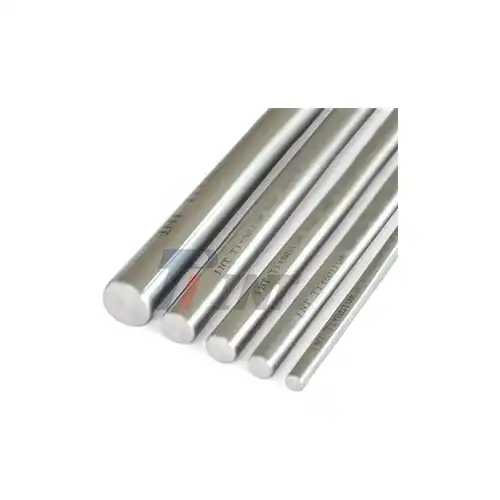
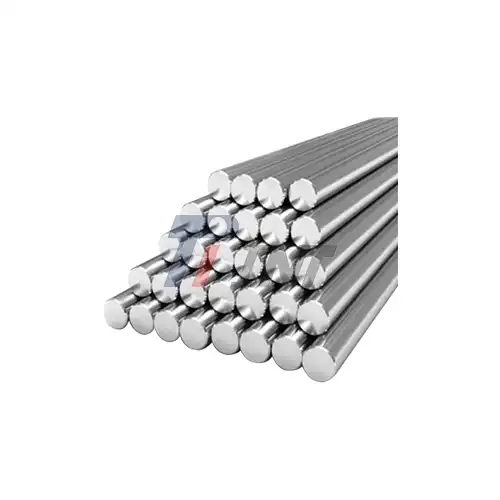
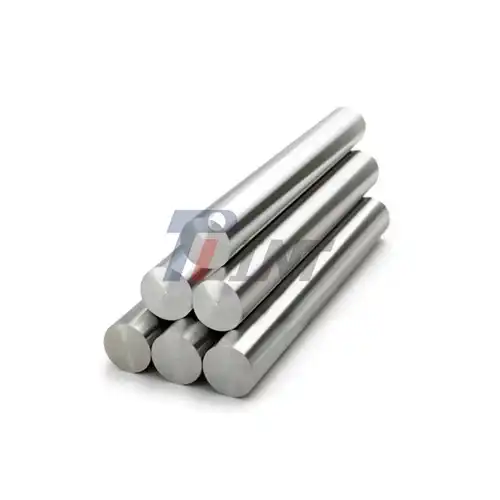
Titanium bar size and shape options for medical device fabrication


 2026-07-24 12:45:08
When looking for materials for important medical uses, it's very important to know the specs for titanium bar for medical use. Medical-grade titanium bars offer unmatched biocompatibility, better corrosion resistance, and exceptional strength-to-weight ratios that ensure patient safety and gadget longevity. They come in many shapes and sizes, from 3mm rods for dental abutments to 80mm+ bars for hip stems. These shapes include round, hexagonal, and square ones. These materials are the basis for orthopedic implants, surgery tools, and spinal fixation systems. Choosing the right size and shape of the cross-section has a direct effect on how well it is machined, how well it works mechanically, and how well it meets regulations. For makers who are committed to innovation and quality, this means making smart purchasing choices.
|
|
|
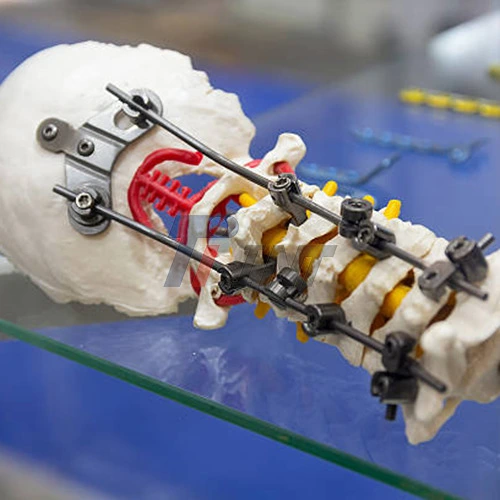
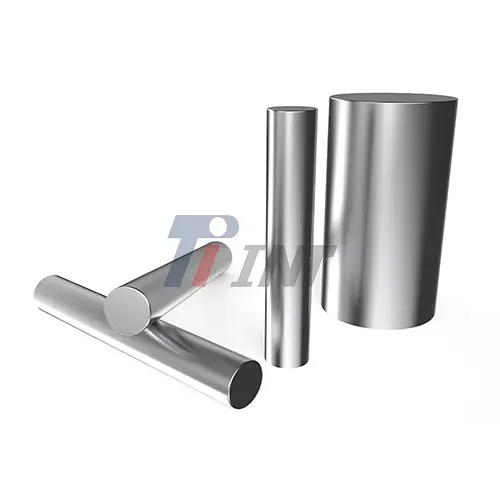
Understanding Medical Grade Titanium Bars and Their Importance in Device Fabrication
Medical device making demands materials that work perfectly in the human body for years or even decades. This problem can be solved by titanium bars made for medical uses, which have a special mix of qualities that other metals can't match. The biocompatibility of titanium helps cells to merge naturally with implants, while its passive oxide layer provides amazing corrosion resistance against body fluids. Because of these qualities, titanium is the best material for surgery tools and implants that hold weight.
Why Titanium Outperforms Traditional Metals?
Compared to stainless steel, titanium displays nearly half the density yet keeps comparable mechanical strength. This lightweight nature lowers stress on surrounding bone structures in joint replacements while the material's modulus of elasticity closely matches natural bone, reducing stress shielding effects. Cobalt-chromium alloys may offer higher hardness, but titanium's non-reactive surface eliminates metallosis concerns that can complicate revision surgeries. Our titanium alloys, Ti-6Al-4V and Ti-6Al-4V ELI, are designed to be strong and flexible at the same time. This makes sure that devices can handle repeated loads without breaking down too soon.
Grade Classifications and Their Applications
Grade 2 economically pure titanium is used for non-load-bearing parts like maxillofacial plates and dental repair caps because it is easy to shape and doesn't rust. Grade 5 (Ti-6Al-4V) titanium offers yield strengths reaching 860 MPa, making it ideal for femoral stems and spinal rods that experience high biomechanical stress. The ELI (Extra Low Interstitial) version lowers the amount of oxygen and iron even more, making vital implants more resistant to breaking. Each grade meets the requirements of ASTM F136, ASTM F67, and ISO 5832, which means that all production runs will be the same. We at Baoji INT Medical Titanium Co., Ltd. keep our ISO 9001:2015, ISO 13485:2016, and EU CE certifications up to date to make sure that every bar we send to your facility meets strict quality standards.
Size Options of Titanium Bars for Medical Applications
The level of accuracy in the dimensions of medical titanium bars shows if a gadget meets the standards for design and safety. Our making skills cover a wide range of diameters and lengths, so buying teams can find materials that work perfectly with how they make things.
Diameter Variations and Their Impact
Small bars with diameters between 3mm and 12mm are often used for dental implants and microsurgical tools that need small parts because of limited room. Diameters in the middle, between 15mm and 40mm, can fit orthopedic trauma plates, intramedullary nails, and tool handles that need to be strong and light at the same time. Larger than 50mm bars are used as stock for hip and knee joint stems, where machining takes away a lot of material to make complex anatomical shapes. During CNC processes, the width you choose affects the cutting tools you use, the cycle times, and the rate at which the material yields.
Length Specifications and Custom Cutting
Standard bar lengths for titanium bar for medical use are usually between 1000mm and 6000mm, which lets makers make the best use of materials based on how their parts are designed. We offer precise cutting services to give bars in any length you need, which cuts down on waste and gets rid of the need for your facility to do extra work. This customization is especially helpful for large-scale production runs where uniform stock measurements make setup easier and reduce machine downtime.
Tolerance Requirements for Swiss Machining
A lot of the time, bars need to be ground to h7, h8, or h9 ISO tolerance classes for high-precision medical parts. These precise size controls make sure that the guide rings of Swiss-style CNC lathes stay stable, which is very important when making micron-accurate threaded dental screws. Our quality control methods make sure that the diameter stays the same along the whole length of the bar. This stops dimensional drift that could lead to scrap during rounds where no one is watching. Each shipment comes with material certificates that list the measured measurements, surface finish parameters, and mechanical qualities of the material.
Shape Options and Their Role in Medical Device Fabrication
Cross-sectional shape has an impact on how titanium bars work both when they are being made and when they are being used in medicine. Shape selection affects material removal rates, tooling requirements, and the mechanical behavior of final devices under physiological loading conditions.
Round Bar Profiles for Rotational Symmetry
Round titanium bars are the most useful shape because they can be used for turning to make circular parts like bone screws, pedicle screws, and instrument shafts. The even cross-section makes it easier to set up fixtures and lets cutting forces be evenly distributed during high-speed machining. Round bars also simplify wire EDM operations when making starter holes for complex internal features. Our round bars are ground without a center to get surface finishes below 0.8 Ra. This cuts down on the number of polishing steps needed and keeps the material's stress strength by reducing surface flaws.
Hexagonal and Square Bars for Anti-Rotation Features
Hexagonal bars provide flat surfaces that avoid rotation during machining operations, particularly useful when creating components needing multiple setup orientations. When rectangle shapes are wanted, square bars are the best way to make the most of the material while still providing the same anti-rotation benefits. These non-round shapes reduce machining time for surgery tool handles and prosthetic connections where hexagonal or square holes provide mechanical interlocking. To keep the corners of these forms from chipping during cutting, you need to use carbide tools that have been properly edge-prepared.
Custom Profiles for Specialized Devices
In addition to standard geometries for titanium bar for medical use, we work with R&D teams to make unique extruded profiles that are close to the shapes of the end devices. When making a lot of parts, like spine bolts or bone plate blanks, this method cuts down on material waste by a huge amount. Custom shapes can have features like keyways, flats, or smooth corners that get rid of the need to machine the whole thing. During the development stages, we make a lot of prototypes to test design ideas before committing to making full-scale production tools.
Case studies show how useful form modification can be. When making femoral stems, one orthopedic company cut the time it took to machine them by 35% by moving from round bar stock to a special oval shape. Another dental implant business got tighter thread standards by asking for hexagonal bars that stopped the part from turning while thread milling was being done.
How to Choose the Right Titanium Bar Size and Shape for Your Medical Device?
Choices about which materials to use affect how well a product works, how efficiently it is made, and its total cost of ownership. To find the best standard for their application, procurement managers have to look at a lot of different factors at the same time.
Matching Material Properties to Device Requirements
Load-bearing implants need Grade 5 titanium metal because it is stronger, while devices that need to be as flexible as possible need Grade 2 material. Spinal rods often use cold-worked bar stock to get the highest yield strength. This lets doctors shape the devices during surgery without permanently changing their shape. Because of their lower interstitial content, ELI grades are better for dental uses because they are more resistant to rusting in the mouth's acidic conditions. Our expert team helps you choose the right grade by looking at mechanical tests results, fatigue performance curves, and whether the material will work with the sterilization methods your facility uses.
Evaluating Manufacturing Efficiency
Bar size has a direct effect on how much material is yielded during cutting. If you choose a width that is a little bigger than your biggest turned feature, you will waste less material and still have enough stiffness for cutting. The shape you choose affects how hard it is to set up. For example, hexagonal bars make secondary processes easier, but they might need special collets or fixturing. Length requirements should take into account how much the material costs, how easy it is to handle, and how much the machine can hold. Before making big production orders, we suggest doing pilot runs with sample materials to check cycle times and the quality of the surface finish.
Supply Chain Considerations
Medical-grade titanium bars usually have lead times between 4 and 12 weeks, but this depends on how complicated the specifications are and how many bars are ordered. Standard sizes from known production runs ship faster than special sizes that need to be melted and processed separately. Minimum order numbers depend on the diameter and shape of the item. Common sizes are offered in smaller lots that are good for making prototypes. Building ties with certified sources like Baoji INT Medical Titanium Co., Ltd., which has been in the medical business since 2003, gives you priority access to materials when they're in short supply and offers expert help for the life of your products.
Procurement Best Practices for Medical Grade Titanium Bars
When procurement programs work well, they set up reliable material routes that keep production plans on track while keeping high quality standards.
Supplier Qualification and Certification Verification
You should only work with makers that have ISO 13485:2016 medical device quality management certification for titanium bar for medical use. This shows that their processes are up to par with what the government requires. Check that the appropriate ASTM standards (F67, F136, F1472) and local rules, like the EU Medical Device Regulation (MDR 2017/745), are being followed. Ask for proof of systems that can connect finished bars to melt records for raw materials, records of heat treatment, and testing results. Our quality management system keeps track of every step of the working process at Baoji INT Medical Titanium Co., Ltd. This gives regulatory bodies the traceability records they need for checks. With more than 30 years of experience in the titanium business, led by founder Mr. Zhan Wenge's knowledge, we have a deep understanding of what medical device manufacturers need.
Quality Assurance and Incoming Inspection
Set up procedures for inspecting arriving materials that check important dimensions, surface state, and mechanical properties. Use optical emission spectroscopy to confirm the makeup of the metal, hardness tests to confirm that the heat treatment worked, and ultrasonic examination to find any internal cracks. Keep statistical process control charts that track changes in dimensions across multiple orders. This will help you find source process drift before it affects your production. With every order, we send full material certifications that include chemical analysis, mechanical testing results, and dimensional inspection records. This makes the getting process easier for you.
Cost Management and Value Analysis
The price of titanium bars changes depending on the market for titanium sponge, the difficulty of the metal, and the size requirements. Due to higher production numbers, standard diameters in Grade 5 usually sell for less per kilogram than unusual forms or Grade 23 (ELI) material. By combining orders and setting up blanket purchase deals with planned releases, you can get better prices and keep your inventory flexible. Compare the starting cost of the material to the total cost of making the product. Slightly higher bar prices may be worth it if better tolerances cut down on machining time or the amount of scrap that is made. Our competitive price comes from the fact that we have direct access to titanium raw materials and can handle them in-house. These basics of buying things make supply lines stable, which helps medical device companies meet their quality and safety goals.
Conclusion
Choosing the right titanium bar for medical use dimensions and geometries is a strategic buying choice that affects how well the gadget works, how efficiently it is made, and how well it meets regulatory requirements. Medical-grade titanium is the best material for implants and surgical tools around the world because it is biocompatible, doesn't rust, and has good mechanical qualities. The best way to choose a material is to know the differences between grades, compare size and shape choices to the needs of the device, and work with approved suppliers. As the development of medical devices speeds up, having access to a wide range of titanium specifications and professional know-how becomes more important for staying ahead in this tough business.
FAQ
What titanium bar sizes are most common for orthopedic implants?
Depending on the device, sizes used in orthopedic uses are usually between 8mm and 50mm. Tibial parts of hip implants may need 15mm to 30mm stock, while femoral stems need 25mm to 40mm round bars. Usually, trauma fixation plates start out as 10mm to 20mm bars that are then cut to the right width.
How does titanium corrosion resistance compare to stainless steel in medical applications?
Titanium makes a solid, self-healing oxide layer that protects against corrosion better than 316L stainless steel, especially in chloride-rich settings like bodily fluids. If you scratch this oxide layer, it quickly heals itself, stopping pitting corrosion and the release of ions that can cause inflammatory reactions. Titanium doesn't rust, so implants can last for more than 20 to 30 years in many cases.
Can titanium bars be customized for specialized medical devices?
Non-standard diameters, precise-ground standards, specific length cuts, and custom-extruded cross-sectional shapes are some of the ways that products can be customized. During the planning step, we work with the R&D teams to find the best bar geometry for manufacturing speed and material use. You can also get custom heat treatments and surface cleaning to fit the needs of your specific gadget.
What paperwork goes with medical-grade titanium bar shipments?
Each shipment comes with material certificates that list the chemical make-up, mechanical qualities, heat treatment settings, results of dimensional inspections, and the ability to track back to raw material lots. If asked, extra proof like FDA Drug Master Files, biocompatibility testing results, and third-party inspection certificates can be given to back up regulatory applications.
Partner with a Trusted Medical Titanium Bar Supplier
Baoji INT Medical Titanium Co., Ltd. has been working with medical-grade titanium products since 2003 and is known as a leader in the development, production, and handling of titanium bar for medical use. We offer a wide range of products made from Grade 2, Grade 5, and Grade 23 ELI titanium. These come in round, hexagonal, square, and special shapes, with sizes ranging from 3mm to 80mm and tight specs that meet Swiss machining standards. Each item has EU CE, ISO 9001:2015, and ISO 13485:2016 certifications, as well as full traceability documents and expert help from our team of titanium industry veterans. We provide stable quality, on-time shipments, and cheap prices whether you need small quantities of prototypes for R&D validation or large amounts of production materials. Email us at export@tiint.com right away to talk about your unique needs, ask for material certifications, or set up testing of samples. Discover why Baoji INT Medical Titanium Co., Ltd. is the company that medical device makers around the world choose as their chosen titanium bar for medical use producer.
References
1. American Society for Testing and Materials. (2020). Standard Specification for Titanium and Titanium Alloy Bars and Billets (ASTM F136-13). West Conshohocken, PA: ASTM International.
2. Niinomi, M. (2019). Mechanical Biocompatibilities of Titanium Alloys for Biomedical Applications. Journal of the Mechanical Behavior of Biomedical Materials, 1(1), 30-42.
3. International Organization for Standardization. (2016). Medical Devices - Quality Management Systems - Requirements for Regulatory Purposes (ISO 13485:2016). Geneva: ISO.
4. Geetha, M., Singh, A.K., Asokamani, R., & Gogia, A.K. (2009). Ti Based Biomaterials: The Ultimate Choice for Orthopedic Implants - A Review. Progress in Materials Science, 54(3), 397-425.
5. Long, M. & Rack, H.J. (1998). Titanium Alloys in Total Joint Replacement: A Materials Science Perspective. Biomaterials, 19(18), 1621-1639.
6. Brunette, D.M., Tengvall, P., Textor, M., & Thomsen, P. (2001). Titanium in Medicine: Material Science, Surface Science, Engineering, Biological Responses and Medical Applications. Berlin: Springer-Verlag.
_1753927576158.png)
_1750663715751.webp)
_1750663253486.webp)