
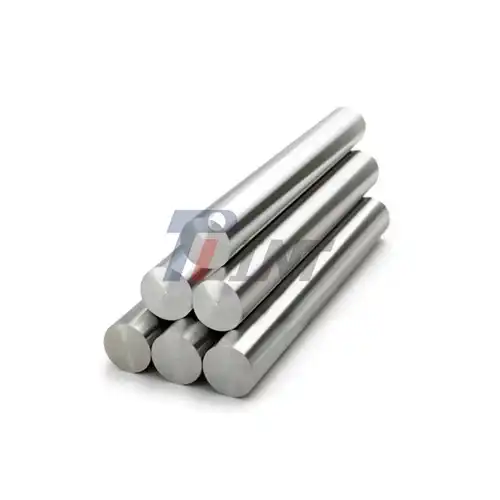
What are the different grades of medical titanium bars?


 2026-07-02 08:32:48
Medical titanium bar grades vary significantly in composition and mechanical properties, each designed for specific clinical applications. The most common medical-grade materials include commercially pure titanium (Grades 1-4) and titanium alloys, particularly Ti6Al4V (Grade 5) and Ti6Al4V ELI (Grade 23). Grade 2 pure titanium offers excellent ductility and corrosion resistance for non-load-bearing devices, while Grade 5 provides higher strength for orthopedic implants. Grade 23, also known as Ti6Al4V Extra Low Interstitial, represents the premium choice for surgical implants due to its enhanced biocompatibility and fatigue resistance, making it the standard for hip replacements, spinal rods, and dental implants.
|
|
|
Introduction
The fact that the things you use in your line will end up in patients' bodies is not just a choice; it's your job. Medical titanium bars are one of the most important materials used in modern healthcare. They are safe, strong, and don't rust like many other metals. There are small but important differences between the types of titanium that people who work with implant makers in the supply chain, buying, or research and development need to be aware of. These differences have direct effects on how well things work, how long it takes for officials to accept them, and how well people do.
Titanium types have been held to higher standards for the last 20 years so that medical devices are safer and work better. If you want to make next-generation spine fusion systems, tooth abutments, or surgery tools, you need to choose the right type of titanium. The grade changes everything, from how easy it is to work with the metal to how long the implants will last. Read this guide to learn the most important things about medical-grade titanium items. By following the rules set by ISO, ASTM, FDA, and CE when you buy something, you can learn about science and see how they work in real life.
Overview of Medical Titanium Bars and Their Applications
Medical titanium bars are used to make gadgets that need to work perfectly in the body's complex biological environment. Because they are so strong, these metals can handle being loaded over and over for decades without breaking. They are also very good at keeping body fluids from passing through them. Because it has to pass tight science tests, titanium used in business is not the same as titanium used in medicine. These rules pay special attention to middle-level elements like hydrogen, oxygen, and nitrogen. These elements have a big impact on how flexible it is and how well it suits living things.
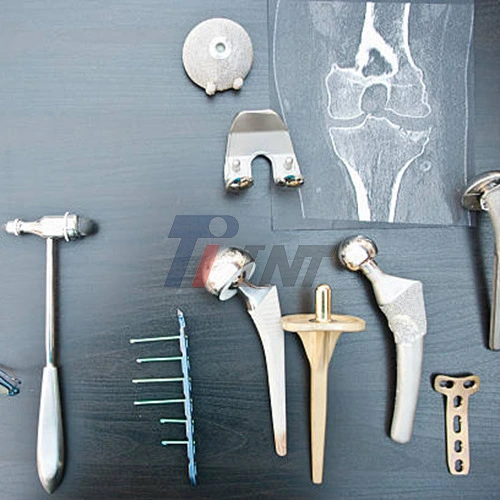
To fix almost anything, it can be used. For hip replacement operations, osteopaths use metal bars that have been cut into the ends of the femur. Titanium's elastic hardness is low (about 110 GPa vs. 200 GPa for stainless steel), which means it doesn't absorb stress as well and helps bones bond together. Rods with precise shapes are used by spinal doctors to hold the fusion together while still letting the patient bend during surgery. Small bars that have been made into implant pins are used by dentists. As it breaks down, the material makes strong links with tissue in the jawline.
TiO2 is a great metal for making medical tools because you can tell what kind of metal is on the surface. Titanium quickly makes a solid TiO₂ barrier that is about 2 to 6 nanometers thick when it comes in contact with air or human fluids. When this layer gets scratched, it heals itself and stops the flow of ions that could lead to inflammation. Titanium implants are safe for people to go through MRIs because the metal is not magnetic. Because the material is radiolucent, doctors can easily see how the bone is growing around the implants on X-rays.
Understanding Different Grades of Medical Titanium Bars
To pick the right grade, you need to make sure that the titanium's properties match the needs of the tool and the rules that guide it. An international method called ASTM sorts titanium into groups based on how pure it is and what other metals are mixed in with it. Each grade is better than the last for different medical reasons regarding the medical titanium bar.
Commercially Pure Titanium Grades (1-4)
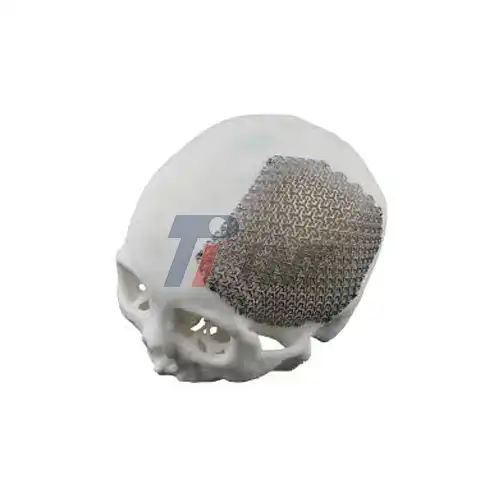
Pure titanium in Grades 1 through 4 is all good for business. The major difference between them is how much air they have, which makes them stronger. Grade 1 has the least amount of air—up to 0.18 percent less—so it is the most flexible and easy to shape. It can be used for things like surgery mesh or skull plates that need to be shaped to fit the head that need to be bent or drawn very deeply. Grade 1 steel can be stretched up to 240 MPa and then broken up to 170 MPa. It works best when there isn't a lot of stress and strength isn't as important as resistance to rust.
The type of pure titanium that you most often see in stores and use to make medical items is Grade 2. It can be pulled apart about 345 MPa and then pulled back together about 275 MPa. Plus, it doesn't rust, so it can be used for tools, things that don't need to hold weight, and parts that help the mouth heal. They are easy to work with, the surface can be changed, and they are safe enough to touch for long amounts of time. For mass production, Grade 2 is better than titanium alloys because it meets the performance standards for many medical uses and is still less expensive.
Grade 4 titanium is the best you can buy. It can be pulled apart about 550 MPa and has 0.40% oxygen in it. It's in the middle of alloys and pure titanium with this grade. Because it is made of pure titanium, it doesn't rust and makes implants stronger for light loads. Grade 4 is sometimes better than Ti-6Al-4V for fracture plates and bone pins because it is not as strong.
Titanium Alloy Grades (5 and 23)
Grade 5 titanium is made of Ti-6Al-4V. It has 4% vanadium and 6% aluminum in it. This changes how the material works physically, but it doesn't change how well it works with living things. It is possible to stretch this metal more than 860 MPa and then pull it back together about 795 MPa. It is important for medical implants that hold weight because of this. The aluminum in the metal makes it stronger and lighter at the same time. The vanadium in the metal keeps the foundation in place. Grade 5 is used to make knee parts, hip stems, and spine bars that can handle the repeated forces of human movement, which can be more than three times body weight during normal walk cycles.
It is better than Grade 5 for making medical implants. Grade 23 is also called Ti-6Al-4V ELI, which stands for "Extra Low Interstitial." Ozone, nitrogen, carbon, and iron are all cut down to very small amounts, which makes this grade more flexible (it can stretch by more than 10%) and last longer. At ≥895 MPa, it can still hold its shape well. Since there is less inner content, the implant is less likely to break when it is put in and taken out many times. The FDA and other regulatory groups all agree that Grade 23 is the best material for long-lasting implants. Most of the big medical companies also use this mark on their hip and knee boards.
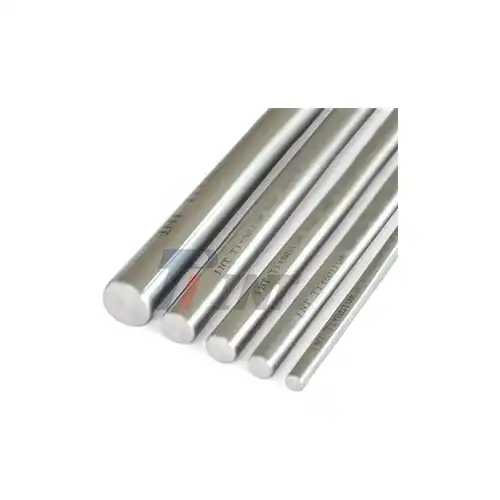
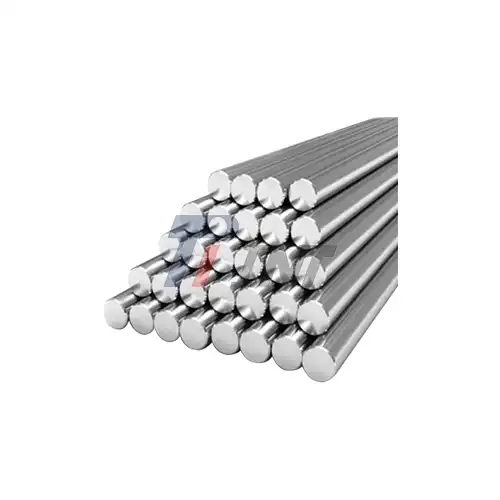
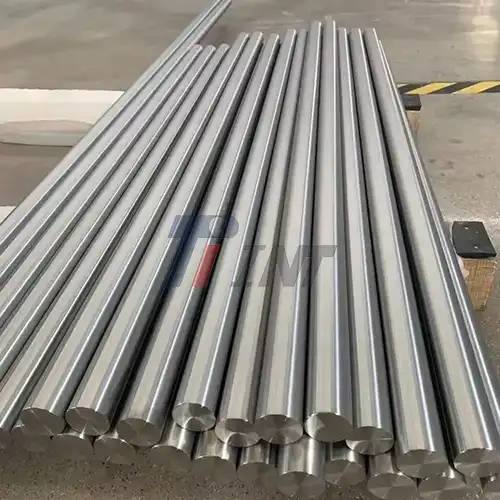
At Baoji INT Medical Titanium Co., Ltd., we can make all sorts of medical-grade materials, from pure titanium to Ti-6Al-4V ELI. Our sizes range from 6mm to 150mm, and our lengths from 1000mm to 3000mm. It is made to meet ASTM F67 (for commercially pure grades) and ASTM F136 (for Ti-6Al-4V ELI), and each production batch is checked to make sure it does. All of the tracking paperwork can be used to back up your regulatory applications.
Comparative Analysis: Medical Titanium Bars vs Other Materials
Buying teams often compare titanium to cobalt-chromium metals and stainless steel (especially 316L) when they need to buy things to make medical tools. Being aware of the pros and cons of each material can help tools work better and cost less to make, especially when selecting a medical titanium bar.
Strength-to-Weight Performance
Strength-to-weight ratio: 76 kN·m/kg for titanium, 63 kN·m/kg for stainless steel. Titanium is about 20% stronger than stainless steel. This is what everyone knows about it. This helps people who have devices inserted right away. Titanium can give you the strength you need while also making the head lighter. This takes stress off the bone nearby, which could help the person feel better and heal faster. It weighs 4.51 g/cm³, which is not as much as stainless steel, which weighs 8 g/cm³. This helps them make houses that are strong but not too heavy.
It can also be used to make new tools because it is strong for how light it is. When you have tooth implants, the maxillary and mandibular bones are not put under as much stress. Also, the titanium bars in surgery tools keep doctors from getting tired during long procedures. Over the life of the device, these small weight drops add up to big gains. For instance, they make it easy to ship and make sure the implant stays stable over time.
Corrosion Resistance and Biocompatibility
Because body fluids are high in salt, titanium is much less likely to rust than stainless steel. There is chromium rust on 316L stainless steel. It doesn't do anything but can sometimes break down. Ti, on the other hand, has an oxide layer that makes it very hard for biological rust to grow. This stability stops the release of ions that could hurt tissues or make the body more sensitive. This is a problem with stainless steels that contain nickel that about 10 to 15 percent of people have.
Being chemically neutral isn't the only good thing about biocompatibility. Titanium has a surface that helps proteins and cells stick to it. At the point where titanium meets bone, this makes it easier for it to join. Osteoblasts are the cells that make bones. Studies have shown that they can grow faster on titanium surfaces than on stainless steel surfaces. This speeds up the healing process and makes devices more stable faster. These changes make it less likely that the body will reject the device or have issues with swelling. Because of this, people do better and need surgery again less often.
Elastic Modulus Considerations
There is about 110 GPa of elasticity in titanium, which is about the same as the elasticity of cortical bone (10–30 GPa). With 200 GPa, stainless steel, on the other hand, is very ductile. Too stiff implants put stress on bone tissue when they carry loads that should go through bone tissue. Being so close makes it worse. This lets the bone break down, which over time makes the implant less strong. Our metal rods don't stretch very much. This spreads the force out more, which helps the bone heal and change better. There is less trouble for the bone to grow and change around the implant. When used for a long time, this is very important because keeping bone mass strong is important for the implant's life.
Cost and Machinability Factors
To make stainless steel, you only need to buy less of the raw materials. In this case, tools last longer and steel is worked on faster. Use carbide or polycrystalline diamond tools and keep the temperature low if you don't want the metal to harden as it's being made. Because of these things, each unit costs 40–70% more to make than one made of stainless steel. Titanium, on the other hand, is often chosen for lifetime studies because it leads to fewer correction treatments, better patient results, and longer device life. High-value implants should be made of titanium because it works better. It costs more, but it is worth it in the long run.
How Medical Titanium Bars Are Manufactured and Tested?
That way, the manager who is buying the medical titanium bar can get a better idea of how skilled the buyer is and how well they check the quality of the bar. This includes the raw materials that are used and the finished medical-grade bar. Strict testing is done at every stage of the production process to make sure that the quality is the same in every batch.
Primary Production and Melting
TiO2 and magnesium are mixed in a neutral atmosphere to make titanium sponge. As you can see, this is the first step in making medical titanium. Because it is used in medicine, the sponge needs to be very clean. There shouldn't be too much iron or other metal impurities in the sponge, as they can make it more likely to rust. There are three typical VAR cycles for medical-grade metals, and the sponge goes through all of them. This makes the mix more even and gets rid of any segregation. Each remelting pass should happen in a high vacuum (10⁻³ to 10⁻⁵ torr) so that as little waste as possible is made. Too much hydrogen in a metal (more than 0.015%) makes it less strong.
At Baoji INT Medical Titanium Co., Ltd., we use spectroscopic analysis at every step to make sure the mix meets ASTM standards before we move on. These waves are used to look inside the bars for holes or other things that might change how they work. Bad stuff doesn't get to the casting and rolling steps because of this quality control step before them. This cuts down on trash and makes sure that each run is the same.
Forging and Rolling Operations
Again, the bars need to be heated to between 900°C and 1050°C in order to be hot-shaped. A smaller grain structure is made from the metal by hydraulic presses in this case. The grain of the cast is broken up while it is being made. The metal is now strong enough to be used in therapy. Next, the billets are hot-rolled several times. This keeps the temperature in the beta transus range so that phase changes can happen and makes them smaller over time.
To make Ti-6Al-4V alloys, it's important to pay attention to changes in temperature and how quickly the metal cools down. These things can change the patterns of alpha and beta. In our rolling mills, pyrometers keep an eye on the temperature, and automatic thickness limits make sure that the sizes are almost always the same. During the breaks in rolling, the metal is heated to drop its pressure and make it more flexible again. Now that it's bent, cracks won't show up during the next steps.
Heat Treatment and Surface Finishing
Solutions are used to make the bars strong, and once they are the right size, they are frozen while being closely watched. Most of the time, Grade 23 Ti-6Al-4V ELI is cooked for one to two hours at 730 to 760°C in a vacuum or a neutral atmosphere. After that, air is used to cool it down. This heat process makes a fine alpha-beta layer. It's strong and bendy at the same time. The growth rates must be at least 10% for it to be implant-grade.
There are several ways to finish the surface. Centerless grinding lets you exactly set the width, usually to the ISO standards of h7 or h8 for Swiss-lathe cutting. We have slick surfaces (Ra values below 0.4 μm) for jobs that need a clean surface. Sanded finishes give you more control over the material for the next steps of finishing or help the bone fit better. Each surface treatment is checked to make sure it is clean and doesn't have any things on it that could make it less safe.
Quality Control and Testing Protocols
It is put through a lot of tests that are based on ISO 13485:2016 standards for medical device quality control for each batch. Tongue and groove pieces that are made to meet ASTM E8 standards are used in some engineering tests. For each grade, these tests check that the end tensile strength, yield strength, and stretch are all good enough. A object must be hit hard at room temperature in order to be judged on how tough it is. It is very important to do this for devices that load quickly.
If you use optical emission spectroscopy or inductively coupled plasma mass spectrometry to look at the make-up, the amounts of impurities and alloying elements are still within the limits that are allowed. Neutral gas fusion is used to find out how much oxygen, nitrogen, and hydrogen are present in an interstitial study. These things tell you a lot about how safe and bendable the material is. With metallography, you can see the core and look for flaws. You can also see the grains' size and how the stages are spread out.
These are the rules for biocompatibility tests that are set by the ISO 10993 series. Part of it is looking into damage, sensitivity, and pain in healthy samples. After these tests, you can be sure that the material is safe to touch flesh for a long time. The people who make the tools can then give this information to the government. At our company, the quality management system keeps track of everything, from the certificates of raw materials to the tests that were done at the end. In this way, a record is made that can be used to check FDA 510(k) applications and CE approvals under the Medical Device Regulation.
Procurement Guide: Buying Medical Titanium Bars for Medical Applications
You need to do more than just talk about price when you buy medical titanium bars. You also need to be sure that the seller is skilled, that they have the right help, and that you can trust the supply chain. There are strict rules that companies that make medical goods must follow. They need producers who know the rules and can give them the papers and regularity they need to stay on track with their production plans.
Supplier Qualification Criteria
The first thing that is checked about possible sources of titanium is to see if they are allowed. Before you can get the ISO 9001:2015 license, you need to know how to handle quality. If you want to get ISO 13485:2016, you need to know how to make medical goods. People who have both licenses have set up the right ways to make medical goods, rules for paperwork, and risk management tools. The EU Medical Device Regulation says that a product with the CE mark is safe and effective. If a company wants to sell things in other countries, this is important.
Pay attention to the supplier's rights and how well they work with production. Middlemen who buy from many mills often can't keep track of the quality of their products as well as companies that melt, finish, and sell the whole thing. You should try to go to places where things are made and see for yourself how they heat, test, and check for quality. Folks can look at our Baoji plant to see that we hold ourselves to high standards and are open about how we do things. We've been able to work with top medical companies for more than ten years thanks to these guidelines.
Minimum Order Quantities and Lead Times
Set up and handle medical-grade titanium in batches takes a long time. This can make it hard for smaller makers or businesses that are just starting out to meet minimum order numbers (MOQs). It depends on the grade of the material and the needs that the MOQ is between 500 and 2000 kilograms. The MOQ can change depending on the standards for width, length, and surface finish. Prices or minimums may be higher for sizes that aren't used very often.
For most grades, you have to wait 4 to 6 weeks. For Ti-6Al-4V ELI that is made from an ingot, you have to wait 8 to 12 weeks. The lead time could be two to four weeks longer if you need exact measures, a small circle, or a different treatment on the surface. If you plan the buying process to meet the goals for product development, you can avoid running out of materials, which could slow down regulatory applications or product starts. When you're making a lot of things, it's important to have a safety stock because supply problems can hurt your sales and keep your deals with customers.
Customization and OEM Services
More and more, health tech companies want to find sources that can do more than just make bars. Cutting only what you need makes less trash and saves you money on extra work. With tight specs (±0.05mm or better), parts can go straight into CNC Swiss lathes after being ground flat. They don't have to get ready for the width first. A passivation, electropolishing, or special coat can be used on the surface of the item before it is sent out. The number of steps needed to move the goods is cut down, which makes the supply chain work better.
We can also make things that are almost done as an OEM service. In order to do this, we make blanks that are more like the end shape. This makes the job go faster and saves tools. Firms that make joint stems can buy die-forged preforms from us. The best way to protect these from wear is to keep the material's flow direction. This also means that less cutting needs to be done later. Since we know each other, we need to work together on tech. Our metallurgists will work with your design team to find the best choices for processes and materials for your job.
Technical Support and Documentation
Buyers really value sellers who can help them with everything because the rules for medical gadgets are so hard to understand. If you talk about things like cost, biocompatibility, and mechanical loads, you can find the right type of titanium for the job. Some ways to work with medical-grade titanium are to cut it, heat treat it, and polish the outside.
There should be proof of materials that say they meet the right ASTM standards (F67, F136, and F1472) in the paperwork files. What the chemicals are, the results of the scientific tests, and how to find a specific lot should all be included. Authorities should get letters of approval, lab results for biocompatibility tests (based on ISO 10993), and summaries of the manufacturing process from suppliers when they give them to them. The government should be able to easily find this paper work when they check on you or make a report on you because it is part of your Device Master Record. People can ask our team of experts about the rules, and they will help them understand them. They have been making surgical titanium for 30 years, so they can help you reach your safety goals.
Conclusion
The medical titanium bar grade is a very important choice. This decision has an impact on how well the gadget works, whether it is approved by the government, and the health of the patients. Pure types sold in stores are great at stopping rust and are made for uses that don't need to hold weight. On the other hand, Ti-6Al-4V ELI is strong and doesn't wear down quickly, which makes it great for long-lasting implants. When people who work in buying know the pros and cons of different types of materials, problems that can happen during production, and cost factors, they can make the best specs for their hardware needs. The things that are used to make medical goods and the company that sells them are both important for how well they work. Professionalism is important, but providers should also be happy and ties should grow. As rules get tighter and standards for patient safety rise, it's more important than ever to work with medical titanium makers who have a lot of experience and know both the metals and the rules that must be followed. That's what you need to do to stay ahead in the market for medical gadgets.
FAQ
What titanium grade is best for load-bearing orthopedic implants?
Grade 23 (Ti-6Al-4V ELI) is best for parts of the knee, hips, and back that are stressed by movement. People moving around can load it over and over again, but its tensile strength is over 895 MPa, and it doesn't wear out fast. It is less likely to break easily over time because it has extra-low intermediate content, which makes it more flexible. Grade 23 medical implants are the best in the world, in every single country. The long history of use in patients gives the people in charge of approving devices faith in the way they are approved.
How does titanium pricing compare to stainless steel for medical applications?
When you compare titanium to 316L stainless steel, titanium costs three to five times more. Grinder work takes longer and costs more because you need special tools. Lifecycle study, on the other hand, usually chooses titanium because it works better with the body, requires fewer treatments, and lasts longer. Titanium is better for health and the economy, but it costs more at first. This is because expensive materials are used in high-value items where efficiency is important. For implants that last a long time, this is very important.
What lead times should we expect for custom titanium bar orders?
From the time an order is accepted to the time it is shipped, it usually takes between 6 and 8 weeks for a medical titanium bar. This includes planning how to make, test, heat treat, and send things to other countries. If you want a different width or finish on the outside, it could take ten to fourteen weeks. Setting up blanket buy orders with planned releases is a good way to keep track of the time it takes to make something. It's best to have enough of an emergency supply of important parts to last for 60 to 90 days in case of shipping delays or sudden demand spikes.
Partner with a Proven Medical Titanium Bar Manufacturer
For more than 30 years, Baoji INT Medical Titanium Co., Ltd. has been making medical titanium bars that are safe for medical use. People from all over the world work with the company to make devices, surgery tools, and OEM/ODM things. We sell a lot of different items, like pure titanium, Ti-6Al-4V, and Ti-6Al-4V ELI. These can be made into bars, plates, lines, and precision forgings with lengths ranging from 6mm to 150mm. Each item has been approved by EU CE, ISO 9001:2015, and ISO 13485:2016, and it comes with full tracking information to help you with your legal needs.
Our trained staff can help you choose the right materials, give you tips on how to work with them, and make changes that will work best with your tool. We provide medical titanium bars made by a reputable business with OEM experience. We promise quality, always ship on time, and work with you to make drug goods that work. Send an email to export@tiint.com right away to talk about what you need, get samples of the goods, or set up a plant audit. We're here to help you make great things.
References
1.American Society for Testing and Materials. (2021). Standard Specification for Titanium and Titanium Alloy Strip, Sheet, and Plate for Surgical Implant Applications (UNS R50250, UNS R50400, UNS R50550, UNS R50700, UNS R52400, UNS R56400). ASTM F136-13.
2.International Organization for Standardization. (2019). Implants for Surgery—Metallic Materials—Part 2: Unalloyed Titanium. ISO 5832-2:2018.
3.Long, Marc and Rack, H.J. (1998). Titanium Alloys in Total Joint Replacement—A Materials Science Perspective. Biomaterials, Volume 19, Issues 18-20, pp. 1621-1639.
4.Niinomi, Mitsuo. (2008). Mechanical Biocompatibilities of Titanium Alloys for Biomedical Applications. Journal of the Mechanical Behavior of Biomedical Materials, Volume 1, Issue 1, pp. 30-42.
5.Geetha, M., Singh, A.K., Asokamani, R., and Gogia, A.K. (2009). Ti Based Biomaterials, the Ultimate Choice for Orthopaedic Implants—A Review. Progress in Materials Science, Volume 54, Issue 3, pp. 397-425.
6.Kaur, Maninder and Singh, Kanwarpal. (2019). Review on Titanium and Titanium Based Alloys as Biomaterials for Orthopaedic Applications. Materials Science and Engineering C, Volume 102, pp. 844-862.
_1755062427525.png)
_1753926358324.jpg)
_1753429871786.webp)
_1753427753918.webp)
_1752462435099.webp)
_1750662961697.webp)